The Pacific Islands are a collection of beautiful and diverse countries and territories located in the southwestern Pacific Ocean. These islands are known for their stunning natural beauty, rich cultural heritage, and unique ecosystems. The region includes thousands of islands, each with their own unique traditions, languages, and customs, many of which are home to indigenous communities. The Pacific Islands are a popular destination for tourists looking for an escape to paradise, and they offer a wealth of opportunities for exploration, adventure, and relaxation.
Test your continent knowledge with our Pacific Islands geography quiz on the Pacific Ocean!
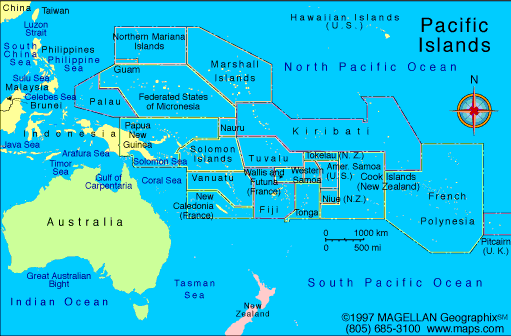
Click on a country for a more detailed map, or try our map index.
History of the Pacific Islands
The Pacific Islands have a rich history of indigenous cultures that have thrived for thousands of years. The first inhabitants of the region were believed to have arrived from Southeast Asia around 3,000-4,000 years ago. These early settlers were skilled navigators who traveled vast distances across the Pacific on large outrigger canoes, bringing with them their unique cultures and traditions. Over time, these cultures evolved and diversified, with each island group developing its own distinct identity.
European explorers, such as Captain James Cook, arrived in the Pacific in the 18th century, leading to colonization by countries such as France, the United Kingdom, and the United States. This colonization had a profound impact on the region, with indigenous populations often suffering from disease, displacement, and cultural assimilation. Despite these challenges, however, many Pacific Island nations have persevered and are now independent countries, while others remain territories of larger nations.
Geography of the Pacific Islands
The Pacific Islands span a vast area of the Pacific Ocean, from Indonesia in the west to Easter Island in the east. The region includes more than 20,000 islands, including the largest island of New Guinea, shared by Indonesia and Papua New Guinea. The Pacific Islands are known for their beautiful beaches, coral reefs, and atolls, which are ring-shaped coral islands that encircle lagoons.
The cultural sphere of the Pacific islands is generally split between Australasia, Polynesia, Malaysia and the Malay Archipelago, Melanesia, and Micronesia, including the Caroline Islands (also known as the Federated States of Micronesia), various atolls, and the Northern Mariana Islands, located near the Philippines on the world map.
Tourist Attractions in the Pacific Islands
The Pacific Islands are a highly sought-after tourist destination, offering a multitude of attractions that cater to a wide variety of interests. In addition to cultural experiences and outdoor adventures, visitors can explore the unique flora and fauna of the region. The islands are home to a diverse array of marine life, including colorful coral reefs, dolphins, and sea turtles. For those interested in history, there are numerous ancient ruins and artifacts to discover, providing a glimpse into the rich cultural heritage of the Pacific.
-
Fiji: The island is known for its stunning beaches, crystal-clear waters, and lush rainforests. Visitors can enjoy snorkeling, scuba diving, and surfing, as well as cultural experiences such as traditional Fijian dance and food.
-
French Polynesia: French Polynesia includes the Society Islands, which are known for their turquoise lagoons and overwater bungalows. Visitors can also explore the rugged terrain of Tahiti and the remote beauty of the Marquesas Islands.
-
Vanuatu: This is an archipelago of 83 islands located in the South Pacific. It is known for its active volcanoes, pristine beaches, and rich cultural heritage. Visitors can experience traditional village life, including kava ceremonies and custom dances, as well as explore the lush rainforests and stunning waterfalls.
-
Palau: Palau is a small island nation located in the western Pacific, famous for its world-class scuba diving and snorkeling. Its pristine waters are home to more than 1,500 species of fish and 700 species of coral, making it one of the most biodiverse places on earth. Visitors can also explore the island's rich cultural heritage, including its unique stone monoliths and ancient burial sites.
-
Cook Islands: The Cook Islands are a group of 15 islands located in the South Pacific. They are known for their turquoise lagoons, sandy beaches, and warm hospitality. Visitors can experience traditional Polynesian culture, including dance and drumming performances, as well as explore the islands' rugged interior and lush tropical forests.
-
Tonga: A Polynesian kingdom located in the South Pacific, Tonga known for its pristine beaches, coral reefs, and friendly locals. Visitors can snorkel with humpback whales, explore ancient tombs and temples, and learn about Tongan culture through traditional dance and song.
-
Hawaii: The islands of Hawaii (or Hawai'i) are a popular tourist destination known for its beaches, volcanoes, and lush rainforests. Visitors can experience traditional Hawaiian culture through hula dancing, lei making, and luaus.
-
New Zealand: The country of New Zealand is famous for its stunning natural beauty, including the Milford Sound and Fiordland National Park. Visitors can also experience Maori culture through cultural performances and traditional food.
People Also Ask...
If you're inspecting the Pacific Islands map, you may have some queries about the region. Here are some of the most frequently asked questions, along with their answers.
What Is Considered South Pacific?
The South Pacific is a region of the Pacific Ocean that includes parts of Melanesia, Micronesia, and Polynesia. It is generally considered to encompass the area south of the equator and east of Australia and Papua New Guinea. The region includes thousands of islands, many of which are home to indigenous communities with their own distinct traditions and languages.
What Are the 14 Pacific Island Countries?
The 14 Pacific island countries are Fiji, Kiribati, Marshall Islands, Micronesia, Nauru, Palau, Papua New Guinea, Samoa, Solomon Islands, Tonga, Tuvalu, Vanuatu, Cook Islands, and Niue. These countries are located in the southwestern Pacific Ocean and are known for their natural beauty and rich cultural heritage.
What Are the Three Major Pacific Islands?
The three major Pacific islands are Papua New Guinea, New Caledonia, and Fiji. Papua New Guinea is the largest and most populous of the three, with a diverse population of over 800 different languages. New Caledonia is a French territory known for its stunning beaches and coral reefs. Fiji is a popular tourist destination known for its crystal clear waters, white sand beaches, and friendly locals.
What Are the 7 Polynesian Islands?
Polynesia is a subregion of Oceania, made up of more than 1,000 islands scattered over the central and southern Pacific Ocean. The seven Polynesian islands are Samoa, Tonga, Cook Islands, French Polynesia, Niue, Tokelau, and Tuvalu. These islands share a common culture, language, and history, and are recognized for their unique traditions and stunning views.
What is the geography of the Pacific Islands?
The Pacific Islands have a variety of geographies. The islands span volcanic landforms to coral atolls and rocky cliffs. Many of these islands sit in turquoise lagoons, ringed by coral reefs, which makes them popular for tourism and marine biodiversity.
What languages are spoken in the Pacific Islands?
The most common languages include Samoan, Tahitian and Fijian. In addition, many of these island countries have governmental and business functions conducted in English, such as the former and present-day colonies of Hawaii and the island of New Zealand.
What is the climate in the Pacific Islands?
The Pacific Islands have a tropical climate with high humidity. The temperatures are warm throughout the year, and there are wet and dry seasons. Most islands are at risk of tropical storms and tropical cyclones, particularly during the rainy season. The temperature is moderate in coastal areas and cooler in mountainous regions.
What drives the economy of the Pacific Islands?
Agriculture, tourism and fishing are the primary industries that drive the Pacific Islands' economy. Key exports include coconut products, fish, and tropical fruits. Tourism is another important contributor to the economy as many visitors get to enjoy the islands' unique culture, pristine beaches and beautiful coral reefs.
Are the Pacific Islands at risk of natural disasters?
Yes, the Pacific Islands are susceptible to many natural disasters, including tropical storms, cyclones, earthquakes and tsunamis. Many of the islands also face the threat of volcanic eruptions as a result of their location on the Pacific "Ring of Fire." Climate change is making these events more frequent and more intense.
What are some cultural traditions in the Pacific Islands?
The traditions of the various Pacific Island are rich and uniquely their own. Some examples are traditional dances, music and arts as well as ceremonies, feasts and festivals. Pacific Island cultures center on family and community, and respect for elders runs deep.
What are the top tourist attractions in the Pacific Islands?
Some of the most popular tourist destinations for island vacations are Fiji, Tahiti, Bora Bora, Cook Islands. At most of them, you will find exotic beaches, clear waters, and luxurious resorts. Visitors can hike, explore, snorkel and dive, and immerse themselves in the islands’ customs and festivals. The Galápagos Islands and Hawaii also draw millions of tourists each year because of their rare wildlife and volcanic landscapes.
What animals live in the Pacific Islands?
The Pacific Islands are home to many wildlife species. Most of them are specific tropical birds of parrots and doves, sea turtles, lizards, etc. The marine life teems, from dolphins and whales to the myriad of fish and corals. New Zealand, for example, has its unique land mammals, such as the flightless kiwi bird, because it broke away from other land masses about 100 million years ago.
What is the role of the Pacific Islands in global climate change?
Due to recent rising sea levels and extreme weather events, the Pacific Islands have been mentioned in global discussions on climate change. Some islands themselves are barely above sea level, making them vulnerable to flooding. These countries are urging stronger international action on climate change as they fight to defend their lands and their resources.
What is the cuisine of the Pacific Islands?
The cuisine of the Pacific Islands varies by region but generally includes fresh seafood, tropical fruit, and root vegetables such as taro and yams. Poke (raw fish), kokoda (Fijian fish salad) and umu (a traditional oven-cooked feast) are all very popular in the area. They are typically flavored with coconut milk and spices.
What are the challenges the Pacific Islands face today?
Among the key challenges are climate change with rising sea levels, extreme weather and coral reef degradation. Other Pacific Island nations, due to a shortage of resources and dependence on imports, also suffer economic hardships. Some regions are also challenged by political and social issues, such as struggles for self-determination in territories.
How is the Pacific Islands region governed?
Governance in the Pacific Islands is incredibly diverse. Some islands are independent countries — Fiji and Tonga, for example — and others are territories or dependencies of countries such as the United States, France and the United Kingdom.

Pacific Islands and Australia Information
Encyclopedia: Pacific Islands and Australia
In-depth entries covering: Economy, Government, History, Land & People
More on Pacific Islands and Australia: Oceania · Australasia ·
More: The Continents · Countries of the World · World Geography
Related Content
- Distance Calculator
- Latitude/Logitude Search
- Current Events
- Highest Mountains
- Oceans & Seas
- Largest Islands
- World Capitals
- Languages by Countries
- Comparative Country Statistics
- Most Populous Countries
- Area and Population of Countries
- World's 50 Largest Cities


