Norfolk Island is a small external territory of Australia located in the South Pacific Ocean, roughly halfway between Australia, New Zealand, and New Caledonia. Despite its modest size, the island boasts a striking volcanic landscape, historic sites, and a unique blend of cultures shaped by early Polynesian settlers, British penal colonies, and Pitcairn Island descendants.
Its remoteness has preserved much of its natural beauty, with cliffs, coral reefs, pine-covered hills, and lush vegetation spread across the island’s 35 square kilometers. Norfolk Island is known for its tranquil atmosphere, self-sufficient lifestyle, and strong local identity.
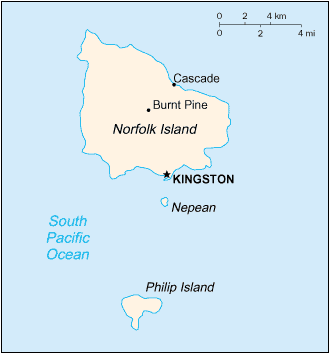
Norfolk Island Profile
History of Norfolk Island
Norfolk Island’s history begins with evidence of Polynesian settlement, though the island was uninhabited when British explorers arrived in the late 1700s. The British established a penal colony in 1788 shortly after settling in Sydney. Due to its isolation, the island was used for some of the harshest penal settlements in the empire before the prison was abandoned in 1855.
In 1856, descendants of the Bounty mutineers from Pitcairn Island were relocated to Norfolk Island by the British, shaping the population and culture that exists today. Though now an external territory of Australia, Norfolk has maintained a level of local governance and cultural autonomy, with tourism and agriculture playing central roles in its modern economy.
Geography of Norfolk Island
Norfolk Island covers around 35 square kilometers (13.5 square miles) and is of volcanic origin. Its highest point is Mount Bates, standing at 319 meters (1,047 feet) above sea level. The terrain includes cliffs, rolling hills, and flat pastures, with surrounding coral reefs offering rich marine biodiversity.
The island has a subtropical climate, with mild temperatures year-round, regular rainfall, and strong coastal breezes. Its famous Norfolk Island pines dominate the landscape, and the coastline features both rocky cliffs and small sandy beaches.
The nearby Phillip Island and Nepean Island are uninhabited and included in the territory. Much of the land is protected within Norfolk Island National Park.
Facts & Figures About Norfolk Island
- Area: 35 square kilometers
- Population: Around 2,000
- Status: External territory of Australia
- Capital: Kingston
- Main Economic Activities: Tourism, agriculture, government services
- Climate: Subtropical with mild, humid summers and cool winters
- Highest Point: Mount Bates (319 meters)
- Currency: Australian dollar (AUD)
- Languages: English, Norfuk (a Creole language of English and Tahitian origin)
Major Settlements
- Kingston – Historic capital and administrative center
- Burnt Pine – Main commercial area and largest population hub
- Cascade – Location of a key landing point and rugged cliffs
- Anson Bay – Small settlement area near beautiful coastal cliffs
People also ask…
What is Norfolk Island known for?
Norfolk Island is known for its historic penal colony, distinctive Norfolk Island pines, strong local culture, and quiet, scenic environment.
Can you visit Norfolk Island?
Yes. Norfolk Island is open to visitors and accessible by air from Australia and New Zealand. It has no visa requirement for Australians but requires a passport or ID for travel.
Is Norfolk Island part of Australia?
Yes. It is an external territory of Australia, though it operates under a unique system of local governance and maintains a strong local identity.
|
|
 |


