Nevada Profile
Located in the western United States, Nevada is a state of striking contrasts, from the arid landscapes of the Mojave and Great Basin deserts to the bright lights and entertainment of Las Vegas and Reno. With a population of over 3 million, most residents live in urban areas along the western edge, while vast stretches of desert and mountains define much of the state’s geography.
Nevada has a rich history shaped by Native American tribes, early explorers, mining booms, and the rise of modern entertainment and tourism. From historic mining towns and scenic desert parks to world-famous casinos and cultural festivals, the state offers a unique blend of natural beauty, history, and vibrant urban life, making it one of the most distinctive states in the U.S.
For a detailed overview of Nevada, explore our full guide.
History of Nevada
The state’s history is shaped by its native inhabitants, mining booms, and rapid development into a modern state. Long before European settlers arrived, the region was home to Native American tribes such as the Paiute, Shoshone, and Washoe, who thrived in the deserts, mountains, and valleys, relying on hunting, gathering, and trade.
In the mid-19th century, European-American settlers arrived, spurred by the westward expansion and the discovery of silver and gold deposits. The famous Comstock Lode in 1859 brought a mining boom that rapidly transformed the region’s economy and population. Nevada became the 36th state of the United States on October 31, 1864, during the Civil War, earning the nickname “The Battle Born State.”
During the 20th century, Nevada’s economy shifted from mining to tourism, entertainment, and gambling. The legalization of casino gaming in 1931 and the rise of cities like Las Vegas and Reno transformed the state into a global hub for tourism and entertainment.
Geography of Nevada
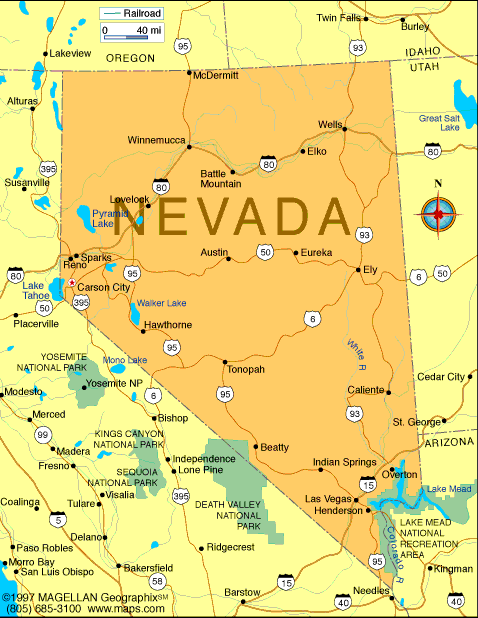
Nevada, the 7th largest state in the U.S., covers approximately 110,572 square miles and is located in the western United States. It is bordered by Oregon and Idaho to the north, California to the west, Arizona to the southeast, and Utah to the east. The state is known for its vast, arid landscapes, rugged mountains, and desert basins, making it one of the most geographically diverse states in the country.
The terrain is dominated by the Great Basin, a high desert region with numerous mountain ranges separated by arid valleys. In the south, the Mojave Desert brings iconic desert scenery, including dunes, canyons, and unique flora. Major mountain ranges include the Sierra Nevada along the western border and the Spring Mountains near Las Vegas.
The state’s climate is mostly arid and semi-arid, with hot summers and cold winters in the desert valleys, while higher elevations experience cooler temperatures and snowfall. Nevada is the driest state in the U.S., receiving less than 10 inches of rain annually in most areas. Despite its dry climate, Nevada features several important rivers and lakes, including Lake Tahoe, shared with California, and the Colorado River along its southeastern border.
Major Cities
-
Elko
-
Fallon
Interesting Facts About Nevada
-
The Silver State: Nevada is nicknamed the Silver State due to its rich history of silver mining.
-
Home of Las Vegas: Known worldwide for its casinos, nightlife, and entertainment, Las Vegas attracts millions of visitors every year.
-
The Battle Born State: Nevada became a state during the Civil War in 1864, earning the nickname “Battle Born.”
-
Desert Landscapes: Much of Nevada is covered by the Mojave and Great Basin deserts, making it the driest state in the U.S.
-
Hoover Dam: Located near Boulder City, this engineering marvel provides hydroelectric power and water to millions.
-
Area 51: Nevada is famous for this top-secret military site, which has inspired countless UFO stories and pop culture references.
-
Lake Tahoe: Shared with California, it’s one of the largest and most scenic alpine lakes in the U.S.
-
Legal Gambling: Nevada was the first state to legalize casino gambling in 1931, shaping its modern economy and culture.
-
Ghost Towns: Nevada has hundreds of historic mining towns, some abandoned, reflecting its rich mining heritage.
People also ask…
Why is Nevada called the “Silver State”?
Nevada earned the nickname “Silver State” because of its rich silver mining history, especially the Comstock Lode discovered in the 19th century.
What makes Las Vegas famous worldwide?
Las Vegas is famous for its casinos, entertainment shows, nightlife, and luxury resorts, attracting millions of tourists every year.
What natural wonders can you explore in Nevada?
Lake Tahoe, Red Rock Canyon, and hundreds of opportunities for hiking, skiing, and outdoor adventure.
|
|
 |


