Cameroon Profile
Nestled on the western edge of Central Africa, Cameroon is often called “Africa in miniature” because it brings together the continent’s most iconic landscapes in one country, from Atlantic coastal plains and dense tropical rainforests to savannas, mountains, and even semi-arid regions in the north. Its geography and location have shaped a rich cultural tapestry, with over 250 ethnic groups and languages blending alongside French and English, the official languages.
The country’s name comes from the Portuguese explorers who called the Wouri River estuary “Rio dos Camarões”, or River of Prawns, a name that eventually evolved into Cameroon. Today, the country is known for its bustling cities like Douala and Yaoundé, the volcanic slopes of Mount Cameroon, and vibrant cultural traditions that reflect centuries of history.
Find out more facts aboutthe country here.
History of Cameroon
Cameroon’s history is shaped by its diverse people and strategic location in Central Africa. Long before Europeans arrived, Bantu and semi-Bantu communities thrived through farming, trade, and early governance. In the 15th century, Portuguese explorers named the Wouri River “Rio dos Camarões”, giving the country its name.
Cameroon became a German colony in 1884, and after World War I, it was divided between France and Britain. French Cameroon gained independence in 1960, and the southern part of British Cameroons joined the new republic in 1961, forming the Federal Republic of Cameroon. A unitary state was established in 1972.
Today, Cameroon’s rich history is reflected in its cultural diversity, languages, and traditions, blending Indigenous, African, and European influences.
Geography of Cameroon
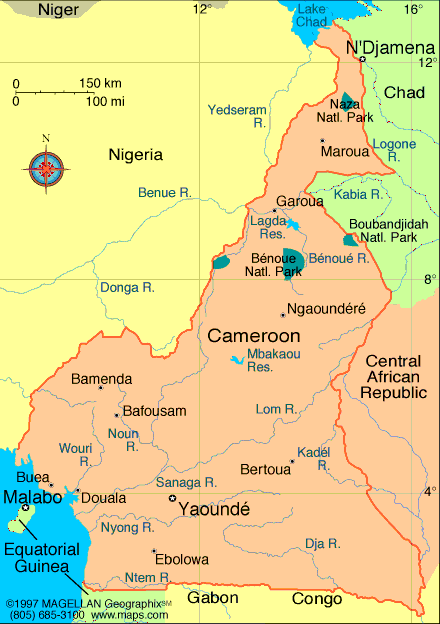
Cameroon is located in Central Africa, bordered by Nigeria to the west, Chad to the northeast, the Central African Republic to the east, and Equatorial Guinea, Gabon, and the Republic of the Congo to the south. Its position at the crossroads of West and Central Africa gives it a diverse landscape often called “Africa in miniature.”
The country features a wide range of terrains, from coastal plains along the Atlantic Ocean to dense tropical rainforests, rolling savannas, and the mountains of the west. Mount Cameroon, an active volcano rising to 4,040 meters, is the highest point in the country and dominates the southwestern region. Rivers such as the Sanaga and Benue flow through Cameroon, supporting agriculture, settlements, and hydroelectric power.
The climate is varied. Coastal areas are hot and humid with heavy rainfall, the southern rainforest region is wet year-round, the central plateau enjoys a milder climate, and the northern regions are semi-arid with savanna vegetation. This diversity allows for rich biodiversity, including wildlife reserves, national parks, and a mix of tropical, savanna, and montane ecosystems.
Major Cities
Facts About Cameroon
-
Bilingual Country: Cameroon is officially bilingual, with French and English as its official languages, reflecting its colonial history and diverse population.
-
Africa in Miniature: The country is often called “Africa in miniature” because it contains nearly every type of climate and landscape found on the continent, from coastal beaches to rainforests, mountains, and savannas.
-
Highest Peak: Mount Cameroon is an active volcano and the tallest mountain in West and Central Africa, rising to 4,040 meters above sea level.
-
Cultural Diversity: Cameroon is home to over 250 ethnic groups, each with its own languages, traditions, and cultural heritage.
-
Rich Wildlife: The country boasts diverse wildlife, including gorillas, chimpanzees, elephants, and exotic birds, protected in national parks such as Waza and Korup..
-
Agricultural Production: Cameroon produces important crops like cocoa, coffee, bananas, and cotton, supporting a key part of the national economy.
-
Tourist Attractions: Cameroon offers a variety of attractions, from the lush rainforests of Korup National Park and the volcanic slopes of Mount Cameroon to the beaches of Limbe, the Bafut Royal Palace, and the bustling cultural markets of Douala and Yaoundé, drawing visitors year-round.
People also ask…
What languages are used in Cameroon?
Cameroon is officially bilingual, with French and English as its official languages. In addition, the country is home to over 250 local languages and dialects, reflecting its rich ethnic and cultural diversity.
What is traditional Cameroonian cuisine?
Cameroonian cuisine is diverse and flavorful, influenced by Indigenous, French, and West African traditions. Popular dishes include Ndolé (a stew made with bitter leaves, peanuts, and meat or fish), Eru (vegetable and meat soup), Fufu (a starchy side made from cassava or plantain), and fresh seafood along the coastal regions. Spices, peanuts, and tropical fruits are commonly used in meals.
What are the top tourist attractions in Cameroon?
Cameroon offers a variety of natural and cultural attractions, including Mount Cameroon, the rainforests of Korup National Park, the beaches of Limbe, the historic Bafut Royal Palace, and the vibrant markets and architecture of Douala and Yaoundé. Visitors can enjoy hiking, wildlife viewing, cultural festivals, and beach activities year-round.
|
|
 |


