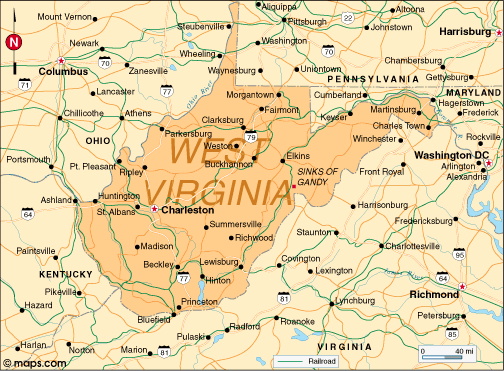
West Virginia Profile
Nestled in the heart of Appalachia, West Virginia covers roughly 24,000 square miles and is known for its rugged ridges, winding rivers, and unmistakable small-town charm. Often called the “Mountain State,” it offers a landscape shaped by the Appalachian Mountains, dense forests, and scenic valleys that feel both timeless and welcoming.
The state capital is Charleston, and major cities shown on the map include Huntington, Morgantown, Parkersburg, and Wheeling. Home to approximately 1.8 million residents, West Virginia blends natural beauty with a strong sense of community and history. Its terrain is crossed by important waterways such as the Ohio and Kanawha Rivers, which have long influenced settlement, industry, and daily life across the state.
Learn more about the state in our detailed guide.
History of West Virginia
West Virginia’s history is deeply tied to its rugged terrain and frontier heritage. Originally part of Virginia, the region was settled in the 18th century by European immigrants drawn to its fertile valleys, abundant forests, and waterways. Its mountainous landscape fostered small, self-reliant communities with a strong sense of independence.
During the Civil War, economic, cultural, and political differences between western and eastern Virginia led the western counties to break away and remain loyal to the Union. On June 20, 1863, West Virginia was admitted to the United States as the 35th state, becoming the only state formed by separating from a Confederate state.
In the years that followed, the state’s economy was shaped by coal mining, timber, and railroads, while its communities maintained a strong sense of Appalachian identity and resilience that continues to define West Virginia today.
Geography of West Virginia
West Virginia is located in the Appalachian region of the eastern United States, covering roughly 24,000 square miles. It is bordered by Pennsylvania to the north, Maryland and Virginia to the east, Kentucky to the southwest, and Ohio to the northwest.
The state is famously mountainous, with the Appalachian Mountains dominating its terrain and creating rugged ridges, narrow valleys, and dense forests. Important rivers, such as the Ohio, Kanawha, and Potomac, carve through the landscape and have historically supported transportation, industry, and settlement.
The region experiences a continental climate in the north and a subtropical climate in the south, with four distinct seasons. Summers are generally warm and humid, while winters can be cold and snowy, especially in higher elevations.
These geographic and climatic features give West Virginia its unique natural beauty, supporting diverse plant and animal life and making it a popular destination for outdoor recreation such as hiking, fishing, and white-water rafting.
Major Cities
-
Charleston
-
Wheeling
-
Hinton
Interesting Facts about West Virginia
-
Mountainous terrain: West Virginia is famously called the Mountain State, with over 75% of its land covered by the Appalachian Mountains.
-
Leading coal producer: Historically, the state has been one of the nation’s top coal-producing regions, shaping its economy and culture.
-
Unique statehood: West Virginia is the only state formed by separating from a Confederate state during the Civil War in 1863.
-
River networks: Major waterways like the Ohio, Kanawha, and Monongahela Rivers have been vital for commerce, transport, and recreation.
-
Cultural hubs: Cities like Charleston and Morgantown offer museums, theaters, and historic landmarks, reflecting the state’s vibrant history.
-
Wildlife and nature: Dense forests and mountains support deer, black bears, and a wide variety of birds, making it perfect for nature lovers.
People also ask…
What is West Virginia famous for?
West Virginia is known as the Mountain State because of its rugged Appalachian Mountains. It’s famous for outdoor adventures like white-water rafting, hiking, and rock climbing, as well as its coal mining history, Appalachian culture, and folk music traditions.
How did West Virginia become a state?
During the Civil War, the western counties of Virginia disagreed with Virginia’s decision to join the Confederacy. These counties broke away and formed their own state, becoming West Virginia in 1863, the only state created by separating from a Confederate state.
What is traditional West Virginia cuisine like?
West Virginia cuisine is hearty, rustic, and influenced by Appalachian traditions. Popular dishes include pepperoni rolls (soft bread filled with pepperoni), biscuits and gravy, cornbread, bean soup, and homemade preserves. Local game, river fish, and seasonal produce also play a big role, and the state is known for its comfort food that reflects its rural, mountainous roots.
|
|
 |


