Fiji is a stunning island nation located in the heart of the South Pacific Ocean, known for its crystal-clear waters, lush tropical landscapes, and rich cultural heritage. Home to approximately 933,154 people, Fiji comprises more than 300 islands scattered across a vast ocean area.
The nation’s physical layout plays a vital role in shaping its climate, biodiversity, transportation networks, and regional development. From rugged mountainous interiors to fertile coastal plains and remote outer islands, the country’s geography influences settlement patterns, agriculture, and tourism. Understanding Fiji’s map, regions, and key geographic features offers valuable insight into how this Pacific nation functions today, both culturally and economically.
For more details on the country’s profile, click here.
Fiji Profile
Fiji’s history is as rich and diverse as its islands. The first settlers arrived over 3,000 years ago, primarily Austronesian and Melanesian peoples, who established vibrant communities across the archipelago. These early societies developed unique customs, languages, and social structures.
Europeans first came into contact with Fiji in the 1600s, but it wasn’t until the 1800s that missionaries, traders, and settlers began arriving in larger numbers. In 1874, Fiji became a British colony, bringing big changes to how the islands were governed, how trade was conducted, and how infrastructure was developed. During this period, sugar plantations expanded across the islands, and many workers from India were brought in under indentured labor programs, shaping Fiji’s cultural diversity and leaving a lasting impact on its population.
The country achieved independence in 1970, transitioning into a sovereign nation while retaining strong regional and international ties. Today, its history is reflected in the cultural diversity, traditions, and provincial divisions seen on modern maps of Fiji, offering a unique glimpse into how past events have shaped the islands’ social and political life.
Geography of Fiji
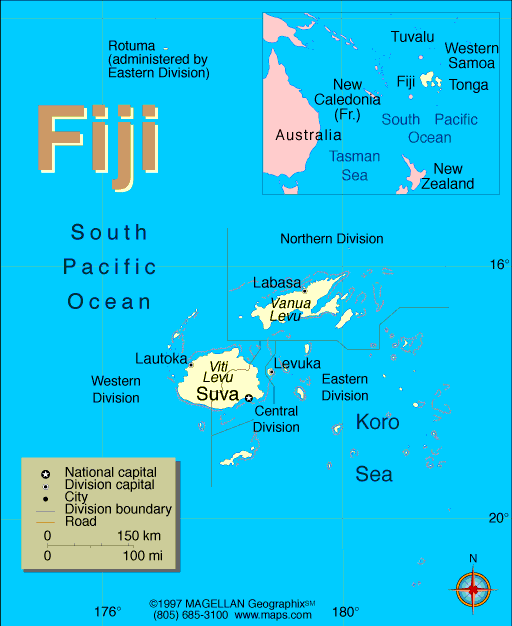
Fiji is a breathtaking archipelago in the South Pacific, covering approximately 18,300 square kilometers of land and over 1.3 million square kilometers of ocean territory. The nation comprises more than 300 islands, with Viti Levu and Vanua Levu being the largest and most populous. Fiji is located about 2,000 kilometers northeast of New Zealand and is surrounded by the Pacific Ocean, with no land borders connecting it to other countries.
The islands feature a mix of volcanic mountains, rolling hills, and fertile plains, with lush tropical rainforests. Coastal regions are lined with white sand beaches and vibrant coral reefs, making Fiji famous for its natural beauty and rich marine biodiversity. The climate is tropical, with warm temperatures year-round and a distinct wet season, which influences agriculture, ecosystems, and daily life.
Fiji’s geography shapes settlement patterns, transportation routes, and economic activity. Its volcanic origins and coral formations create a variety of landscapes, from dense forests and rivers to lagoons and reefs, offering a glimpse into the country’s natural diversity.
Major Cities
- Suva
- Nadi
- Lautoka
- Labasa
- Sigatoka
- Savusavu
- Levuka
- Ba
- Rakiraki
Interesting Facts
- Land of Coral Reefs: Fiji is home to some of the world’s most vibrant coral reefs, earning it the nickname “Soft Coral Capital of the World.”
- Island Nation: Fiji consists of over 300 islands, but only around 110 are permanently inhabited.
- Cultural Melting Pot: The official languages are English, Fijian, and Hindi, reflecting its diverse population.
- Rugby Powerhouse: Rugby is Fiji’s most popular sport, with the national team winning gold at the 2016 and 2020 Olympics in Rugby Sevens.
- No Land Borders: Fiji is surrounded by the Pacific Ocean, with no neighboring land borders.
- Volcanic Beauty: Fiji’s islands are of volcanic and coral origin, creating lush mountains, fertile plains, and stunning beaches.
- Historic Towns: Levuka, on Ovalau Island, was Fiji’s first capital and is now a UNESCO World Heritage site.
People also ask…
What is the traditional cuisine of Fiji?
Fijian cuisine features fresh, local ingredients like coconut, root vegetables, seafood, and tropical fruits. Popular dishes include kokoda (marinated raw fish in coconut milk), lovo (meat and vegetables cooked in an underground oven), and taro and cassava as staple sides. Meals often reflect a blend of Indigenous Fijian and Indian influences.
What is the capital city of Fiji?
The capital of Fiji is Suva, located on the southeast coast of Viti Levu. Suva is the political, administrative, and cultural hub of the country.
What languages are spoken in Fiji?
Fiji has three official languages: English, Fijian, and Hindi, reflecting its multicultural population and colonial history.
More Geographic Information
|
|
 |


