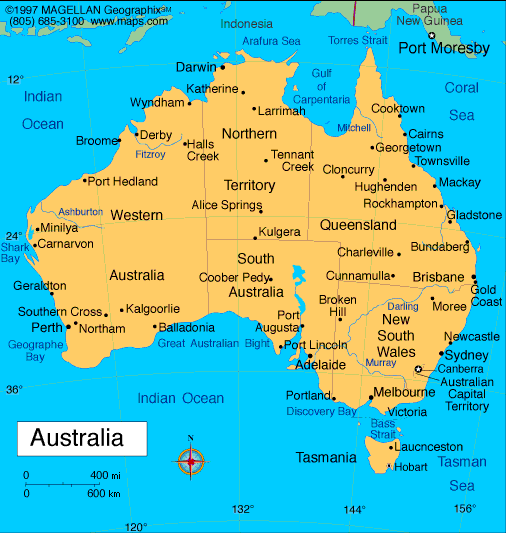
Australia, also known as the Commonwealth of Australia, is the largest country in Oceania. The Australian continent is surrounded by the south Pacific Ocean on the east and the Indian Ocean on the west. It is made up of six states and two territories, including the Australian Capital Territory and the Northern Territory, with a federal parliamentary system of government. The capital city of Australia is Canberra.
It has a diverse population of over 25 million people, with English as the official language, and a rich indigenous history. Australia's economy is largely driven by the service sector, with industries such as mining, agriculture, and tourism also playing important roles. The country is home to many unique animal species, including kangaroos, koalas, and wombats. Overall, Australia is a vibrant and dynamic country with much to offer, including the Great Barrier Reef, Uluru, and the Outback.
If you want to discover more in-depth information on Australia as a continent, check out our Australia Profile!
Test your continent knowledge with our Australia geography quiz, Australian Animals!
History of Australia
Australia has a rich history dating back over 60,000 years, with the indigenous Aboriginal people being the original inhabitants of the land. In 1770, the British navigator Captain James Cook claimed the eastern part of Australia for Great Britain. The country became a federation in 1901, with six colonies coming together to form the Commonwealth of Australia.
Today, Australia is a federation, operating under the authority of a constitutional monarchy and federal parliamentary democracy, where the British monarch is the head of state. The nation has matured into a wealthy, multicultural country with more than 25 million people. It is an economic force with a high standard of living, exceptional educational and healthcare systems, and modern urban centers such as Sydney, Melbourne and Brisbane.
Geography of Australia
Australia has a land area of over 7.6 million square kilometers, making it the sixth-largest country in the world. The country is home to some of the world's most breathtaking natural wonders, including Uluru, the Great Barrier Reef, and the Great Dividing Range. The country is also home to many national parks, mountain ranges, and coral reefs. Australia is divided into six states and two territories, including New South Wales, Victoria, Queensland, South Australia, Western Australia, Tasmania, the Australian Capital Territory, and the Northern Territory.
Major Cities
Tourist Attractions in Australia
Australia is a popular tourist destination, offering visitors a wide range of attractions to explore. Some of the must-visit places in Australia include Sydney, Melbourne, Brisbane, Perth, Cairns, Adelaide, and Hobart. Visitors can also explore the Outback, see kangaroos in the wild, or enjoy the beaches of the Gold Coast. A visit to the Great Barrier Reef is a must-do for anyone visiting Australia, and major cities like Sydney, Melbourne, Brisbane, Perth, Adelaide, and Hobart shouldn’t be missed.
Natural Wonders and National Parks
Australia boasts some of the most iconic natural sites and protected areas in the world:
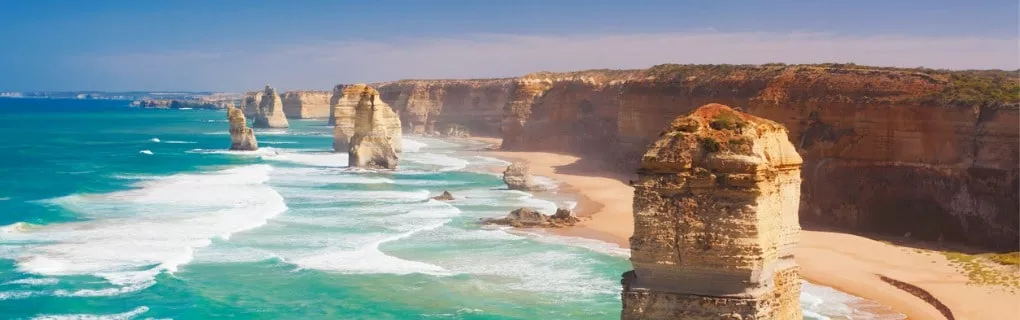
- The Twelve Apostles: Stunning limestone stacks along the Great Ocean Road in Victoria.
- Kakadu National Park: A World Heritage-listed site known for its Aboriginal rock art and diverse ecosystems.
- Daintree Rainforest: One of the oldest tropical rainforests on Earth, located in Queensland.
- Blue Mountains: Famous for dramatic cliffs, eucalyptus forests, and the Three Sisters rock formation.
- The Outback: Vast, remote regions with unique desert landscapes and Indigenous cultural heritage.
Fun Facts About Australia
- Distinctive Fauna: Australia has wonderful forms of plants and animals – over 60,000 species - not found anywhere else in the world. Many amongst these are kangaroos, koalas, wombats and platypuses.
- Great Barrier Reef: The world’s largest coral reef system is more than 2,300 kilometers long and can be seen from outer space; it lies just off the coast of Queensland.
- Uluru: A large sandstone monolith known as Ayers Rock, Uluru is a sacred site for the Anangu people as well as an UNESCO World Heritage-registered location.
- Diverse Landscapes: Australia can claim deserts in the Outback, rainforests in Queensland, and snow-covered mountains in Victoria – it has sights for everyone.
- Indigenous Heritage: Australian Aborigines have lived on the continent for more than 60,000 years and are one of the world’s oldest continuous cultures.
People Also Ask...
If you're inspecting continent maps of Australia, you may have some queries about the region. Here are some of the most frequently asked questions, along with their answers.
Is Australia Bigger Than the U.S.?
Australia is not bigger than the United States in terms of land area. The United States is the third largest country in the world by land area, covering approximately 9.8 million square kilometers. In comparison, Australia is the sixth largest country in the world by land area, covering approximately 7.7 million square kilometers. However, Australia does have the largest coral reef system in the world, the Great Barrier Reef, which is over 2,300 kilometers long.
What Are the 8 States of Australia?
Australia has six states and two territories. The six states are New South Wales, Queensland, South Australia, Tasmania, Victoria, and Western Australia. The two territories are the Australian Capital Territory and the Northern Territory.
Each state and territory has its own capital city, and they are all governed by a parliamentary system. Australia's government is based on the British parliamentary system, with a constitutional monarchy and a federal system of government.
What Are the 3 Closest Countries to Australia?
The three closest countries to Australia are Indonesia, Papua New Guinea, and East Timor. Indonesia is the closest, with a distance of only 5.8 km between the two countries at their closest points. Papua New Guinea is located to the north of Australia, and East Timor is located to the northwest. The proximity of these countries has led to strong cultural and economic ties between them and Australia.
What Countries Border Australia?
Australia is surrounded by the Pacific Ocean to the east, the Indian Ocean to the west, and the Southern Ocean to the south. The closest countries to Australia are Indonesia, Papua New Guinea, and East Timor. To the south is New Zealand. While Australia does not share land borders with any other country, it does have maritime borders with East Timor, Indonesia, and Papua New Guinea.
What is the Capital of Australia?
Canberra is the capital city of Australia. It is the political and administrative capital, with the Parliament House and government offices.
What is the Main Language Spoken in Australia?
The official language of Australia is English, and since its population also comprises people from around the world, Mandarin, Italian, Greek, Arabic and different native languages are spoken.
What is the Population of Australia?
Australia’s population is more than 27 million people, and most of them live in cities on the east and southeast coasts.
What is the official currency of Australia?
The Australian Dollar (AUD) is the official currency of Australia, which is used in transactions all over the country.
What is the Climate in Australia?
Climate Australia has an extremely diverse climate: tropical in the north, arid in the deserts (Outback), temperate in the south. Summers can be very warm, particularly in inland areas. An exception to this is the coast, which experiences cool temperatures.
What are Some of the Most Notable Landmarks in Australia?
Australia is known for its many natural wonders, such as the Sydney Opera House, Great Barrier Reef and Uluru.
Is Australia Safe to Visit?
Australia is regarded as a relatively safe destination for tourists, especially in the main cities and tourist areas where crime rates are low. Those visiting should also take regular precautions and be vigilant of natural dangers such as strong sea currents, wildlife and dangerous weather.

Australia Information
Encyclopedia: Australia
In-depth entries covering: Economy, Government, History, Land & People: U.S. State Department Notes: Australia
More on Australia: Great Barrier Reef · Tasmania ·
Related to Australia: Australian External Territories
More: Countries of the World · World Geography · World Statistics · Flags
Related Content
- Distance Calculator
- Latitude/Logitude Search
- Time Zones
- World's 50 Largest Cities
- Dependencies and Territories
- Highest Mountains
- Oceans & Seas
- Largest Islands
- World Capitals
- Languages by Countries
- Ethnicity and Race by Countries
- Comparative Country Statistics
- Most Populous Countries
- Area and Population of Countries


