The United Kingdom is a sovereign nation located in Europe. It is composed of four countries: England, Scotland, Wales, and Northern Ireland. These countries have a rich history and cultural heritage.
The U.K. operates as a constitutional monarchy with a parliamentary democracy. The monarchy has mainly a ceremonial function, whereas the Prime Minister leads the government. The nation boasts a varied populace, comprising various ethnicities and faiths.
The country is renowned for its extensive history - it has been a worldwide leader in politics, economics, science and culture. It was previously the hub of a large empire and still holds significant importance globally. The most famous attractions are the Big Ben, Buckingham Palace, and Stonehenge.
If you want to discover more in-depth information on the United Kingdom of Great Britain and Northern Ireland as a country, check out our United Kingdom Profile!
Plus, test your cultural U.K. country knowledge with our quiz, U.K. Remembrance Day: Traditions & History!
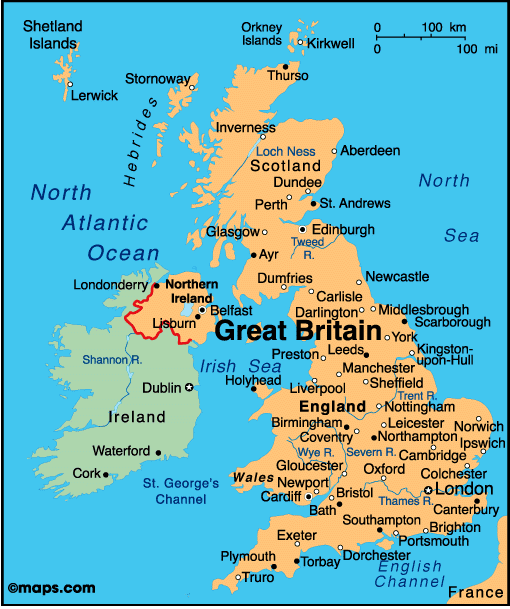
See also: Shetland Islands map
History of the United Kingdom
The United Kingdom boasts a captivating and extensive history that stretches back thousands of years. This island nation has been influenced by numerous cultures and civilizations that have all have contributed to the country's identity.
For example, the Romans brought with them their advanced engineering and architectural techniques, which can still be seen in some of the U.K.'s most iconic buildings. The Vikings, known for their seafaring prowess, left a lasting impact on the culture and language of the region. And the Normans, with their military conquests, influenced everything from the country's language to its legal system.
Although it is relatively small compared to some other powerful nations, the U.K. has had an important impact on world history. At its peak, the British Empire covered the world, with territories and colonies in every continent. This worldwide influence contributed to the formation of the world map and the locations we inhabit today, with impact on various aspects from politics to trade to culture.
Geography of the United Kingdom
The United Kingdom is situated on the Western Europe map and is surrounded by the Atlantic Ocean, the North Sea, the Irish Sea, and the English Channel. The closest countries on the map of Europe include France, Denmark, and Norway, among others. The country is made up of two main islands: Great Britain and Ireland, though only Northern Ireland is part of the political map of the United Kingdom, and the Republic of Ireland is independent.
The largest city is London, which is also the capital of England, nestled on the banks of the Thames. Other major cities include Birmingham, Edinburgh, Manchester, Liverpool, Glasgow, Cardiff, and Belfast. The country is known for its diverse landscapes, ranging from the rugged mountains of Scotland and Wales to the rolling hills of England and the picturesque coastline of the British Isles. The country is also home to several groups of islands, including the Shetland Islands, Orkney, and the Hebrides.
The United Kingdom has a moderate climate, with mild winters and cool summers. The country's weather is influenced by the Atlantic Ocean and the Gulf Stream, which brings warm water from the Gulf of Mexico and the Caribbean.
Tourist Attractions in the United Kingdom
The United Kingdom is a favored travel spot, featuring numerous famous landmarks, cultural sites, and natural marvels. The nation's vibrant cultural legacy is reflected in various aspects, including its architecture, literature, art, and music. From the Gothic spires of Oxford University to the punk rock scene of London, the physical map of the United Kingdom has a little something for everyone, making it a fascinating and endlessly intriguing place to explore, including:
- London is one of the world's most popular cities, with a rich history and diverse culture. Some of the top attractions include the Tower of London, Buckingham Palace, the British Museum, and the London Eye.
- Edinburgh is the Scottish capital and is known for its stunning architecture, vibrant arts scene, and historic landmarks. Some of the top attractions include Edinburgh Castle, the Royal Mile, and the National Museum of Scotland. From here, visitors can venture into the Scottish Highlands and climb Ben Nevis, the highest point in the U.K.
- Cardiff is the Welsh capital and is a vibrant city with a rich history and culture. Some of the top attractions include Cardiff Castle, the National Museum Cardiff, and the Millennium Stadium.
- Belfast is the capital of Northern Ireland, off the coast of the island of Great Britain, and is a city steeped in history and culture. Some of the top attractions include Titanic Belfast, the Ulster Museum, and the Crumlin Road Gaol.
- Manchester is a city in the northwest of England and is known for its industrial heritage, vibrant music scene, and world-class football clubs. Some of the top attractions include the Manchester Art Gallery, the National Football Museum, and the Science and Industry Museum.
- Sheffield is a city in the north of England known for its industrial heritage, world-class universities, and vibrant music scene. It is home to the Sheffield Steel, a famous brand of cutlery, and has a rich sporting history.
- Liverpool is a city in the northwest of England and is famous for being the birthplace of The Beatles. Some of the top attractions include the Albert Dock, the Beatles Story, and the Liverpool Cathedral.
- Glasgow is the largest city in Scotland and is known for its rich cultural heritage and vibrant nightlife. Some of the top attractions include the Kelvingrove Art Gallery and Museum, the Glasgow Science Centre, and the Riverside Museum.
- Bristol is a city in the southwest of England and is known for its maritime history and vibrant arts scene. Some of the top attractions include the Clifton Suspension Bridge, the Bristol Museum and Art Gallery, and the S.S. Great Britain.
- Exeter is a historic city located in the southwest of England. It is known for its stunning cathedral, Roman walls, and vibrant arts scene.
- Leeds is a city in the north of England and is known for its industrial heritage and vibrant nightlife. Some of the top attractions include the Royal Armouries Museum, the Leeds Art Gallery, and the Kirkstall Abbey.
- Swansea is a coastal city in Wales and is known for its stunning beaches and rugged coastline. Some of the top attractions include Swansea Bay, the Dylan Thomas Centre, and the National Waterfront Museum.
- The Isle of Man is a self-governing British Crown dependency located in the Irish Sea. It has a population of around 85,000 and is known for its stunning scenery and unique culture.
People Also Ask…
If you're inspecting a map of UK geography, you may have some queries about the region. Here are some of the most frequently asked questions, along with their answers.
What Are the 4 States in England?
The United Kingdom is composed of four countries: England, Scotland, Wales, and Northern Ireland. England is a country in the southern part of the United Kingdom, and is divided into nine regions.
Is Great Britain the Same as the UK?
Great Britain is not the same as the United Kingdom but is a part of it. Great Britain refers to the island that includes England, Scotland, and Wales. The United Kingdom includes those three countries as well as Northern Ireland.
Is Scotland a Part of the British Isles?
Yes, Scotland is a part of the British Isles. The British Isles is a geographical term that refers to a group of islands off the north-western coast of Europe, which includes Great Britain, Ireland, and many smaller islands, including the Scottish Isles, the Hebrides, Orkney, and the Shetland Islands, among others.
What is the Currency in the UK?
The currency used in the United Kingdom is the British pound (£).
What Language is Spoken in the UK?
The official language in the UK is English. There are also Welsh, Scots Gaelic, and Irish spoken in specific areas.
Is the UK Part of the European Union?
No. Following the Brexit referendum, the United Kingdom left the European Union on January 31, 2020.
As of January 1, 2021, the UK has functioned independently from the EU, establishing its own rules for trade, immigration, and regulatory policies. The UK still continues to uphold several agreements with the EU concerning trade, security, and travel.
What is the Most Popular Sport in the UK?
Football (soccer) is the national sport of the UK. It is the country's most beloved and frequently watched sport, boasting a rich legacy dating back to the 19th-century roots of the contemporary game.
Clubs such as Manchester United, Liverpool, and Arsenal have a large international fanbase. The Premier League is considered one of the most competitive and widely watched football leagues across the globe.
What is the Food in the UK?
The cuisine in the UK is varied, featuring a blend of classic meals and global influences. Some classic British dishes are:
Fish and Chips – A traditional meal of battered and fried fish (typically cod or haddock) accompanied by thick-cut fries.
Full English Breakfast – A big breakfast, made up of eggs, bacon, sausage, baked beans, grilled tomatoes, mushrooms, black pudding, and toast.
Sunday Roast – Served on Sundays, it is a traditional meal that features roast beef, lamb, or chicken, accompanied by roasted vegetables, Yorkshire pudding, and gravy.
What is the Weather in the UK?
The UK experiences a temperate maritime climate, marked by gentle temperatures, reasonable rainfall, and regular cloudiness year-round.
What is the Population in the UK?
In 2025, the estimated population of the United Kingdom is above 69 million. This indicates a consistent rise from the last year, primarily driven by migration and natural expansion. Forecasts indicate the population may hit 72.5 million by 2032 if present trends persist.
The UK has an ethnically varied population, where most individuals identify as White. Additional notable ethnic groups consist of Asians, especially those of Indian, Pakistani, and Bangladeshi heritage, followed by Black or African people.
|
|
 |


