Portugal is a country of stunning beauty and rich culture, from the sun-soaked beaches of the Algarve to the rolling vineyards of the Douro Valley and the historic streets of Lisbon. As one of Europe’s most captivating destinations, it offers everything from world-class wine and seafood to medieval castles, vibrant cities, and scenic coastal beauty.
Home to over 10 million people, Portugal blends European elegance with a warm, laid-back lifestyle. The capital, Lisbon, enchants visitors with its colorful neighborhoods, historic trams, and lively nightlife, while Porto charms with its riverside streets and famous port wine. Beyond the cities, travelers can explore the dramatic cliffs of the Algarve, hike the lush mountains of Serra da Estrela, or wander the cobbled streets of Sintra, dotted with palaces and castles.
Portugal promises an unforgettable mix of adventure, culture, and history. It’s a destination that delights the senses, one pastel de nata at a time.
Test your European geography skills with our European Geography Quiz.
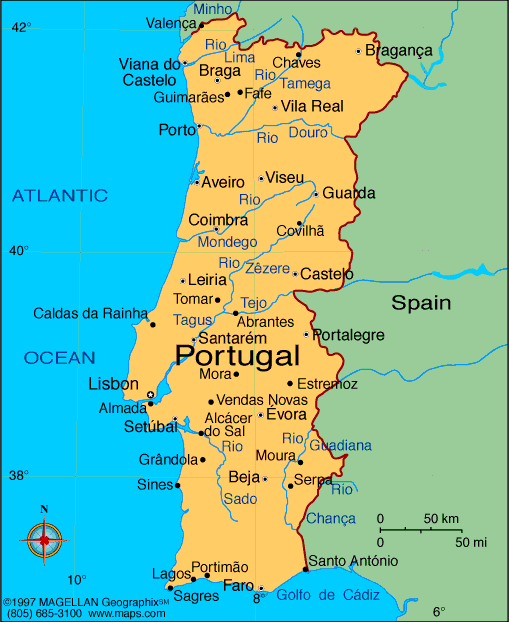
Portugal Profile
History of Portugal
Portugal’s history stretches back thousands of years, shaped by diverse peoples and cultures. Early settlers, including the Celtic tribes and Iberian communities, lived in the region long before the arrival of the Romans, who left a lasting legacy in architecture, language, and law. After the fall of the Roman Empire, Germanic tribes and later the Moors influenced the land, introducing new farming techniques, art, and knowledge.
In 1143, Portugal emerged as an independent kingdom under King Afonso I, and over the next centuries, the nation solidified its borders and identity. The 15th and 16th centuries marked Portugal’s Golden Age of Exploration, when explorers like Vasco da Gama and Ferdinand Magellan opened sea routes to Africa, India, and the Americas, establishing Portugal as a global maritime power.
Despite periods of political turmoil, including a brief union with Spain and internal revolts, Portugal maintained its culture and resilience. The 20th century saw the fall of the monarchy, the rise and fall of dictatorships, and finally, the 1974 Carnation Revolution, which restored democracy and modernized the country.
Today, Portugal honors its rich historical legacy, blending ancient traditions with modern innovation, and stands as a nation celebrated for its maritime heritage, cultural achievements, and enduring charm.
Geography of Portugal
Portugal sits on the Iberian Peninsula in southwestern Europe, bordered by Spain to the east and north and the Atlantic Ocean to the west and south. Despite being a relatively small country, Portugal boasts a remarkable diversity of landscapes. Its coastline stretches over 800 kilometers, featuring golden beaches, dramatic cliffs, and charming seaside towns, while inland regions reveal rolling plains, fertile valleys, and rugged mountains.
The country is divided into two main regions: Continental Portugal, which includes major cities like Lisbon and Porto, and the autonomous islands of Madeira and the Azores, known for their volcanic landscapes, lush greenery, and unique ecosystems. The northern region is mountainous, with the Serra da Estrela hosting Portugal’s highest peak, while the central and southern regions feature fertile plains, vineyards, and the sun-drenched beaches of the Algarve.
Portugal’s climate is equally varied: the north is cooler and wetter, the central region enjoys temperate conditions, and the south, including the Algarve, is warm and Mediterranean. This diversity supports a rich variety of flora and fauna, from cork oak forests and olive groves to seabirds and marine life along the coast.
Major Cities
Interesting Facts about Portugal
- Oldest nation in Europe: Portugal has had the same defined borders since 1139, making it one of the oldest countries in Europe.
- Maritime explorers: Portugal led the Age of Discovery, with explorers like Vasco da Gama opening sea routes to India and beyond.
- Fado music: This soulful, melancholic music style is uniquely Portuguese and recognized by UNESCO as Intangible Cultural Heritage.
- World-class wine: Portugal is famous for Port wine, Vinho Verde, and other exceptional regional wines.
- Lisbon’s trams: Iconic yellow trams navigate the city’s narrow, hilly streets, a symbol of Lisbon’s charm.
- Cork production: Portugal is the world’s largest producer of cork, supplying much of the global market.
- Diverse landscapes: From the golden beaches of the Algarve to the mountains of Serra da Estrela and volcanic islands of Madeira and the Azores.
- Seafood paradise: Portugal is famous for its fresh seafood, particularly dishes like bacalhau (salted cod) and grilled sardines.
People also ask…
What is the Population of Portugal?
Portugal has a population of approximately 10 million people, with the largest concentrations in Lisbon, Porto, and surrounding urban areas.
What is the Official Language of Portugal?
The official language is Portuguese, which is also spoken in several countries worldwide, including Brazil, Angola, and Mozambique.
What is the Official Currency of Portugal?
Answer: Portugal uses the Euro (€) as its official currency, like most countries in the European Union.
What are the top tourist attractions in Portugal?
Popular tourist spots include Lisbon and its historic neighborhoods, the Douro Valley wine region, the beaches of the Algarve, the medieval town of Sintra, and the volcanic islands of Madeira and the Azores.
|
|
 |


