Known as the Beaver State, Oregon lies in the heart of the Pacific Northwest — a land where misty forests meet rugged coastlines, and snow-capped peaks rise above fertile valleys. From the creative energy of Portland to the serene, mirror-like waters of Crater Lake, Oregon, captivates visitors with its striking natural beauty and rich cultural heritage.
Home to approximately 4,291,090 people as of 2025, Oregon offers a dynamic mix of vibrant urban centers, charming small towns, and vast wilderness areas. From the rugged Pacific coastline and the fertile Willamette Valley to the volcanic peaks of the Cascade Range and the sun-drenched expanses of the high desert, Oregon stands among the most geographically and ecologically diverse states in America.
With a strong economy, a deep respect for the environment, and a pioneering spirit, Oregon continues to embody the essence of the Pacific Northwest.
Discover more about Oregon’s geography, history, and key facts by exploring here.
Oregon Profile
History of Oregon
Long before European explorers arrived, Oregon was home to many Native American tribes, including the Chinook and Klamath, with the Nez Perce living in parts of northeastern Oregon. The region entered recorded history in 1805, when Lewis and Clark reached the Pacific Coast during their famous expedition. In the mid-1800s, thousands of settlers made the long journey west along the Oregon Trail, drawn by the promise of fertile land and new opportunities.
Oregon became the 33rd state in the United States on February 14, 1859. Its early economy centered on fur trading, logging, and farming, and over time it expanded to include technology, manufacturing, and renewable energy.
Today, Oregon is celebrated for its spirit of independence, innovation, and strong commitment to the environment.
Geography of Oregon
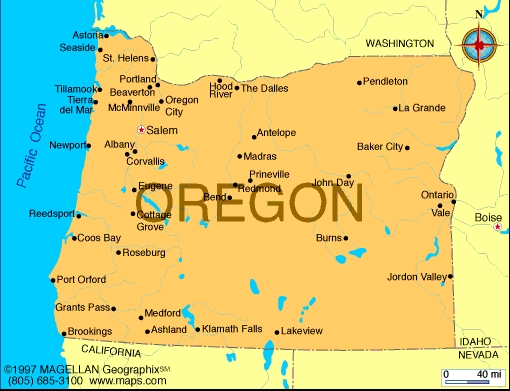
Oregon covers about 98,379 square miles (254,800 km²), making it the ninth-largest state in the United States. It is bordered by Washington to the north, Idaho to the east, Nevada and California to the south, and the Pacific Ocean to the west. This central location gives the state a remarkable mix of landscapes, from rugged coastlines and lush valleys to volcanic mountains and arid high deserts.
The terrain is incredibly diverse. Along the Pacific Coast and the Coast Range, you’ll find dramatic cliffs, sandy beaches, and dense forests. The Willamette Valley in western Oregon is a fertile heartland, home to much of the state’s population, thriving agriculture, and famous vineyards. Rising to the east, the Cascade Range dominates the skyline, with volcanic peaks like Mount Hood, the state’s highest point at 11,239 feet (3,425 m).
Beyond the mountains, eastern Oregon opens up into the Columbia Plateau and high desert, where sagebrush plains, deep canyons, and volcanic formations create a unique landscape. In Oregon, you can experience rainforest, mountains, and desert all within just a few hours’ drive.
The state’s climate mirrors its geographic variety. Western Oregon enjoys a mild, maritime climate with cool, wet winters and warm, dry summers, perfect for forests and vineyards. Eastern Oregon, lying in the rain shadow of the Cascades, is much drier, with semi-arid conditions, low humidity, and greater seasonal temperature swings. This mix of climates supports a wide range of ecosystems, from coastal rainforests and alpine meadows to desert basins, making Oregon one of the most ecologically diverse states in the country.
Major Cities
Tourist Attractions
Oregon is a treasure trove for travelers, offering a mix of natural beauty and cultural experiences. Visitors can explore Portland's vibrant food, coffee, and craft beer scene, or hike to breathtaking waterfalls in the Columbia River Gorge.
Nature lovers can visit Crater Lake National Park, ski and hike around Mount Hood, or enjoy the beaches and iconic Haystack Rock at Cannon Beach. The Willamette Valley invites wine enthusiasts to tour its famous vineyards, while Bend and Central Oregon offer endless outdoor adventures, including rafting, biking, and skiing.
Interesting Facts
- Diverse Landscapes: Oregon is one of the few U.S. states where you can experience coastal beaches, dense forests, high deserts, and volcanic mountains all within a few hours’ drive.
- Crater Lake: Home to Crater Lake National Park, the deepest lake in the United States at 1,949 feet, formed in the caldera of a collapsed volcano.
- Environmentally Conscious: Oregon is a leader in green energy and sustainability, with many cities promoting renewable energy, biking culture, and conservation initiatives.
- No Sales Tax: Oregon is one of only a few states in the U.S. with no state sales tax, making it popular for shopping.
- Wine and Agriculture: The Willamette Valley is famous for its Pinot Noir wines, and the state is a major producer of hazelnuts, pears, and berries.
- Outdoor Paradise: From skiing at Mount Hood to hiking in the Columbia River Gorge, Oregon offers endless outdoor recreational opportunities.
- Cultural Firsts: Portland is known for its quirky, creative culture, including being home to the first Nike headquarters, an extensive food truck scene, and the world-famous Portland Saturday Market.
- Historical Oregon Trail: The state was the end destination of the Oregon Trail, which thousands of settlers traveled in the mid-1800s in search of fertile land and opportunity.
- State Nickname: Oregon is known as the Beaver State, in honor of the animal that played a key role in the fur trade and the state’s early economy.
- Volcanic Peaks: Oregon has several active and dormant volcanoes in the Cascade Range, including Mount Hood, Mount Jefferson, and Mount Bachelor.
People also ask…
What is the official currency used in Oregon?
The official currency is the United States Dollar (USD, $), as Oregon is a U.S. state.
What type of cuisine is Oregon known for?
Oregon cuisine is diverse and emphasizes fresh, local ingredients, including seafood, farm-to-table dishes, fruits like berries and hazelnuts, and wine from the Willamette Valley. Iconic foods include Dungeness crab, marionberry pies, and artisan cheeses.
What is Oregon's state nickname and why?
Oregon is called the “Beaver State” because beavers were historically important in the fur trade, which played a major role in the state’s early economy.
|
|
 |


