Oklahoma is located in the south-central United States and shares borders with Texas, Kansas, Missouri, Arkansas, New Mexico, and Colorado. Known for its plains, tornadoes, Native American heritage, and energy production, Oklahoma features a unique mix of cultural history and geographical diversity.
The state spans over 69,000 square miles, with terrain that ranges from the forested hills in the east to arid plains in the west. Its central location and complex history have made it a crossroads of migration, trade, and settlement.
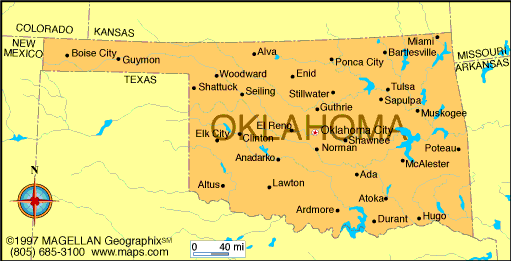
Oklahoma Profile
History of Oklahoma
Oklahoma’s land has long been home to Indigenous peoples, including the Cherokee, Chickasaw, Choctaw, Creek, and Seminole Nations, especially after the Indian Removal Act of 1830 forced many tribes to relocate there. The region was originally designated as Indian Territory.
In the late 1800s, the U.S. government opened parts of the land to non-Native settlers, famously triggering the 1889 Land Run. The state was officially admitted to the Union in 1907.
Since then, Oklahoma has developed into a hub for energy production, particularly oil and natural gas, while maintaining a strong cultural identity tied to Native American traditions and the American frontier.
Geography of Oklahoma
Oklahoma’s landscape is divided into 10 distinct ecoregions, including prairies, forests, mountains, and mesas. The state has more than 500 named creeks, rivers, and streams, with major ones like the Arkansas River and Red River playing a role in shaping its terrain and agriculture.
The state lies in what is known as Tornado Alley due to its frequent and sometimes severe tornado activity. Its weather patterns are influenced by its position between the humid East and dry Southwest.
Oklahoma also includes parts of the Ozark Plateau, the Ouachita Mountains in the southeast, and the high plains to the west. Agriculture, oil fields, and wind farms are common sights across the state.
Facts & Figures About Oklahoma
- Area: 69,899 square miles
- Population: Approximately 4 million
- Capital: Oklahoma City
- Time Zone: Central Time (CST)
- Statehood: Admitted in 1907 (46th state)
- Nickname: The Sooner State
- Major Rivers: Red River, Arkansas River, Canadian River
- Economy: Oil, natural gas, aviation, biotechnology, agriculture
- Highest Point: Black Mesa (4,973 feet)
Major Cities
- Oklahoma City – Capital and economic center
- Tulsa – Historic oil hub and cultural hotspot
- Norman – College town, home to the University of Oklahoma
- Lawton – Military and manufacturing presence
- Broken Arrow – Fast-growing suburb of Tulsa
- Edmond – Suburban city with educational and family-friendly appeal
People also ask…
What is Oklahoma known for?
Oklahoma is known for its Native American heritage, energy industry, severe weather, and the 1889 Land Run that helped shape its modern settlement patterns.
Is Oklahoma part of Tornado Alley?
Yes. Oklahoma is one of the states most frequently affected by tornadoes due to its central U.S. location and weather systems that create ideal storm conditions.
What is the capital of Oklahoma?
The capital of Oklahoma is Oklahoma City, which is also the largest city in the state.
|
|
 |


