Ohio Profile
Known as the Buckeye State, Ohio sits at the crossroads of the American Midwest, where vibrant cities meet rolling farmland and winding rivers. From the lively streets of Columbus and Cleveland to the tranquil shores of Lake Erie, Ohio blends urban energy with natural beauty and a rich sense of history.
Home to nearly 12 million people as of 2025, Ohio is a place of contrasts. Its western and central plains are fertile and productive, while the eastern hills and river valleys offer forests, lakes, and scenic landscapes. This diversity shapes the state’s economy, culture, and way of life.
With strong communities, a thriving economy, and deep historical roots - from Native American heritage to its role in industry and innovation - Ohio continues to be a state full of character, opportunity, and charm.
Explore more about Ohio with our detailed overview here.
History of Ohio
Ohio’s story begins long before European settlers arrived, with native inhabitants such as the Shawnee, Miami, and Iroquois shaping the land, building thriving communities, and creating rich cultural traditions that still influence the state today.
European exploration started in the 1600s, when French traders and missionaries traveled the Ohio River and the Great Lakes region. After the Seven Years’ War, the territory came under British control, setting the stage for future settlement by European colonists.
Following the American Revolution, the country became part of the Northwest Territory, attracting settlers moving westward for fertile land and access to rivers and trade routes. On March 1, 1803, Ohio officially became the 17th state of the United States.
During the 19th century, the nation grew rapidly as an industrial and transportation hub. Cities like Cleveland, Cincinnati, and Toledo became centers for manufacturing, shipping, and commerce, while the state played an important role in the Underground Railroad, helping enslaved people escape to freedom.
Today, Ohio balances its rich history with modern innovation, thriving communities, and a strong economy, making it a key cultural, political, and economic center in the American Midwest.
Geography of Ohio
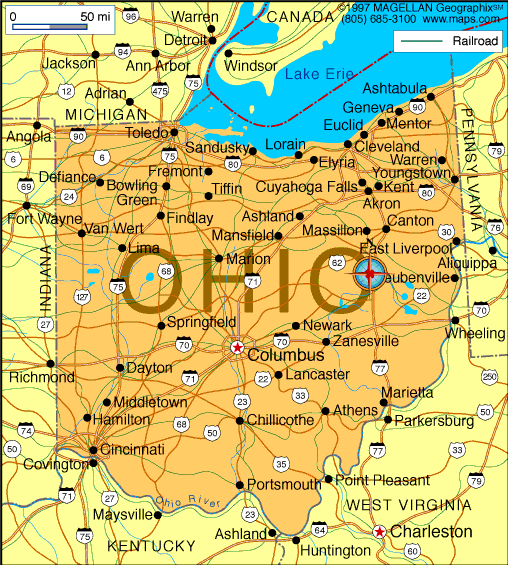
Located in the Midwestern United States, Ohio is bordered by Michigan to the north, Pennsylvania to the east, West Virginia and Kentucky to the south, Indiana to the west, and Lake Erie to the north. The state covers a mix of landscapes, including fertile farmland, rolling plains, river valleys, and forested hills. Northern Ohio is flatter, with rich farmland and industrial cities, while southern and eastern Ohio are hillier and include parts of the Appalachian foothills.
The area is home to many rivers, including the Ohio River along its southern border, and countless smaller streams that feed into Lake Erie and other waterways. The climate varies across the state, with cold, snowy winters and warm summers in the north, and milder winters and slightly hotter summers in the south. Lake Erie helps moderate temperatures in northern Ohio, often increasing precipitation and creating lake-effect snow in winter.
Ohio’s geography supports agriculture, urban development, and outdoor recreation, making it a state of contrasts, from bustling cities and industrial centers to peaceful forests and scenic river valleys.
Major cities
-
Hamilton
Facts about Ohio
-
The Buckeye State: Ohio is nicknamed after the Ohio buckeye tree, whose nuts were a symbol for early settlers.
-
Birthplace of Presidents: Ohio has produced eight U.S. presidents, earning it the nickname “Mother of Presidents.”
-
Scenic Waterways: Ohio is home to Cuyahoga Valley National Park, featuring rivers, waterfalls, and hiking trails, offering natural beauty similar to other famous scenic areas in the region.
-
Industrial Hub: Cities like Cleveland, Cincinnati, and Akron helped fuel America’s industrial revolution, particularly in steel, rubber, and manufacturing.
-
Cultural Festivals: Ohio hosts major events like the Cleveland International Film Festival, Columbus Arts Festival, and Cincinnati Music Festival.
-
Aviation History: Dayton, Ohio, is the birthplace of the Wright brothers and the world’s first powered flight.
-
Amusement Parks: Ohio is home to Cedar Point, one of the world’s largest and most famous amusement parks.
-
Football Legacy: Ohio is considered a hotbed for American football, from high school teams to professional teams like the Cleveland Browns and Cincinnati Bengals.
-
Underground Railroad: Ohio played a key role in the Underground Railroad, helping enslaved people escape to freedom in the 19th century.
People also ask…
What is Ohio known for?
Ohio is known as the Buckeye State and is famous for its role in U.S. history, industrial innovation, and sports. It’s also the birthplace of eight U.S. presidents and home to cities like Columbus, Cleveland, and Cincinnati.
What is the climate like in Ohio?
Ohio has a humid continental climate, with warm, humid summers and cold winters. Northern Ohio near Lake Erie experiences lake-effect snow, while southern Ohio tends to have milder winters and slightly warmer summers.
What are some popular attractions in Ohio?
Popular attractions include Cedar Point amusement park, Cuyahoga Valley National Park, the Rock & Roll Hall of Fame in Cleveland, and historical sites like Ohio’s Underground Railroad locations.
|
|
 |


