New Jersey is located in the northeastern part of the United States and is known for its eclectic urban area, beautiful nature, and historic cities. Sometimes called the “Garden State,” New Jersey is known for its beaches, mountains, urban areas and close proximity to major metropolitan regions like New York City and Philadelphia.
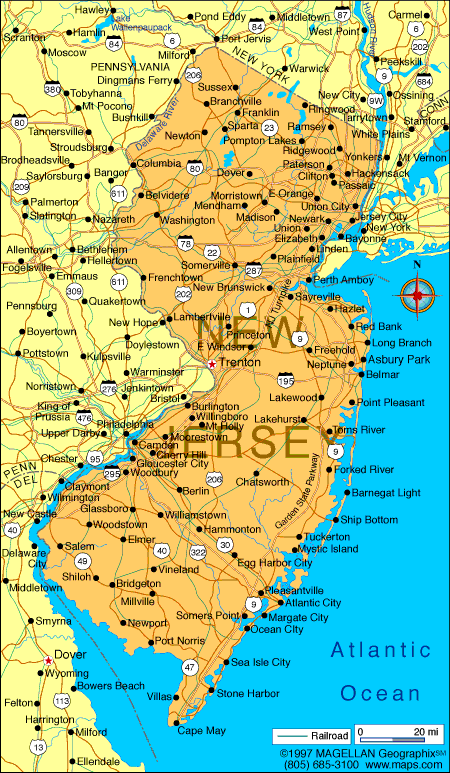
New Jersey Profile
History of New Jersey
Jersey’s history is inextricably tied to the early progress of the United States. First populated by Native American groups such as the Lenni Lenape, the area was claimed by the Dutch in the early 1600s.Later on, the English would finally conquer this area, calling it after the island of Jersey in the English Channel.
New Jersey was very important to the American Revolution, with many of the major battles, including the famed Battle of Trenton, taking place within its borders. In 1787, New Jersey was among the original 13 colonies to ratify the U.S. Constitution. The state developed further during the 19th and 20th centuries with its industry rapidly growing to make it a center for manufacturing, transportation, and commerce.
The state also helped shape American culture and popular music, including the development of jazz. It produced many legendary names in entertainment and politics.
Geography of New Jersey:
New Jersey covers an area of 8,723 square miles. It is geographically diverse, with mixed terrain in its relatively small area. It is bounded by New York to the north, Pennsylvania to the west, Delaware to the south, and a long stretch of the Atlantic Ocean as its eastern border.
Its central position has made it a state with immense potential for trade, industry, and tourism in the long run. The geography of the state is characterized by tropical plains such as the Piedmont Plateau, the Appalachian Mountains, and the Pine Barrens, a vast, wooded region that hosts rare species of plants and animals. The breathtaking gorge where the Delaware River carves its way through the Appalachian Mountains in the northwestern part of the state, is called the Delaware Water Ga.
Major cities of New Jersey
- Trenton: The capital of New Jersey, Trenton plays an important part in the history of the American Revolution. There are many state government buildings and historical landmarks associated with its history.
- Newark: Home to a major regional airport (Newark Liberty International Airport) and one of the major passenger rail junctions in New Jersey, Newark has had a historical role in transportation. It is also known because of its cultural institutions such as the New Jersey Performing Arts Center (NJPAC).
- Jersey City: Located just across the Hudson River from New York City, this city nestled beside Manhattan is essentially an economic center. It is also known for the views of its waterfront, diverse population and rapidly growing skyline.
- Paterson: Known as the "Silk City" for its history in silk production, Paterson has a rich industrial history. It has also been a significant cultural center for immigrant communities.
- Elizabeth: The fourth-largest city in New Jersey, Elizabeth is known for its nearness to the Port of New York and New Jersey, making it a major center of international trade and logistics.
- Camden: Located across the Delaware River from Philadelphia, Camden has seen a series of thorough revitalization activities in the past ten years. It is known for its cultural attractions, including the Adventure Aquarium and the Camden Waterfront.
- Atlantic City: Famous for its illuminated casinos and entertainment, Atlantic City is one of the most visited resorts in New Jersey's coastal area. It offers a mix of tourism, gambling and entertainment.
People aso ask…
What is New Jersey known for?
The great state of New Jersey is know for its diverse landscapes, rich history, and their importance to American industry. Its Jersey Shore beaches as well as its proximity to New York City and Philadelphia make it a major destination for tourists.
How did New Jersey get its name?
New Jersey is named after the Island of Jersey in the English Channel. The name was selected by Sir George Carteret, in recognition of his history as governor of Jersey, as he was one of the land’s original proprietors
What is it like living in New Jersey?
New Jersey has a strong quality of life with good schools, sound health care and many cultural and recreational activities. Due to its close proximity to New York, though, the cost of living can be high, especially in cities like Hoboken and Jersey City.
What is the climate like in New Jersey?
New Jersey has a humid subtropical climate, hot summers and cold winters. Winters tend to be milder along the coast and more extreme in the inland areas.
What is the population of New Jersey?
As of the latest estimates, New Jersey has a population of about 9.6 million people, making it one of the most densely populated states in the country. This also reflects a strong cultural diversity across the state and a variety of ethnic groups. The largest groups include White (55%), Black or African American (15%), Hispanic or Latino (20%) populations, followed by Asian Americans (10%)
What are the top tourist attractions in New Jersey?
There's so much to do within the state, whether enjoying the scenic Jersey Shore, with its beaches and bustling boardwalks, or visiting the iconic Liberty State Park, where you can enjoy views of the Statue of Liberty. Then there's Atlantic City — home of glitzy casinos and wild nightlife. There are also numerous natural wonders such as the Delaware Water Gap and the Pine Barrens.
What is the cuisine in New Jersey?
New Jersey has a rich culinary landscape due to the wide mixture of cultures in the state. Signature foods include the Jersey tomato, saltwater taffy, bagels and Taylor ham (or pork roll), a regional breakfast staple. Immigrant communities in the state also develop Italian, Polish and Latin American cuisines.
What drives the economy of New Jersey?
New Jersey has a mixed economy, including finance, pharmaceuticals, manufacturing and agriculture. It is a major tech industry hub and home to many pharmaceutical giants, including Johnson & Johnson.
What symbols represent the state of New Jersey?
New Jersey has a state flower - the violet, which is a native flower of the state that is known for its delicate scent and beauty. The state bird is the eastern goldfinch, which is believed to illustrate joy and vibrancy. The state animal is the horse, which represents freedom and strength. The motto of New Jersey is “Liberty and Prosperity.”
What is the population of New Jersey?
As of the most recent estimates, New Jersey has a population of around 9.3 million people, making it one of the most densely populated states in the U.S. The state is ethnically diverse, with a population comprising White (55%), Black or African American (15%), Hispanic or Latino (20%), and Asian (10%) communities, reflecting its rich cultural mix.
Does New Jersey have many parks?
Yes, there are many state parks and natural reserves in New Jersey. Popular outdoor attractions include High Point State Park, Harriman State Park as well as the Pine Barrens, with options for hiking, camping, and fishing for outdoor enthusiasts.
|
|
 |


