From the gleaming skyline of Chicago to the rolling farmlands of the Midwest, Illinois captures the perfect blend of urban energy and heartland charm. Known as the “Prairie State,” it’s a place where world-class culture meets small-town hospitality. It is home to deep-dish pizza, blues music, and some of America’s most iconic history.
With a population of over 12 million people, Illinois offers remarkable diversity. The bustling metropolis of Chicago sits on the shores of Lake Michigan, famous for its architecture, museums, and vibrant neighborhoods. In contrast, southern Illinois reveals scenic state parks, quiet vineyards, and historic towns along the Mississippi River. From the fertile farmlands of central Illinois to the lively college towns and charming riverfront communities, the state reflects the true spirit of the American Midwest.
Whether you’re exploring the art and food scene in Chicago, hiking through the Shawnee National Forest, or visiting Springfield, the home of Abraham Lincoln, Illinois invites travelers to experience history, innovation, and authentic American culture.
Test your U.S. geography knowledge with our U.S. States Quiz.
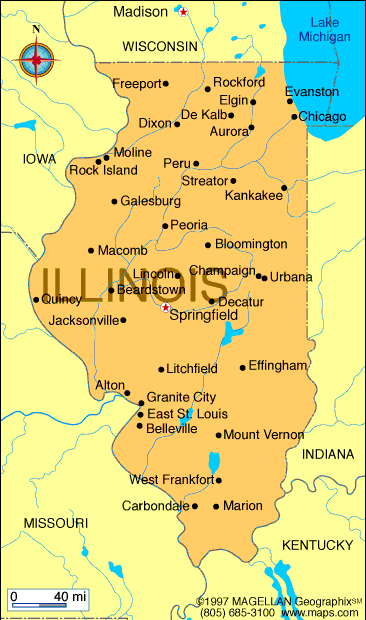
Illinois Profile
History of Illinois
Illinois has a fascinating history that stretches back thousands of years. Long before European explorers arrived, the region was home to Native American tribes like the Illiniwek, Miami, and Sauk, who thrived along the fertile lands of the Mississippi and Illinois Rivers.
European exploration began in 1673, when Jacques Marquette and Louis Jolliet navigated the Mississippi River through Illinois. The territory became part of New France, and French fur traders established settlements along the rivers, including Kaskaskia, one of the earliest European towns in the state.
After the French and Indian War, Illinois passed under British control and eventually became part of the United States. On December 3, 1818, Illinois officially joined the Union as the 21st state, earning the nickname “The Prairie State” for its vast, fertile prairies.
The 19th century saw rapid growth driven by agriculture, river trade, and railroads. Illinois also played a key role in American history as the home of Abraham Lincoln, who lived in Springfield before becoming the 16th U.S. President. Chicago emerged as a major economic and cultural hub, especially after rebuilding from the Great Chicago Fire of 1871.
Today, Illinois balances its rich history with modern industry, vibrant cities, and cultural landmarks.
Geography of Illinois
Located in the heart of the Midwestern United States, Illinois is a state defined by its rich natural diversity and central role in America’s geography. It’s bordered by Wisconsin to the north, Iowa and Missouri to the west (across the Mississippi River), Kentucky to the south (across the Ohio River), and Indiana to the east. To the northeast, the state meets Lake Michigan, giving Illinois a vital link to the Great Lakes and global trade.
The state’s landscape transitions beautifully from rolling prairies and fertile farmlands in the north and central regions to forested hills and river valleys in the south. The Shawnee Hills in southern Illinois offer rugged terrain, scenic cliffs, and hidden waterfalls, a striking contrast to the flat expanses of the central plains. Major rivers, including the Mississippi, Illinois, and Wabash, shape the state’s borders and provide vital resources for agriculture and industry.
Illinois has a humid continental climate, marked by hot, humid summers and cold, snowy winters. The southernmost part of the state experiences a slightly milder climate, with warmer winters and longer growing seasons. Seasonal changes bring vivid color to the landscapes - from bright green summers to golden autumns and snow-covered winters.
Home to diverse ecosystems, Illinois supports a wide range of wildlife, including white-tailed deer, foxes, eagles, and migratory birds that follow the Mississippi Flyway. Its fertile soil and waterways make it one of the nation’s leading agricultural states, producing corn, soybeans, and wheat that feed both the country and the world.
Major Cities
Interesting Facts about Illinois
- Birthplace of Abraham Lincoln: Springfield, the state capital, is home to the 16th U.S. President, with the Lincoln Home National Historic Site and Lincoln Presidential Library.
- Chicago architecture: Chicago is famous worldwide for its innovative architecture, including the Willis Tower (formerly the Sears Tower) and the John Hancock Center.
- Deep-dish pizza: Illinois, particularly Chicago, is the birthplace of the iconic deep-dish pizza.
- Great Lakes Access: Illinois has a coastline along Lake Michigan, providing key ports, trade, and recreational opportunities.
- Route 66: The historic Route 66 begins in Chicago, linking the Midwest to the West Coast.
- First Skyscraper: Chicago is home to the world’s first skyscraper, the Home Insurance Building, built in 1885.
- Agricultural powerhouse: Illinois is a leading producer of corn, soybeans, and wheat, contributing significantly to U.S. agriculture.
- Cultural institutions: Chicago hosts world-class museums, like the Art Institute of Chicago and the Field Museum.
People also ask…
What is the Capital of Illinois?
The state capital of Illinois is Springfield, known for its historic connection to Abraham Lincoln.
What Currency is Used in Illinois?
Illinois, like the rest of the United States, uses the U.S. Dollar (USD) as its official currency.
What are Some Major Industries in Illinois?
Illinois has a diverse economy, including manufacturing, agriculture (corn and soybeans), finance, technology, transportation, and tourism.
|
|
 |


