Georgia is a state that has a strong historical influence. It is located in the southeastern part of the U.S. and is known for its natural beauty and unique landscapes. Georgia features areas such as coastal plains and rolling mountains.
The state has something to offer for everyone, whether you want to know about its part in the American Revolution, information on some of the most vibrant cities, or its amazing geographical characteristics.
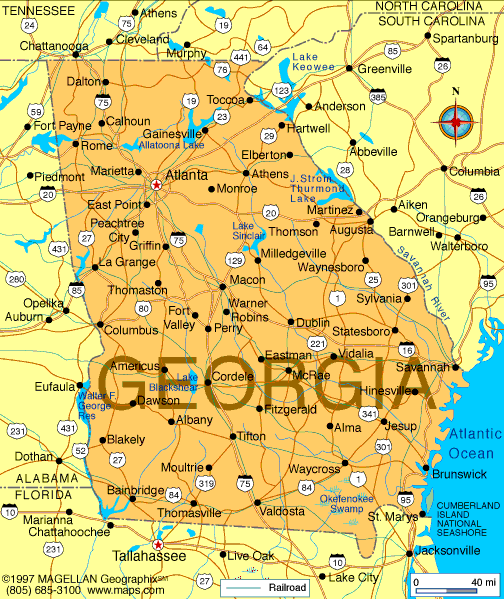
Georgia Profile
Below, you can discover some more details about Georgia, its rich history, geographical features, and fun facts.
History of Georgia
Georgia’s history stretches back for thousands of years before the first European settlers arrived. Until the European arrival, the region was inhabited by the Cherokee the Creek Native American tribes.
The colony of Georgia was established in 1733 by James Oglethorpe, who envisioned it as both a refuge for debtors and a buffer between British South Carolina and Spanish Florida. The colony expanded — through agriculture, especially after rice and indigo were introduced - and came to rely heavily on enslaved labor. Georgia was heavily involved in the American Revolution during the 1700s, and after the war, it became the fourth state to join the Union in 1788.
Through the 20th century, the state was actively involved in the Civil Rights Movement - a movement switch was expressed in the change search, with individuals such as Martin Luther King Jr. participating.
Over the years, Georgia has become a center of trade and industry, especially in cities like Atlanta and Savannah, which are major transportation hubs and have experienced rapid economic growth in sectors such as logistics, technology, and manufacturing.
Geography of Georgia
In terms of area, Georgia ranks 24th among all the U.S. states. It covers 59,425 square miles in size. Its northern border is marked by Tennessee, and North Carolina lies to the northeast. To the east is South Carolina, and flaming Florida can be seen from the southern tip of the state. Alabama borders Georgia to the west.
This state offers various landscape types. There are low coastal plains along the southeast border, with beaches on Georgia's Atlantic shoreline. One can see what amounts to farmland all around Metro Atlanta and south to Columbus through Macon from its northeast join in the Piedmont region, all the way up to Rome right at Georgia's northern edge. The Savannah River forms part of the eastern boundary. The Chattahoochee River delineates much of its western border.
Georgia’s geography also consists of wetlands, rolling hills, and areas of fertile farmland, all contributing to the importance of the state both agriculturally and economically.
Major cities in Georgia
- Atlanta: The capital and biggest city in Georgia, Atlanta is the biggest business, cultural and transportation hub. Famous for its role in the Civil Rights Movement, it hosts important sites, including the Martin Luther King Jr. National Historical Park and Hartsfield-Jackson Atlanta International Airport - one of the busiest airports on the planet.
- Savannah: This coastal city is known for its unique historic appeal, cobblestone streets, and stunning parks. The city’s still-preserved architecture and its proximity to the Atlantic make it a popular destination for tourists and a vital port for Georgia’s economy.
- Augusta: Augusta is famous for hosting the Masters Tournament, and is globally known as a great golf town. In addition to being located on the Savannah River, it also has a vibrant cultural scene, complete with museums, theaters, and historical sites.
- Macon: A center for soul music and rock ’n’ roll, Macon is linked to legends like Otis Redding and the Allman Brothers Band. It has a lot to offer, with plenty of history, culture, and Southern hospitality available at places like the Ocmulgee National Monument and a number of antebellum homes.
- Columbus: This city along the Chattahoochee River has a lively arts scene, lots of opportunities for outdoor recreation, and the National Infantry Museum. It is a city that harbors a very military feeling presence, a center for manufacturing and industry in Georgia.
Fun facts about Georgia
- The Peach State: Georgia is known as the "Peach State" due to the fact that its climate and soil are perfect for the production of peaches with great quality and sweetness. The state is one of the largest peach producers in the United States.
- Home of Coca-Cola: Atlanta is the birthplace of Coca-Cola, one of the most iconic soft drinks in the world. Invented in 1886 by pharmacist John Stith Pemberton, the drink is still one of the most preferred in the world.
- World's Greatest Aquarium: Atlanta is home to the Georgia Aquarium - the world's largest aquarium in terms of total water volume. The aquarium is home to thousands of marine animals, including whale sharks and beluga whales.
- State flower: The Cherokee Rose is Georgia's state wildflower. It is a white flower with a yellow center named after the Cherokee people, that has historical significance, symbolizing their painful journey along The Trail of Tears.
People also ask…
What is Georgia known for?
Georgia should be synonymous with its iconic peaches, rich history, and vibrant culture. It’s home to the city of Atlanta, which is a business hub and the locale of Coca-Cola’s birthplace and key historic sites associated with the Civil Rights Movement.
How did Georgia get its name?
Georgia was named after King George II of Britain. The colony was founded in 1733 as a British settlement, and it was one of the final of the original thirteen colonies to be settled.
What is the capital of Georgia?
Georgia's capital city, Atlanta, is a busy hub of cultural diversity, business ventures, and historical importance. It was a key site of the Civil Rights Movement and hosts major attractions such as the Georgia Aquarium and Martin Luther King Jr. National Historical Park.
What year did Georgia become a state?
On January 2, 1788, Georgia ratified the U.S. Constitution, becoming the 4th state to enter the Union. It was also one of the original thirteen colonies and had a significant part in the early history of the country.
What are the main industries that drive Georgia’s economy?
Georgia has a diverse economy. Major industries include agriculture (especially peaches and peanuts), manufacturing, transportation, and technology. Atlanta, in particular, is a worldwide center for companies, particularly in the areas of logistics, film, and finance.
What is the population of the State of Georgia?
According to the latest census data, there are approximately 11,297,300 people in Georgia, making it the 8th most populous state in the United States. Ethnically, Georgia is diverse with the most share of white Americans, followed by black or African Americans. They are followed by members of the Hispanic or Latino groups and many others.
What is the climate in Georgia?
Georgia has a humid and subtropical climate, hot for most of the summer and mild in the fall and winter. The northern parts, especially in the mountains, experience winter temperatures that can be colder, while the coastal areas can see more rainfall.
What are the top tourist attractions in Georgia?
The most popular attractions include the Georgia Aquarium, Stone Mountain, Savannah’s historic district, and the Appalachian Trail. Beautiful beaches, coasts and small towns like Helen are also some of the reasons Georgia is so popular.
|
|
 |


