Colorado is a land of dramatic contrasts – where rugged Rocky Mountain peaks meet sweeping plains and sun-soaked plateaus. With a population of around 6 million people (as of 2025), Colorado offers a mix of outdoor adventure, cultural vibrancy, and economic growth. From the cosmopolitan energy of Denver to the ski slopes of Aspen and the red rock canyons of the southwest, the state’s landscapes are as diverse as its community.
Adventure seekers can hike, ski, or bike through stunning wilderness, while history enthusiasts can explore old mining towns and pioneer landmarks. Whether you’re drawn by its natural beauty, historic mining towns, or thriving tech hubs, Colorado captures the spirit of the American West like nowhere else.
Discover more about Colorado by visiting our comprehensive state page.
Colorado Profile
History of Colorado
Long before European settlers arrived, Colorado was home to Indigenous peoples such as the Ute, Arapaho, and Cheyenne tribes, who lived in harmony with the land's mountains, plains, and rivers. Spanish explorers first passed through in the 1500s, but it wasn’t until the 1800s that large numbers of settlers arrived — lured by the promise of gold during the Pikes Peak Gold Rush of 1858–59.
Colorado became a U.S. territory in 1861 and achieved statehood on August 1, 1876, earning its nickname, the Centennial State, for joining the Union exactly 100 years after the Declaration of Independence. Mining, railroads, and agriculture drove its early growth, while later decades saw expansion into tourism, aerospace, and renewable energy.
Today, Colorado blends its pioneering past with innovation, making it one of the most dynamic states in the nation.
Geography of Colorado
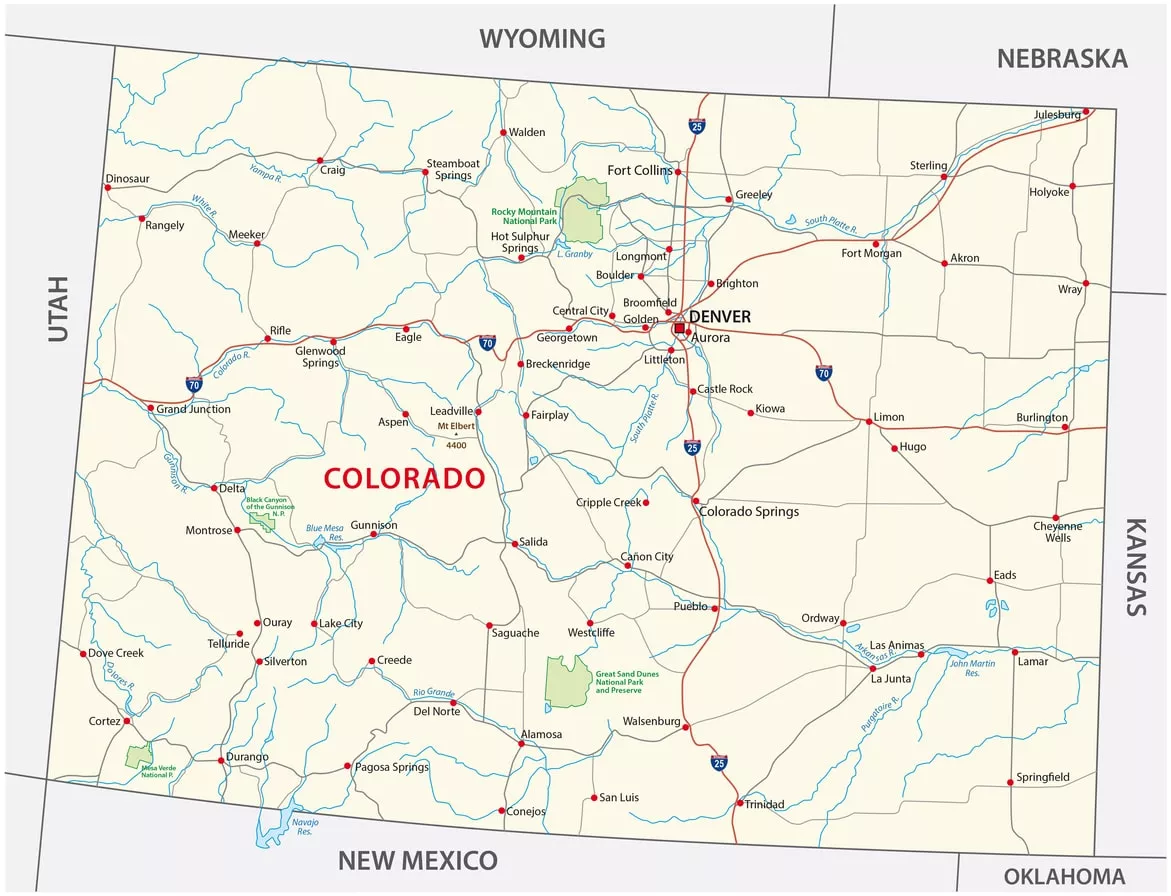
Located in the heart of the western United States, Colorado shares borders with Wyoming and Nebraska to the north, Kansas to the east, Oklahoma and New Mexico to the south, and Utah to the west. It is one of only a few states whose borders form a perfect rectangle.
Covering about 104,094 square miles (269,837 km²), Colorado ranks as the eighth-largest state in the U.S. Its geography is dominated by the Rocky Mountains, which run north to south through the center of the state, dividing the lush Front Range from the high desert plateaus of the west. Major peaks include Mount Elbert, the tallest mountain in the Rockies at 14,440 feet (4,401 meters).
Colorado’s climate varies widely with elevation and region. The eastern plains experience a semi-arid climate with hot summers and cold winters, while the mountains see heavy snowfall, making them a haven for winter sports. Western Colorado tends to be drier, with warm days and cool nights. Despite its diversity, the state is known for abundant sunshine year-round, with around 300 sunny days annually.
Major Cities
- Denver
- Colorado Springs
- Aurora
- Fort Collins
- Lakewood
- Thornton
- Arvada
- Westminster
- Pueblo
- Boulder
Interesting Facts About Colorado
- Home to the Rocky Mountains: Colorado boasts some of the tallest peaks in the U.S., including Mount Elbert, which rises 14,440 feet.
- A High State: Colorado has the highest average elevation of any U.S. state, earning it the nickname “The Highest State.”
- Legal Firsts: Colorado was the first state to legalize recreational marijuana in 2012.
- Sunshine State: Despite its mountains, Colorado enjoys over 300 days of sunshine per year in some areas.
- Skiing Paradise: It is home to world-famous ski resorts, including Aspen and Vail.
- Unique Wildlife and Landscapes: From the sand dunes of Great Sand Dunes National Park to abundant wildlife such as elk and bighorn sheep, Colorado offers diverse natural beauty.
Top Tourist Destinations in Colorado
Colorado offers a variety of tourist attractions. Rocky Mountains National Park offers breathtaking alpine scenery, hiking trails, and wildlife viewing. Garden of the Gods in Colorado Springs features iconic red rock formations. History enthusiasts can explore Mesa Verde National Park, which is home to ancient Puebloan cliff dwellings.
Skiers and snowboarders flock to Aspen and Vail for premier winter sports, while the Great Sand Dunes National Park showcases the tallest sand dunes in North America. Denver, the state capital, offers vibrant museums, historic districts, and a lively nightlife scene. Boulder and the Red Rocks Amphitheatre are popular for outdoor concerts and scenic hiking trails.
People also ask…
What is the Capital of Colorado?
The capital of Colorado is Denver, a vibrant city known for its arts and culture and for its proximity to the Rocky Mountains.
What is Colorado’s State Nickname?
Colorado is called “The Centennial State” because it celebrated its admission to the Union in 1876, 100 years after the Declaration of Independence.
What is the Cuisine of Colorado?
Colorado is famous for Rocky Mountain trout, bison burgers, green chili, Palisade peaches, and locally crafted beers, reflecting the state’s rich culinary and agricultural traditions.
What currency is used in Colorado?
Colorado uses the United States Dollar (USD), like the rest of the U.S.
|
|
 |


