Nestled in the heart of the Deep South, Alabama is a state where rich history, dramatic landscapes, and warm Southern hospitality come together. Known for its pivotal role in the Civil Rights Movement, Alabama is home to legendary landmarks like the Edmund Pettus Bridge and the Birmingham Civil Rights District. Beyond its historic roots, the state features a stunning variety of landscapes, from the Appalachian Mountains and winding river valleys to the Gulf Coast’s sugar-white beaches and vibrant coastal towns.
Alabama’s cities each bring their own charm: Birmingham blends modern energy with industrial heritage, Montgomery stands as a living museum of American history, and Mobile offers centuries-old architecture, Mardi Gras traditions, and waterfront beauty. Add in celebrated Southern cuisine, world-class music heritage, and outdoor adventures, and it’s easy to see why Alabama captivates travelers and researchers alike.
Whether you're planning a visit, exploring U.S. geography, or diving into Southern culture, this in-depth guide uncovers everything that makes Alabama one of America’s most intriguing and culturally rich states.
Learn more about the state of Alabama with our detailed overview and discover the unique features of other U.S. states here.
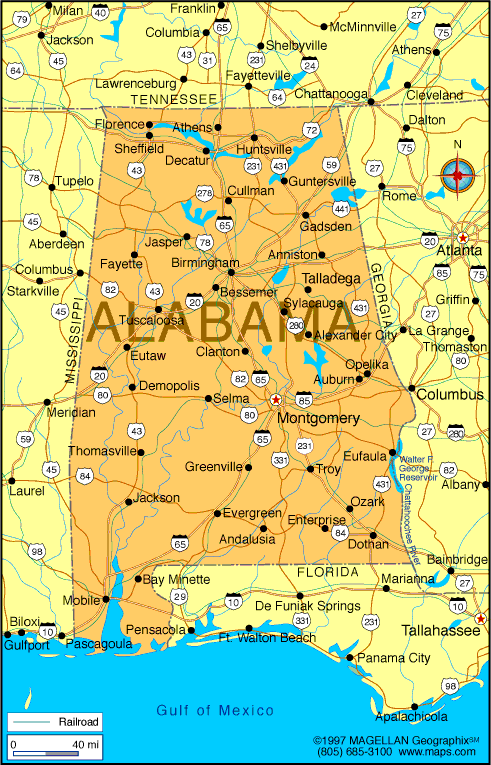
Alabama Profile
History of Alabama
Alabama has a rich and complex history that spans thousands of years, beginning with its native tribes such as the Cherokee, Choctaw, Chickasaw, and Creek nations, who lived in the region long before European settlers arrived. In the early 16th century, Spanish explorers first mapped parts of what is now Alabama, followed by French and British colonization, each leaving a lasting cultural and architectural influence.
The nation became part of the United States in 1819 as the 22nd state and quickly developed an agriculture-based economy, with cotton plantations playing a central role. The state was deeply affected by the Civil War (1861-1865), which saw it join the Confederacy, and its post-war Reconstruction era shaped much of Alabama’s social and political landscape.
In the 20th century, Alabama became a central stage of the Civil Rights Movement, with landmark events in cities like Montgomery and Birmingham. Figures such as Rosa Parks, Martin Luther King Jr., and George Wallace left lasting marks on the nation’s struggle for equality and justice.
Today, Alabama’s history is reflected in its museums, historic sites, and cultural traditions, offering residents and visitors alike a chance to connect with its past while experiencing its ongoing growth and diversity.
Geography of Alabama
Located in the southeastern United States, Alabama spans approximately 52,420 square miles (135,767 km²). It is bordered by Tennessee to the north, Georgia to the east, Florida to the south, and Mississippi to the west, with the Gulf of Mexico forming its southern coastline. This strategic location gives Alabama a unique mix of landscapes, from mountainous regions in the north to rolling hills, fertile plains, and sandy beaches along the Gulf Coast.
The state features three major geographic regions:
- The Appalachian Highlands in the north, characterized by mountains, valleys, and forested areas.
- The Piedmont Plateau and Central Upland, featuring rolling hills, rivers, and fertile farmland.
- The Coastal Plain in the south, known for wetlands, estuaries, and beaches along the Gulf of Mexico.
Alabama experiences a humid subtropical climate, with hot, humid summers and mild winters. The state receives abundant rainfall, especially in the southern and central regions, supporting its lush forests and fertile farmland. Severe weather, including tornadoes and tropical storms, can occur, particularly in spring and late summer.
The state is home to diverse flora and fauna. Its forests host oak, hickory, pine, and cypress trees, while its rivers and wetlands support species such as alligators, turtles, and migratory birds. Wildlife includes white-tailed deer, black bears, bobcats, and a wide variety of freshwater fish, making Alabama a haven for outdoor enthusiasts and nature lovers.
Major Cities
- Birmingham
- Montgomery
- Mobile
- Huntsville
- Tuscaloosa
- Hoover
- Dothan
- Auburn
- Decatur
- Madison
Interesting Facts about Alabama
- State Nickname: Alabama is known as the “Heart of Dixie”, reflecting its central role in Southern culture and history.
- Civil Rights Landmarks: The state was a major stage for the Civil Rights Movement, with historic sites like Selma’s Edmund Pettus Bridge and Birmingham’s Civil Rights District.
- Space and Rocket History: Huntsville, Alabama, is nicknamed “Rocket City” because it played a central role in the U.S. space program and the development of NASA rockets.
- Gulf Coast Beaches: Alabama’s Gulf Shores and Orange Beach feature sugar-white sand and clear waters, making it a top destination for coastal tourism.
- Unique Biodiversity: The state is home to more than 100 species of freshwater mussels, along with diverse wildlife including black bears, white-tailed deer, and migratory birds.
- NASA’s Marshall Space Flight Center: Located in Huntsville, it is a key facility for space exploration and engineering.
- Rich River Systems: Alabama has more than 77,000 miles of rivers and streams, providing vital water resources and supporting recreation and biodiversity.
People also ask…
What is Traditional Cuisine in Alabama?
Alabama is famous for its Southern cuisine, which emphasizes bold flavors, fresh ingredients, and regional specialties. Popular dishes include barbecue (especially pork and smoked ribs), fried catfish, fried green tomatoes, collard greens, and cornbread. Along the Gulf Coast, seafood dishes like shrimp and grits, crab cakes, and oysters are local favorites.
What is the Official Currency Used in Alabama?
Alabama, like all U.S. states, uses the U.S. dollar (USD) as its official currency for all transactions.
What are the Top Tourist Attractions in Alabama?
Popular destinations include the U.S. Space & Rocket Center in Huntsville, Gulf Shores beaches, the Civil Rights landmarks in Birmingham and Selma, Bellingrath Gardens, and historic towns like Mobile and Montgomery.
What Languages are Spoken in Alabama?
English is the primary language spoken throughout the state, while Spanish and other languages are also spoken in some communities due to growing cultural diversity.
What is the Population of Alabama?
Alabama’s population is about 5.2 million people, according to the latest 2025 estimates. This growing and diverse population contributes to the state’s rich cultural heritage, thriving cities, and strong Southern identity.
|
|
 |


