Sweden is a country recognized for its breathtaking scenery, rich history, and forward-looking society. It is located in Northern Europe and is also the largest country in Scandinavia. The country features diverse natural beauty that includes dense forests and extensive lakes, in addition to many famous archipelagos.
The country maintains close ties to its past and traditions, even as it has become a stream of forward-thinking innovations in the realms of sustainability, technology, and design. Sweden has a superior living standard and is still one of the most praised areas for quality of life and equality.
Sweden Profile
History of Sweden
Sweden has a history of evolving from a medieval kingdom to a modern welfare state. During the Viking Age, it was a united country, where Swedish warriors and explorers came from many parts of the world.
Even by the 16th century, the Swedish king Gustavus Adolphus had turned Sweden into a great European power across much of the Baltic Sea. However, after the Great Northern War in the early 18th century, Sweden lost much of its power and territory.
In the 1800s and early 1900s, Sweden developed into a constitutional monarchy with a peaceful democracy and a policy of neutrality in world wars. Nowadays, the nation is known for its strong economy, progressive social policies, and commitment to peace. It has become one of the foremost countries in international humanitarian work.
Geography of Sweden
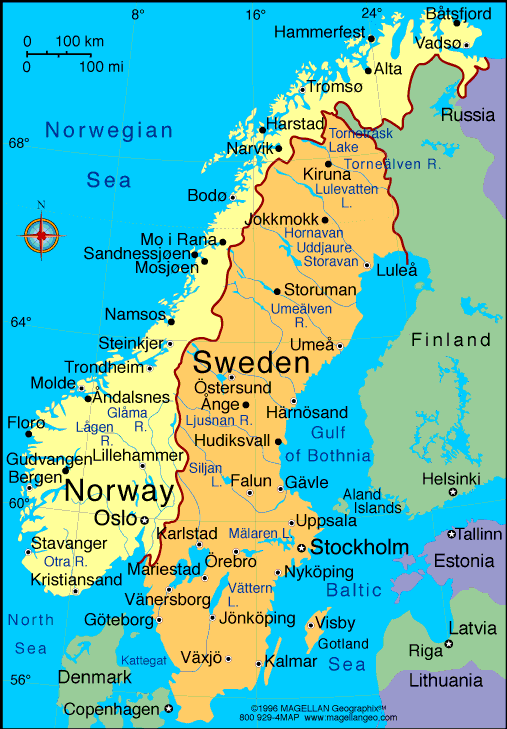
Sweden, which covers an area of about 172,751 square miles, is the largest country in Europe in terms of area. It is bordered by Norway to the west, Finland to the northeast, and the Baltic Sea to the south and east. The country boasts diversity in landscapes - from the snow-capped peaks of the Scandinavian Mountains in the West to the endless forests and thousands of lakes that cover much of the land.
Sweden’s terrain also includes long stretches of coastline, including the scenic archipelagos of its eastern and southern coasts. With its untouched natural landscapes, the country is also known for its outdoor activities, hiking, skiing and boating, in particular.
Major Cities in Sweden
- Stockholm: The capital city of Sweden is located on the eastern coast, and it is spread over 14 islands. It’s famous for its picturesque waterfront, historic attractions and lively cultural scene, including the iconic Vasa Museum and Royal Palace.
- Gothenburg: A major port, Gothenburg is Sweden’s second-largest city, located on the west coast. It has a good combination of canals, the Liseberg Amusement Park, and various great restaurants.
- Malmö: Located in the south end of Sweden, Malmö is an up-and-coming city that has been heavily influenced by the culture of its Danish neighbor.
- Uppsala Uppsala: Home to Sweden’s oldest university, it is a place rich in history and academic accomplishment. Visitors can tour the Uppsala Cathedral and the Botanical Gardens.
- Västerås: Situated on the shores of Lake Mälaren, the city is one of Sweden’s oldest cities that emerged over a millennium ago. It offers stunning parks, a booming tech industry, and the historic Västerås Cathedral.
3 Fun Facts about Sweden
- The birth country of the Nobel Prize: Sweden is the home of the Nobel Prize that was founded by the inventor Alfred Nobel. Nowadays, Nobel Prizes are granted each year in areas like science, literature, and peace.
- IKEA: Sweden is the birthplace of the strikingly stunning IKEA that is adored around the world for its flat-pack home furnishing and minimalist designs. In 1958, the first IKEA store opened in Sweden, and it changed the face of home furnishings all around the world.
- The first Icehotel: Located in Jukkasjärvi, Sweden’s Icehotel is the world's first hotel built entirely from ice and snow. It’s rebuilt annually and has ice beds, ice sculptures, and unique artistic design.
People also ask…
What is Sweden known for?
Sweden is well-known for its high quality of life, beautiful natural scenery, and progressive values. Also known for innovations such as IKEA, the Nobel Prize and its deep cultural history.
What is the population of Sweden?
According to the most recent data, there are approximately 10,643,629 people in Sweden. The country has a large population of Swedish descent, however, there is a growing immigrant and ethnic minority population.
What language is spoken in Sweden?
Swedish is the official language, however, nearly all Swedes speak good English. Both languages are heard frequently in daily life, particularly in the main cities.
When is the best time to visit Sweden?
Summer (June to August) has warm temperatures and longer hours of sunlight, ideal for going outside. In winter (December to February), you can catch the Northern Lights and participate in winter sports in the Swedish Lapland.
What is the cuisine of Sweden?
Swedish food is a pleasing combination of hearty, uncomplicated foods, often with fresh, locally sourced produce. Among traditional dishes are köttbullar (Swedish meatballs) with lingonberry sauce and potato mash and gravad lax (salmon cured in sugar, salt, and dill) with mustard sauce. Traditionally, Swedish people like to have some cinnamon buns or cardamom rolls along with a cup of coffee.
Is Sweden expensive to visit?
Sweden is not the cheapest of countries compared to the rest of Europe, as accommodation and dining tend to stand out as the more expensive factors in Sweden. Despite this, there is no shortage of affordable activities, from free outdoor events to public transport.
What are the top tourist attractions in Sweden?
Some of the top tourist attractions in Sweden are the beautiful archipelagos out of Stockholm, Abisco National Park for Northern Lights, Vasa Museum in Stockholm, and the Icehotel inJukkasjärvi. There are also many beautiful mountains and lakes.
What is Sweden's weather like?
Sweden has a diverse climate. The southern areas have milder winters and warm summers, while the north doesn’t only have cold, snowy winters, but also incredible starlight in summer. If you're visiting in the winter months, prepare with extra warm clothes!
Is Sweden a safe country?
Sweden is considered to be one of the safest countries in the world. The crime rates are relatively low. That being said, as with any travel destination, it’s always wise to remain vigilant in crowded places.
What is the political system of Sweden?
Sweden is a constitutional monarchy with a parliamentary democracy. The King is merely a ceremonial figurehead, while political authority is exercised by the Riksdag (parliament) and the Prime Minister leading the government. The country has a strong democratic tradition, with free elections, a pluralistic political landscape, and a commitment to human rights and social welfare.
|
|
 |


