Estonia is a modern and dynamic country on the eastern shores of the Baltic Sea, where medieval charm meets cutting-edge digital innovation. Home to about 1.3 million people, Estonia packs a lot of culture, history, and natural beauty into a relatively small space. It is known for its world-class digital infrastructure, earning a reputation as one of the most advanced e-societies, while still preserving its ancient traditions and folklore.
From the cobblestone streets and historic spires of Tallinn, Estonia's capital, to the quiet forests, sparkling lakes, and windswept islands, Estonia is a country of contrasts that feels both timeless and futuristic. Visitors and locals alike enjoy a vibrant cultural scene, delicious traditional cuisine, and festivals that celebrate everything from music and art to nature and history.
For a clear snapshot of Estonia’s key facts and figures, you can also check out Estonia’s country profile on InfoPlease.
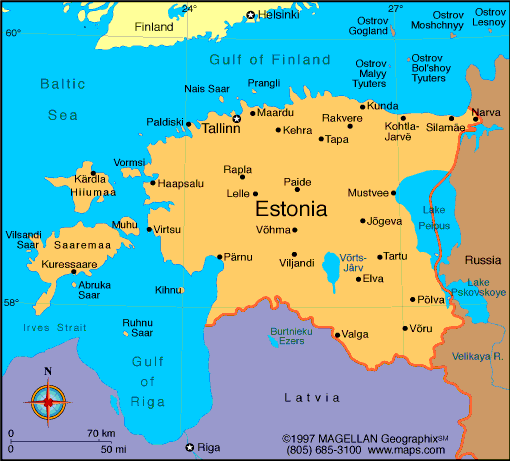
Estonia Profile
History of Estonia
Estonia’s history has been shaped by its strategic location in Northern Europe and the resilience of its people. The area has been inhabited for thousands of years by Finno-Ugric communities who built early farming and fishing settlements.
In the Middle Ages, Estonia became an important trade hub, with cities like Tallinn joining the Hanseatic League. Over time, the country was ruled by various foreign powers, including Denmark, Sweden, and later the Russian Empire, all of which influenced its culture and architecture.
Estonia first gained independence in 1918, but this period was cut short by World War II and subsequent Soviet occupation. In 1991, Estonia peacefully restored its independence and quickly transformed into a modern democratic nation
Today, it stands as a proud Baltic state that values its history while embracing innovation and progress.
Geography of Estonia
Estonia is located in Northern Europe, along the eastern coast of the Baltic Sea. It borders Latvia to the south and Russia to the east, while the Gulf of Finland lies to the north and the Baltic Sea to the west. The country also includes more than 2,000 islands, with Saaremaa and Hiiumaa being the largest.
The country’s landscape is largely flat and low-lying, shaped by glaciers from the last Ice Age. It is characterized by dense forests, peat bogs, lakes, rivers, and gently rolling plains. Nearly half of the country is covered by forest, making nature an essential part of everyday life. Estonia also has over 1,500 lakes, including Lake Peipus, one of the largest lakes in Europe.
With a temperate climate, Estonia experiences four distinct seasons, from cold, snowy winters to mild summers with long daylight hours. This mix of coastline, islands, wetlands, and woodlands gives Estonia a diverse and peaceful natural environment that strongly influences its culture and way of life.
Major Cities
Interesting Facts about Estonia
- Digital Pioneer: Estonia is one of the world’s most digitally advanced countries, offering e-residency, online voting, and almost all government services online.
- Island Nation: The country has over 2,000 islands, with Saaremaa and Hiiumaa being the largest.
- Forested Land: Nearly half of Estonia is covered in forests, making it one of Europe’s greenest countries.
- Medieval Charm: Tallinn’s Old Town is a UNESCO World Heritage site, famous for its cobblestone streets and historic buildings.
- Small Population: Estonia is home to about 1.3 million people, giving it a low population density compared to most European countries.
- Long Summer Days: During summer, northern Estonia experiences “White Nights”, with almost 19 hours of daylight.
People also ask…
What is Estonia famous for?
Estonia is famous for its digital innovation, medieval Old Town of Tallinn, and stunning natural landscapes. The country is a pioneer in e-governance and e-residency, while its forests, lakes, and islands offer breathtaking scenery for travelers.
What is the traditional Estonian cuisine?
Estonian cuisine focuses on local and seasonal ingredients. Popular dishes include black bread (leib), smoked fish, sauerkraut, potato pancakes, and kama (a traditional grain-based dessert). Dairy, rye, and forest berries also play a central role in everyday meals.
What languages are spoken in Estonia?
The official language is Estonian, a Finno-Ugric language closely related to Finnish. Russian is also widely spoken, especially in northeastern regions, and English is commonly used in business and tourism.
|
|
 |


