Belarus, located in Eastern Europe, is a country rich in natural beauty, history, and vibrant culture. Known as the “Land of Castles and Forests,” it features vast woodlands, serene rivers, and charming historic cities. With a population of nearly 9 million people, Belarus is anchored by its dynamic capital, Minsk, which blends modern architecture, historic landmarks, and a thriving cultural scene.
From medieval castles and Soviet-era architecture to traditional music, festivals, and local cuisine, Belarus offers a unique mix of heritage and contemporary life. This guide explores the country’s history, geography, culture, major cities, and much more.
For more detailed facts and insights about Belarus, visit our detailed Belarus overview.
Belarus Profile
History of Belarus
The country has a long and fascinating history shaped by its location at the crossroads of Eastern Europe. In the early medieval period, the region was home to the Polotsk and Turov principalities, important centers of trade, culture, and Orthodox Christianity. By the 14th century, much of Belarus became part of the Grand Duchy of Lithuania, and later the Polish-Lithuanian Commonwealth, blending Eastern European and Western influences in its language, religion, and culture.
In the late 18th century, Belarusian lands were incorporated into the Russian Empire, which brought significant social, political, and economic changes. The 20th century was especially turbulent: World War II devastated the country, destroying cities and claiming millions of lives. After the war, Belarus became a republic of the Soviet Union, undergoing rapid industrialization and urban development.
Following the collapse of the USSR, Belarus declared independence in 1991. Since then, the nation has worked to balance its Soviet past with its own cultural identity, preserving historic sites, traditions, and languages while modernizing cities and infrastructure.
Geography of Belarus
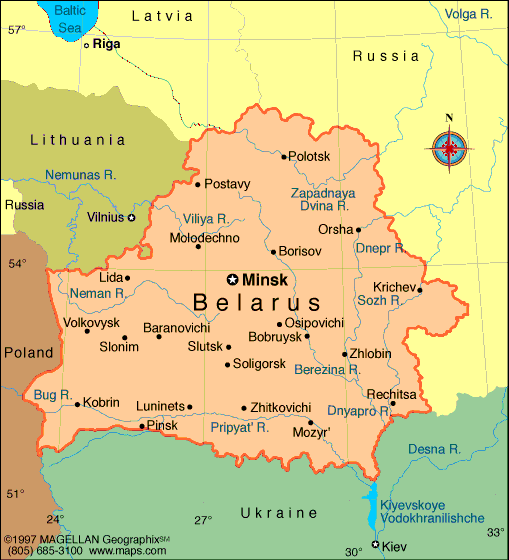
Belarus is a landlocked country in Eastern Europe, covering about 207,600 square kilometers (80,200 square miles). It is known for its flat landscapes, extensive forests, and numerous rivers and lakes. The country is often referred to as the “land of a thousand lakes and a million forests,” thanks to its rich natural resources and green spaces.
The territory shares borders with Russia to the northeast, Ukraine to the south, Poland to the west, and Lithuania and Latvia to the northwest, placing it at a strategic crossroads between Eastern and Northern Europe. Its terrain is mostly low-lying plains, with occasional rolling hills in the north and central regions. The Belarusian Ridge and Braslaw Hills are the most notable elevated areas.
The country’s rivers and lakes are essential to its ecosystem and economy. The Dnieper, Pripyat, and Neman rivers flow through Belarus, providing water for agriculture, industry, and hydroelectric power. There are also thousands of lakes, particularly in the Braslaw and Vitebsk regions, which are popular for tourism and recreation.
The climate is continental, with cold winters often dipping below freezing and warm summers that are generally mild. Rainfall is fairly evenly distributed throughout the year, nourishing its fertile soil and dense forests, which cover about 40% of the country. The combination of rivers, lakes, and forests supports a diverse array of wildlife, including European bison, wolves, deer, and numerous bird species.
Major Cities
Interesting Facts about Belarus
- Land of Forests and Lakes: Belarus is often called the “land of a thousand lakes and a million forests,” with forests covering about 40% of the country.
- Historic Castles: Belarus is home to several medieval castles, including Mir Castle and Nesvizh Castle, both UNESCO World Heritage Sites.
- European Bison: Belarus hosts one of the largest populations of European bison, Europe’s heaviest land mammal, mainly in the Białowieża Forest.
- Rich Cultural Heritage: The country has a vibrant tradition of folk music, dance, and festivals, reflecting centuries of Eastern European culture.
- World War II History: Belarus was heavily affected by the war, with many monuments and museums commemorating its resilience and history.
- Famous for Potatoes: Belarus is sometimes called the “potato republic” due to its long-standing cultural and culinary association with the vegetable.
- Diverse Wildlife: The country is home to wolves, deer, lynx, and numerous bird species, thanks to its extensive forests and wetlands.
- Eastern European Charm: Belarus combines medieval towns, Soviet architecture, and natural beauty, making it a unique and often overlooked destination in Europe.
People also ask…
What is the Capital of Belarus?
The capital of Belarus is Minsk, which serves as the political, cultural, and economic center of the country, featuring modern architecture, historic landmarks, and vibrant public spaces.
What is the Cuisine of Belarus like?
Belarusian cuisine is hearty and flavorful, with staples such as potatoes, rye bread, meat, and dairy products. Popular dishes include draniki (potato pancakes), machanka (pork stew), borscht, and various dumplings, often served with sour cream.
What is the Official Currency of Belarus?
The official currency of Belarus is the Belarusian Ruble (BYN), which is used throughout the country for all transactions.
What are the top tourist attractions in Belarus?
Belarus offers a variety of cultural and natural attractions, including Mir Castle, Nesvizh Castle, Belovezhskaya Pushcha National Park, the historic city of Brest, and the vibrant capital, Minsk, with its museums, theaters, and parks.
|
|
 |


