Tunisia Profile
Nestled at the northern tip of Africa, Tunisia sits where the Mediterranean Sea gently meets the Sahara Desert, offering a stunning blend of sun‑drenched beaches, rugged landscapes, and ancient history. From the vibrant streets of Tunis and the legendary ruins of Carthage to olive groves, rolling hills, and the shifting sands of the south, Tunisia invites discovery at every turn.
Home to around 12 million people, Tunisia’s geography is as diverse as its cultural heritage, shaped by Phoenician, Roman, Arab, and Mediterranean influences over millennia. Its fertile coastal plains rise toward mountain ranges in the north and give way to vast desert expanses farther south, all set against a backdrop of historic towns and bustling modern cities.
Economically and socially, Tunisia stands at the crossroads between Europe and Africa, with a rich tradition of trade, agriculture, and tourism that continues to evolve in the 21st century.
Discover more facts about Tunisia here.
History of Tunisia
Thanks to the country’s position along the Mediterranean, it has long been a meeting point for different people, ideas, and empires. One of the earliest was Carthage, founded by Phoenician traders more than 2,000 years ago. It grew into a powerful city before being overtaken by Rome, which left behind roads, amphitheaters, and cities that still shape the landscape today.
After the Roman era faded, Tunisia went through a quieter and often unsettled period, passing between rulers until the arrival of Arab Muslim armies in the 7th century. This moment changed the country deeply. Islam, the Arabic language, and new traditions took root and continue to define Tunisian culture centuries later.
Under Islamic dynasties and later the Ottoman Empire, Tunisia developed strong ties across North Africa and the Mediterranean, becoming a place of trade, learning, and craftsmanship. In the late 19th century, the country entered another chapter as a French protectorate, which left lasting traces in its architecture, education system, and city planning.
The country gained independence in 1956, opening the door to modern nationhood. More recently, Tunisia stepped into the global spotlight in 2011 as the starting point of the Arab Spring, reminding the world of its long tradition of social and political change.
Geography of Tunisia
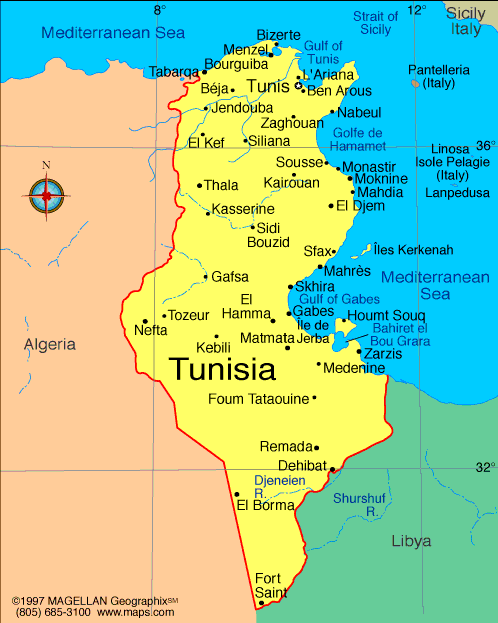
Tunisia is a North African country bordered by Algeria to the west, Libya to the southeast, and the Mediterranean Sea to the north and east. Despite being one of the smaller countries in Africa, Tunisia has a surprisingly varied landscape.
The north is hilly and fertile, home to parts of the Atlas Mountains and productive farmland. Moving south, the terrain becomes drier, turning into semi-arid plains and eventually the vast Sahara Desert. Tunisia also features salt lakes (chotts), oases, and long sandy beaches along the coast.
The country’s climate reflects its geography: Mediterranean in the north with mild, wet winters and hot, dry summers, and hot, arid conditions in the south. Seasonal winds and limited rainfall influence agriculture, settlements, and daily life.
Tunisia’s mix of mountains, plains, deserts, and coastline, combined with its strategic borders, gives it a unique and varied geography in the heart of North Africa.
Major Cities
Facts About Tunisia
-
Northernmost African country: Tunisia sits at the tip of North Africa, where the Mediterranean meets the Sahara.
-
Carthage and ancient history: The legendary city of Carthage was founded here by the Phoenicians over 2,500 years ago.
-
Birthplace of the Arab Spring: Tunisia sparked the 2011 movement that reshaped politics across the Arab world.
-
Diverse landscapes: From Mediterranean beaches and fertile plains to the Sahara Desert, Tunisia’s geography is incredibly varied.
-
Historic medinas: Cities like Tunis, Sfax, and Kairouan have centuries-old medinas that are UNESCO World Heritage sites.
-
Olive oil powerhouse: Tunisia is one of the world’s largest producers of olive oil.
-
Film locations: Tunisia’s deserts have been used in famous movies, including Star Wars.
-
Cultural crossroads: Tunisia has been influenced by Phoenician, Roman, Arab, Ottoman, and French cultures.
-
Ancient mosaics: Tunisia is home to some of the world’s finest Roman mosaics, especially in cities like El Djem and Bardo Museum.
People also ask…
What is Tunisia known for?
Tunisia is known for its ancient history, Mediterranean beaches, and desert landscapes. It’s home to historic sites like Carthage, UNESCO-listed medinas, and the Sahara Desert.
What is traditional Tunisian cuisine?
Tunisian cuisine is a flavorful mix of Mediterranean and North African influences. Popular dishes include couscous, brik (stuffed pastry), tajines, and harissa-spiced stews, often featuring seafood, lamb, and fresh vegetables.
What languages are spoken in Tunisia?
The official language is Arabic, and French is widely used in business and education. Some people also speak Berber languages and English, especially in tourist areas.
|
|
 |


