Rwanda is a landlocked country in East-Central Africa, famously known as the “Land of a Thousand Hills” for its breathtaking rolling landscapes, volcanic mountains, and pristine lakes. With a population of nearly 14 million people, Rwanda is celebrated for its remarkable wildlife, rich cultural heritage, and rapid economic growth, making it one of Africa’s most dynamic nations.
The capital, Kigali, located near the geographic center, serves as Rwanda’s political, cultural, and economic hub, offering a mix of modern infrastructure, bustling markets, and thriving arts and culinary scenes. Beyond the city, Rwanda’s natural beauty draws travelers from around the world, from the mountain gorillas in Volcanoes National Park to the serene waters of Lake Kivu and the lush forests of Nyungwe.
This guide will take you through Rwanda’s history, geography, major cities, culture, and top attractions, giving you a full understanding of what makes this East African nation so unique and captivating.
For more detailed information, visit our comprehensive Rwanda page.
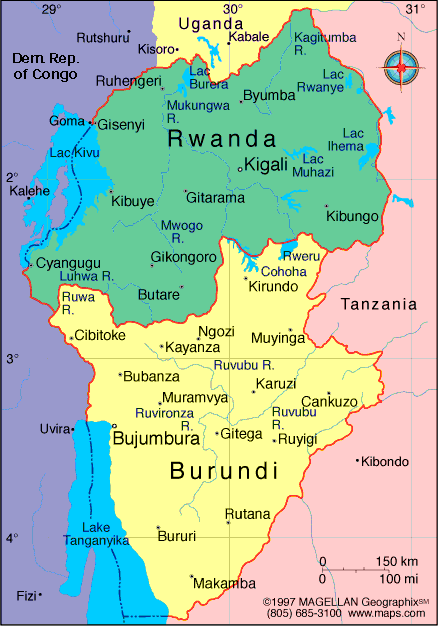
Rwanda Profile
History of Rwanda
Rwanda’s history stretches back thousands of years, with early communities forming along the fertile hills and valleys for which the country is famous. Before European contact, Rwanda was organized into a monarchy led by the Mwami (king), with a complex social structure including the Hutu, Tutsi, and Twa communities. Agriculture, cattle herding, and local trade shaped everyday life, and oral traditions preserved the nation’s rich cultural heritage.
In the late 19th century, German colonizers arrived, followed by the Belgians after World War I, who introduced new administrative systems and exacerbated social divisions between ethnic groups. Rwanda gained independence in 1962, but the following decades were marked by political unrest and tension.
Tragically, Rwanda is perhaps best known internationally for the 1994 genocide, in which hundreds of thousands of Tutsi and moderate Hutu were killed. The country has since embarked on an extraordinary journey of reconciliation, recovery, and development, focusing on unity, economic growth, and social progress.
Today, Rwanda is recognized for its stability, innovative governance, and thriving tourism, with historical lessons woven into its national identity while it continues to rebuild and modernize.
Geography of Rwanda
Rwanda is a small nation in East Africa, positioned at the heart of the Great Lakes region. It shares its borders with Uganda to the north, Tanzania to the east, Burundi to the south, and the Democratic Republic of the Congo to the west. Despite its compact size, Rwanda holds significant geographic and ecological importance within the region.
Often called the Land of a Thousand Hills, Rwanda is defined by its rolling highlands, terraced hillsides, and dramatic volcanic mountains. The Virunga Mountains dominate the northwest, where towering peaks such as Mount Karisimbi rise above dense cloud forests. Western Rwanda is shaped by the deep rift valley that forms Lake Kivu, one of Africa’s most scenic lakes. The central part of the country features green, undulating hills, while the eastern region transitions into warmer savanna and wetland ecosystems, home to Akagera National Park and its diverse wildlife.
Thanks to its elevation, Rwanda enjoys a mild tropical highland climate with pleasant temperatures throughout the year. The country experiences two rainy seasons, the first from March to May and the second from September to December, separated by drier months ideal for agriculture and travel. Average temperatures range from cool mountain air in the highlands to warmer conditions in the eastern plains.
Rwanda’s river system plays an important role in the region, with rivers such as the Nyabarongo contributing to the upper Nile basin. The country’s fertile volcanic soils support agriculture, while lakes like Kivu provide fish, freshwater, and growing opportunities for tourism.
Major cities
- Kigali
- Butare
- Gisenyi
- Musanze
- Nyanza
- Byumba
- Cyangugu
- Kibungo
- Rwamagana
- Muhanga
Interesting Facts about Rwanda
- Land of a Thousand Hills: Rwanda’s nickname comes from its lush, rolling landscape of countless green hills that stretch across the country.
- Gorilla Conservation Success: The country is among the few in the world where you can see endangered mountain gorillas in their natural habitat, thanks to successful conservation efforts.
- Africa’s Cleanest Country: Known for its strict environmental policies, Rwanda banned plastic bags and holds monthly community clean-up days called Umuganda, making it one of Africa’s cleanest nations.
- Remarkable Safety and Stability: Despite its tragic past, Rwanda has become one of Africa’s safest and most politically stable countries.
- Women in Leadership: Rwanda has one of the highest percentages of women in parliament worldwide and is leading global efforts in gender equality.
- Home to Lake Kivu: Lake Kivu, one of Africa’s Great Lakes, is famous for its stunning scenery, fishing communities, and recreational opportunities.
- Unique Wildlife Diversity: Beyond gorillas, Rwanda hosts elephants, lions, hippos, crocodiles, and hundreds of bird species across its national parks.
- Rich Cultural Heritage: Rwanda’s culture blends traditional music, dance, crafts, and storytelling, with events like Intore dance performances showcasing national pride.
- Volcanic Landscapes: The Virunga Mountains contain several volcanoes, some of which are active, providing dramatic scenery and fertile soils for agriculture.
- Coffee and Tea Production: Rwanda is renowned for its high-quality Arabica coffee and tea, which are major exports and a key part of the nation’s economy.
People also ask…
What is the Capital of Rwanda?
The capital city is Kigali, the political, economic, and cultural hub of the country. Known for its cleanliness, modern infrastructure, and vibrant markets, Kigali reflects Rwanda’s rapid development and forward-looking growth.
What are the Official Languages Spoken in Rwanda?
The official languages are Kinyarwanda, French, English, and Swahili. Kinyarwanda is spoken by virtually the entire population, while the other languages are used in education, business, and government.
What is the Traditional Rwandan Cuisine like?
Rwandan cuisine is simple, fresh, and hearty, often based on staples like beans, bananas, cassava, maize, and sweet potatoes. Popular dishes include Isombe (cassava leaves with peanut sauce), Ugali (cornmeal porridge), and grilled or stewed meats. Fresh tropical fruits like passionfruit, mango, and pineapple are also commonly enjoyed.
|
|
 |


