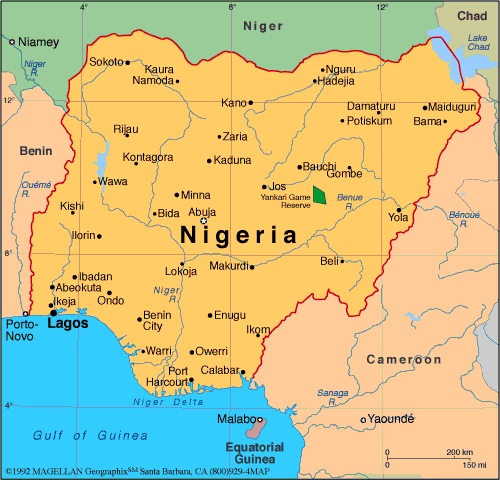
Nigeria is a country located in West Africa that is officially known as the Federal Republic of Nigeria. It is bordered by Niger to the north, Chad to the northeast, Cameroon to the east, and the Gulf of Guinea to the south. Nigeria is the most populous country in the map of Africa, with over 200 million people, and it is one of the largest countries on the continent. Its capital city is Abuja, and its largest city is Lagos. Among the countries of the world, Nigeria is particularly home to an incredible history and culture that date back to prehistoric times.
If you want to discover more in-depth information on Malta as a country, check out our Nigeria Profile!
Plus, test your country knowledge with our world geography quiz on African Flags Part II.
Nigeria Facts: History
Nigeria has a rich history, with evidence of human habitation dating back to 9,000 B.C. The country has been home to several kingdoms, such as the Nok Culture, which flourished between 1,000 B.C. and 300 A.D., and is the earliest known civilization in Nigeria. The country was later ruled by various empires, including the Nri Kingdom, Kanem-Bornu Empire, the Oyo Empire, and the Sokoto Caliphate. These kingdoms had unique art, architecture, and traditions that can still be seen today in various parts of the country
In 1914, Nigeria became a British protectorate, and it gained independence in 1960. Since then, Nigeria has faced political instability, including a civil war from 1967 to 1970. However, the country has managed to overcome these challenges and has emerged as one of the leading African countries.
Following independence, Nigeria experienced alternating periods of civilian and military rule until the return to democracy in 1999. Nowadays, it is one of the largest political and economic forces on the continent, often referred to as “the Giant of Africa” due to its enormous population and rich culture. There are more than 250 ethnic groups and 500-plus languages spoken in the country.
The discovery of oil in the Niger Delta region in the mid-20th century reshaped the country’s economy, and it became one of the largest oil producers. There are ongoing environmental problems and regional tensions, but despite all the challenges, Nigeria has been a powerhouse of African politics and peacekeeping missions.
Nigeria Facts: Geography
Nigeria is located in west Africa and covers an area of 923,768 square kilometers. It is home to diverse landscapes, including the Niger River, the Benue River, and the Chad Basin. The country shares borders with several African countries such as Niger, Chad, Cameroon, and Benin. The Gulf of Guinea is located to the south of the country. Lagos, Kano, and Ibadan are some of Nigeria's major cities. The country's highest point is Chappal Waddi, which stands at 2,419 meters, and is found in Taraba state.
According to the Administrative Map of Nigeria, the country is divided into 36 states and one Federal Capital Territory, which is Abuja.
Nigeria is a country with a diverse landscape that is home to many natural wonders and tourist attractions. The country is also known for its cultural heritage, which is reflected in its historic sites and landmarks.
Nigeria Facts: Tourist Attractions
The map of Nigeria is home to several tourist attractions that range from natural wonders to historic sites. The country has something to offer for every tourist, making it a must-visit destination for anyone interested in exploring Africa. Here are some of the top tourist attractions in Nigeria:
- Lagos: Lagos is Nigeria's largest city and one of the fastest-growing cities in Africa. It is home to several attractions, including the National Museum Lagos and the Nigerian National Theatre. Lagos is also known for its beaches, such as Elegushi Beach, and its nightlife.
- Abuja: Abuja is Nigeria's capital city and is home to several government buildings and embassies. It is also a popular tourist destination, with attractions such as Aso Rock and the Nigerian National Mosque.
- Port Harcourt: Port Harcourt is a city located in the Niger Delta region of Nigeria. It is known for its oil industry and is a gateway to many of Nigeria's natural attractions, such as the Bight of Benin and the Niger Delta swamps.
- Benin City: Benin City is the capital of Edo State and is known for its rich cultural heritage. The city is home to the Benin National Museum and the Oba's Palace, which is a UNESCO World Heritage Site.
- Jos: Jos is a city located in the middle belt region of Nigeria. It is known for its cool climate and scenic beauty, with attractions such as the Jos Wildlife Park and the National Museum of Nigeria.
- Maiduguri: Maiduguri is the capital city of Borno State and is located in the northeast region of Nigeria. It is known for its rich history and culture and is home to several historic sites, such as the Shehu of Borno's Palace and the Maiduguri Museum.
- Other major cities in Nigeria include Katsina, Bauchi, Ondo, Enugu, Osun, and Ekiti.
Interesting Facts About Nigeria
- The Most Populous Nation In Africa: With more than 235 million people, Nigeria is the most populous country on the African continent and the 7th most populous in the world.
- Diversity: Nigeria is home to over 250 distinct ethnic groups speaking more than 500 languages, making it one of the most diverse countries in the world.
- Nollywood: Nigeria’s film industry, also known as Nollywood, is the second-largest in the world by volume of production, rivaling Hollywood and Bollywood.
- Music Influence: Nigerian artists such as Fela Kuti, Burna Boy, and Wizkid have been central figures in the development of Afrobeat and Afropop, ranking the country as one of the world’s premier music destinations.
- Home of the Longest River: Part of the Niger River, one of Africa’s longest rivers, runs through the country. It brings water, serves as transportation, and provides fertile farmland.
- Ancient Art: The Nok terracotta sculptures, which were created circa 500 B.C., are some of the earliest known artistic traditions in sub-Saharan Africa.
- Sports Passion: Nigerians are football lovers and have hosted numerous internationally known events, such as the FIFA World Cup.
People Also Ask...
If you're inspecting the Nigeria country map, you may have some queries about the region. Here are some of the most frequently asked questions, along with their answers.
Which Is the Largest State in Nigeria?
The largest state in Nigeria by landmass is Niger State, which covers an area of 76,363 square kilometers. However, in terms of population, Lagos State is the largest, with an estimated population of over 21 million people.
What Is Nigeria Known For?
Nigeria is known for its history and culture, diverse landscapes, and natural wonders, including Lagos, Abuja, and Port Harcourt, and is a gateway to many of Africa's other destinations. Nigeria is also known for its oil industry and its status as the most populous country in Africa, as well as Nollywood movies.
How Many States in Nigeria?
Nigeria is divided into 36 states and the Federal Capital Territory, based on the political map of Nigeria. Each state has its own unique culture, history, and traditions, and is governed by a state governor and legislature.
What is the Capital of Nigeria?
The capital of Nigeria is Abuja, a contemporary city constructed as the center of the country. It was established to be the capital in the early 1990s and is popular for its government buildings, embassies, and attractions such as Aso Rock and the Nigerian National Mosque.
What is the Climate in Nigeria?
The climate in Nigeria is varied, though it is generally tropical. The humid southern coast experiences heavy annual rainfall, the central regions enjoy a tropical savanna climate with distinct wet and dry seasons, while the northern areas are semi-arid, marked by hot and dry conditions for most of the year.
What is the Official Language in Nigeria?
The official language in Nigeria is English, the language of government, commerce, and education. Nigeria also has more than 500 native languages spoken across the land, including Hausa, Yoruba, Igbo, Fulfulde, Ibibio, Kanuri, and Tiv.
What is the Population of Nigeria?
The population of Nigeria is over 235 million people according to the latest statistics, making it the most populous country in Africa and the seventh most populous in the world.
What is the Official Currency of Nigeria?
The Nigerian Naira is the official currency in Nigeria, denoted as ₦ or NGN. It is issued and controlled by the Central Bank of Nigeria.
What are the Main Industries in Nigeria?
Nigeria’s economy is mixed and is one of the emerging market economies. Its primary sectors of agriculture, manufacturing, and extractive industries include oil & gas. It is also a land of Nollywood, the world’s third-biggest film industry in terms of the number of films produced.
What is the Main Religion of Nigeria?
Islam and Christianity are the two dominant religions in Nigeria. The north is dominated by Muslims, the south and center of the country have professing Christians.
What is the time zone in Nigeria?
Nigeria operates on West Africa Time (WAT), which is UTC+1. The country does not observe daylight saving time, keeping its clocks consistent throughout the year.
What are the Best Places to Visit in Nigeria?
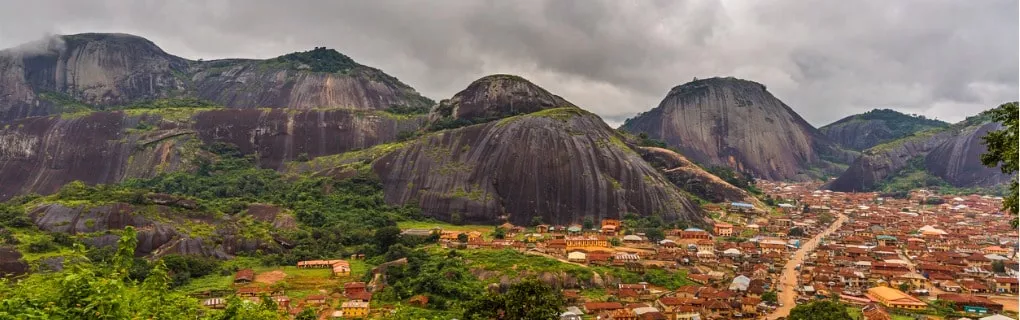
Some popular landmarks in Nigeria include Yankari Game Reserve, Sukur Cultural Landscape (UNESCO World Heritage Site), Osun-Osogbo Sacred Grove (UNESCO), Olumo Rock, and Lekki Conservation Centre.
When is Nigeria’s Independence Day?
Nigeria’s Independence Day is 1 October. It is the anniversary of the end of its colonialisation by the British. The day is celebrated with parades, cultural exhibitions, and patriotic events throughout the country.
What Type of Government Does Nigeria Have?
Nigeria is a federal presidential republic consisting of 36 states and the Federal Capital Territory in Abuja. There is a President who serves as both the head of state and government.
Is Nigeria Safe to visit in 2025?
Nigeria has areas that are safe for visitors, especially in cities like Lagos and Abuja. Still, some regions face security challenges and should be avoided. Always check with the most recent government travel advisories before planning your visit.
Think you have what it takes?
Show off your geography knowledge with our quiz on the flags of Africa.
|
|
 |


