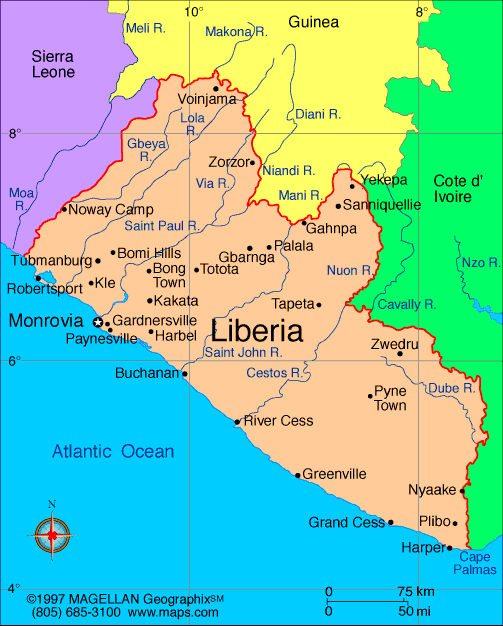
Liberia is a country rich in natural beauty, diverse landscapes, and cultural heritage. A closer look at Liberia's map reveals 15 administrative counties, each with its own unique geography and traditions. The country stretches along over 350 miles (560 km) of Atlantic coastline, bordered by Sierra Leone to the northwest, Guinea to the north, and Côte d’Ivoire to the east.
The country is home to over 5 million people, with Monrovia, the capital and largest city, serving as its economic and political hub. The nation’s geography features tropical rainforests, fertile plains, and rolling hills, while its major rivers, such as the St. Paul, Cestos, and Cavalla, play a vital role in agriculture and transportation.
Find out more about Liberia in our detailed guide.
Liberia Profile
History of Liberia
Liberia has a unique and fascinating history that sets it apart from other African nations. Founded in 1822 by freed African Americans under the auspices of the American Colonization Society, Liberia was established as a settlement for formerly enslaved people seeking a new life in Africa. The country declared its independence in 1847, making it the first African republic to gain independence and one of the oldest on the continent.
Due to the blending of native African cultures with the traditions brought by Americo-Liberians, a distinctive social and political landscape has emerged. Throughout the 20th century, the country experienced economic growth through its rubber and iron industries, but also faced political challenges and civil conflicts that deeply impacted its development.
Today, Liberia is rebuilding and evolving as a democratic nation, celebrating its cultural heritage, resilient population, and historical significance. Understanding Liberia’s history provides crucial context for its modern geography, demographics, and societal structure, making it an essential topic for travelers, students, and researchers.
Geography of Liberia
The nation spans approximately 111,369 square kilometers (43,000 square miles) and is located on the west coast of Africa. It is bordered by Sierra Leone to the northwest, Guinea to the north, Côte d’Ivoire to the east, and the Atlantic Ocean to the south and west, giving it a strategically important coastline of over 350 miles (560 km).
The geography is defined by three major regions: the coastal plains, the hinterland plateau, and the mountainous interior. The coastal plains are lined with sandy beaches, lagoons, and mangrove swamps, while the interior features rolling hills, tropical rainforests, and fertile river valleys.
Liberia experiences a tropical climate, characterized by hot, humid conditions and distinct wet and dry seasons. The rainy season lasts from May to October, bringing heavy rainfall that nourishes the country’s lush forests and rich biodiversity. The dry season, from November to April, is marked by cooler temperatures and lower humidity, influenced by the dry harmattan winds from the Sahara.
Major Cities
- Monrovia
- Gbarnga
- Buchanan
- Harper
- Kakata
- Zwedru
- Ganta
- Sanniquellie
- Greenville
- Voinjama
Interesting Facts about Liberia
- Oldest Republic in Africa: Liberia declared independence in 1847, making it the first African republic to gain independence.
- Founded by Freed African Americans: The nation was established by formerly enslaved African Americans under the American Colonization Society.
- Flag Inspired by the United States: Liberia’s flag resembles the U.S. flag, and the single white star symbolizes freedom.
- Capital Named After a U.S. President: Monrovia, the capital city, honors James Monroe, who supported the colonization plan.
- Rich in Natural Resources: Liberia is abundant in iron ore, gold, diamonds, and timber, which contribute to its economy.
- Lush Rainforests and Wildlife: The nation is home to tropical rainforests with elephants, pygmy hippos, chimpanzees, and diverse bird species.
- Longest Coastline in West Africa: Liberia has over 350 miles of Atlantic coastline, home to beautiful beaches and ports.
- Diverse Indigenous Ethnic Groups: About 16 indigenous ethnic groups live in Liberia, each with its own language and cultural traditions.
- Major Rubber Producer: Liberia is one of the world’s largest producers of natural rubber, with the historic Firestone Plantation.
- Dual Currency System: The Liberian Dollar (LRD) is the official currency, but the U.S. dollar is widely used throughout the nation.
People also ask…
What are the Top Tourist Attractions in Liberia?
Liberia offers a mix of natural beauty and cultural heritage. Popular attractions include Sapo National Park (home to rainforests and wildlife), Providence Island in Monrovia, historic port towns like Buchanan and Harper, and scenic beaches such as Silver Beach and Robertsport.
What is the Currency of Liberia?
The official currency is the Liberian Dollar (LRD), but the U.S. dollar is widely accepted and commonly used for everyday transactions.
What is the Traditional Liberian cuisine?
Liberian cuisine features hearty dishes based on rice, cassava, plantains, and fresh seafood. Popular meals include Jollof rice, Palm butter, Fufu with soup, and Pepper soup. Many dishes are flavored with local spices, palm oil, and fresh vegetables.
What is the Official Language of Liberia?
While English is the official language, Liberia is home to 16 indigenous ethnic groups that speak languages such as Kpelle, Bassa, Grebo, and Kru. English is used in government, schools, and business, while local languages are widely spoken in communities.
|
|
 |


