Located in the heart of the African continent, the Central African Republic is a landlocked nation known for its vast wilderness, rich natural resources, and deep cultural roots. Often described as one of Africa’s most unspoiled countries, it offers a glimpse into traditional ways of life shaped by centuries of history, diverse ethnic groups, and a close connection to nature.
Home to around 5.6 million people, the Central African Republic features a striking mix of landscapes, from dense tropical rainforests in the south to open savannas and rolling plateaus in the north. The country is crisscrossed by major river systems, including the Ubangi River, which supports both wildlife and local communities.
Despite facing ongoing challenges, the Central African Republic is rich in cultural heritage and natural beauty. Its people, traditions, and ecosystems reflect the resilience and diversity of Central Africa itself.
Discover more about the Central African Republic in this detailed review.
Central African Republic Profile
History of the Central African Republic
The story of the Central African Republic stretches back thousands of years, long before modern borders existed. For centuries, the land was home to many Indigenous communities who lived from farming, fishing, hunting, and regional trade. Their customs, languages, and traditions formed the cultural foundation of the country and are still visible in everyday life today.
In the late 1800s, European powers moved into the region, and it eventually became part of French Equatorial Africa. Colonial rule brought major changes, many of them harsh, including forced labor and the exploitation of people and resources. When the Central African Republic gained independence from France in 1960, there was great hope for a new beginning
The years that followed were difficult. The country experienced repeated political upheaval, including coups and periods of authoritarian leadership. One of the most unusual moments came in the 1970s, when the nation was briefly ruled as an empire under Jean-Bédel Bokassa. Since then, the Central African Republic has continued to face serious challenges while also showing remarkable endurance.
Today, history is a powerful reminder of both struggle and strength. Its people continue to preserve their cultural identity while working toward peace, stability, and a better future.
Geography of the Central African Republic
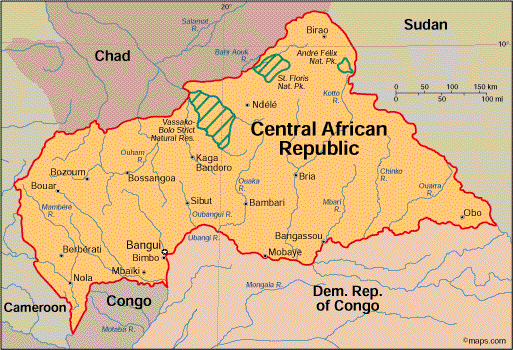
Located in the very heart of Central Africa, the Central African Republic is a landlocked country covering approximately 622,984 square kilometers (240,535 square miles). It shares borders with Chad to the north, Sudan and South Sudan to the east, the Democratic Republic of the Congo and the Republic of the Congo to the south, and Cameroon to the west. Its central position has long influenced trade routes, migration, and cultural exchange across the region.
The country’s landscape is dominated by broad plateaus, gently rolling hills, and expansive savannas, especially in the north. In the south, the terrain gradually transitions into dense tropical rainforests, part of the larger Congo Basin ecosystem. The highest elevations are found in the western regions, where low mountain ranges rise above the surrounding plains.
Several important rivers shape the geography of the Central African Republic. The Ubangi River, a major tributary of the Congo River, forms much of the southern border and serves as a key transportation and water source. Other rivers, including the Chari and Sangha, support agriculture, wildlife, and local communities throughout the country.
The Central African Republic has a tropical climate, with distinct wet and dry seasons. Rainfall is heavier in the southern regions, supporting lush vegetation, while the north experiences a drier climate with open grasslands. This mix of forests, rivers, and savannas gives the country a diverse natural environment rich in wildlife and natural resources.
Major Cities
- Bangui
- Bimbo
- Berbérati
- Bambari
- Bouar
- Bossangoa
- Bria
- Bangassou
- Carnot
- Sibut
Interesting Facts about the Central African Republic
- Diamond Country: The nation is rich in natural resources, particularly diamonds, gold, and uranium.
- Peaceful Forests: The southern rainforests are largely untouched, offering a glimpse into Africa’s natural beauty and ancient ecosystems.
- River Heartland: Major rivers like the Ubangi and Sangha shape the country’s landscape and support local communities.
- Savanna and Plains: Northern regions are dominated by open savannas and plateaus, in contrast to the lush southern forests.
- Cultural Mosaic: The country is home to over 80 ethnic groups, each with unique traditions, languages, and crafts.
- Wildlife Riches: CAR is a haven for biodiversity, including antelopes, crocodiles, hippos, and countless bird species.
People also ask…
What is the Central African Republic known for?
The Central African Republic is known for its vast rainforests, rich wildlife, and natural resources like diamonds and gold. Its rivers, savannas, and forests make it one of Africa’s most ecologically diverse countries.
What is the cuisine in the Central African Republic?
Central African cuisine is based on local staples like cassava, plantains, maize, and rice. Common dishes include moufara (a cassava-and-peanut stew), grilled fish from local rivers, and sauce graine, a tomato-and-palm-oil-based sauce served with meat or vegetables.
What languages are spoken in the Central African Republic?
The official languages are French and Sango, the latter widely spoken as a lingua franca across ethnic groups. Many local languages are also used within communities.
|
|
 |


