1. Flint Water Crisis 2. Hurricane Katrina 3. BP Oil Spill 4. Exxon Valdez Oil Spill 5. Three Mile Island 6. St. Francis Dam 7. Picher Lead 8. Tennessee Ash Spill 9. Libby Asbestos 10. Dust Bowl
- Lead Contamination in Picher
-
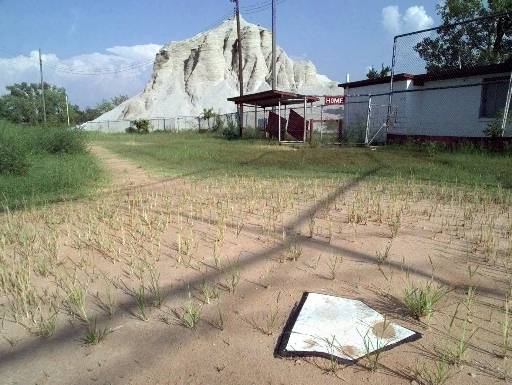
- At its peak in 1926, Picher, Oklahoma had a population of 14,252. From 1917 through 1947, the town's mines produced over $20 billion of ore. More than fifty percent of lead and zinc metals used in World War I came from the mines in Picher. Over 18,000 people worked in those mines or in mining services, some commuting via trolley from as far away as Joplin or Carthage, Missouri. However, due contamination from over a century of unrestricted excavation, all mining had stopped by 1967. In 1996, researchers found that 34% of all children in Picher had lead poisoning due to the environmental effects of the contamination. The toxins in Picher included 36 million tons of mill sand and sludge as well as contaminated water from at least 14,000 mine shafts. The contamination was so bad that in April 2006, the U.S. government decided to close Picher and relocate all residents.
- Today Picher is a ghost town. It's abandoned little league field is pictured above. Picher is one of the few cities to be declared uninhabitable due to health and environmental damage by mines. Other abandoned mining towns include Gilman, Colorado, Centralia, Pennsylvania, and Wittenoom, Western Australia.
- Photo source: AP Photo/J. Pat Carter
Related Links |