Nestled in the heart of South America, Paraguay is a landlocked nation known for its rich cultural heritage, scenic river landscapes, and striking geographic contrasts. Home to nearly 7 million people, it remains one of the continent’s most under-explored yet steadily developing countries. Its capital, Asunción, perched along the Paraguay River, serves as the center of political life, commerce, and tradition.
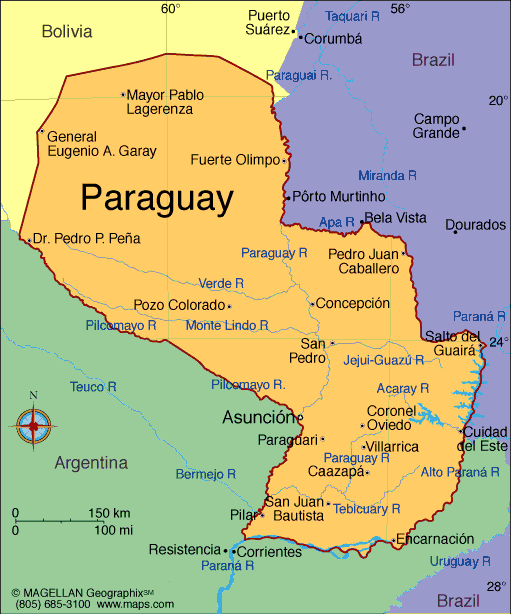
Paraguay’s terrain is dramatically shaped by the mighty Paraguay River, which divides the country into two distinct halves: the lush, forested Eastern Region, where most of the population lives, and the rugged Western Chaco, a vast expanse of savannas and wetlands known for its wildlife and remote ranching communities. Waterways play a crucial role in the nation’s identity, fueling agriculture, trade routes, and one of the world’s largest hydroelectric partnerships.
To explore more key facts, statistics, and background information, visit the comprehensive Paraguay overview on Infoplease.
Paraguay Profile
History of Paraguay
Paraguay’s history is shaped by a blend of Indigenous traditions, colonial influence, and periods of dramatic transformation. Before European contact, the region was home to the Guaraní people, whose language and culture remain central to Paraguayan identity today. In the 16th century, Spanish settlers arrived and established missions and settlements, creating a unique society where Indigenous and European cultures blended more closely than in many other parts of South America.
The nation gained its independence in 1811, becoming one of the first countries in the region to break from Spanish rule. The early years were marked by efforts to build a strong, self-sufficient nation. This period was followed by one of the most devastating conflicts in Latin American history - the Paraguayan War (1864–1870). The war, fought against Brazil, Argentina, and Uruguay, dramatically reduced the population and reshaped the country’s borders.
In the 20th century, Paraguay faced political instability, including the Chaco War with Bolivia and decades of authoritarian rule under Alfredo Stroessner. Since the late 1980s, the nation has moved toward democracy, working to strengthen its institutions and modernize its economy.
Geography of Paraguay
Paraguay is a landlocked country in the heart of South America, spanning about 406,752 square kilometers (157,048 square miles). Despite having no coastline, it boasts an impressive range of landscapes, including lush forests, fertile farmlands, expansive wetlands, and wide-open plains - making it one of the continent’s most geographically diverse nations. Paraguay shares its borders with Argentina to the south and southwest, Brazil to the east and northeast, and Bolivia to the northwest, giving it a strategic position in central South America.
The Paraguay River divides the country into two contrasting regions. The Eastern Region (Región Oriental) is home to the majority of the population and features rolling hills, dense forests, rich agricultural land, and many of the country’s major cities, including the capital, Asunción. This area forms the agricultural backbone of Paraguay, producing soybeans, corn, wheat, and other key crops.
In contrast, the Western Region (El Chaco) is a vast, sparsely populated area known for its dry forests, savannas, and rugged wilderness. The Chaco experiences hotter, drier conditions than the east and is famous for its cattle ranches and unique wildlife, including capybaras, jaguars, armadillos, and caimans. Its remote landscapes and biodiversity make it a fascinating but challenging region.
Paraguay’s climate ranges from subtropical to tropical, with hot, humid summers and mild winters. The rainy season stretches from October to April, feeding the country’s rivers and supporting agriculture, while the drier months from May to September provide ideal conditions for harvesting. Temperatures typically range from 20°C (68°F) in winter to 35°C (95°F) in summer, though the Chaco can reach even higher.
Major Cities
- Asunción
- Ciudad del Este
- Encarnación
- San Lorenzo
- Pedro Juan Caballero
- Luque
- Lambaré
- Capiatá
- Ñemby
- Villa Elisa
Interesting Facts about Paraguay
- Landlocked Country: Paraguay is one of only two landlocked countries in South America, along with Bolivia.
- Paraguay River: The Paraguay River divides the country into two distinct regions, shaping its geography and economy.
- Guaraní Language: Alongside Spanish, Guaraní is an official language and widely spoken, reflecting the country’s Indigenous roots.
- Hydroelectric Power: Paraguay is home to the Itaipú Dam, one of the largest hydroelectric dams in the world, shared with Brazil.
- Yerba Mate: Paraguay is famous for yerba mate, a traditional tea consumed daily by much of the population.
- Biodiversity: The Chaco region and rivers support unique wildlife, including jaguars, capybaras, and caimans.
- Historical Significance: Paraguay was one of the first South American nations to gain independence in 1811.
People also ask…
What is the Capital of Paraguay?
The capital of Paraguay is Asunción, a vibrant city on the Paraguay River that serves as the country's political, cultural, and economic center.
What is Traditional Paraguayan Cuisine?
Paraguayan cuisine is hearty and flavorful, featuring staples like corn, cassava, beef, and cheese. Popular dishes include sopa paraguaya (a cornbread-like dish), chipa (cheese bread), bori-bori (corn-and-meat dumplings), and asado (grilled meat), often enjoyed with mate tea.
What is the Official Currency of Paraguay?
The official currency of Paraguay is the Paraguayan Guaraní (PYG), used for all transactions within the country.
What are the Top Tourist Attractions in Paraguay?
Paraguay offers unique attractions, including Asunción’s historic districts, the Itaipú Dam, Jesuit Missions of La Santísima Trinidad de Paraná and Jesús de Tavarangue, the Chaco wilderness, and riverside landscapes for boating and ecotourism.
|
|
 |


