Located in South America, Colombia is a nation that boasts incredible history and culture. The country boasts diverse landscapes and experiences, from the lush Amazon rainforest to the majestic Andes mountains. Known as one of the warmest and most hospitable nations, Colombia is always happy to welcome tourists from all over the world.
Colombia Profile
History of Colombia
Colombia has a long history of mixed culture. Spanish explorers arrived in 1499, and the territory became part of the Spanish Empire. Before the arrival of Spanish colonists, different native societies existed, such as the Muisca, Tairona, and Quimbaya. In about 300 years, the natives were colonized, forced into labor, and Christianized.
Inspired by revolutionary movements throughout Latin America, Colombia struggled for independence from Spain in the early 19th century. It gained independence in 1819 as part of Gran Colombia - a federation that included what are now Colombia, Venezuela, Ecuador, and Panama. In 1831, Gran Colombia was dissolved, and Colombia became a republic. During the 19th and 20th centuries, Colombia experienced political turmoil, violence, and civil wars, notably "La Violencia" (1948-1958). During the second half of the 20th century, the country faced a surge of drug cartels and armed conflict, with the presence of guerrilla groups such as the FARC.
In recent years, Colombia has made great advances toward peace and some degree of stability. The 2016 peace deal with the FARC marked a momentous turning point.
Geography of Colombia
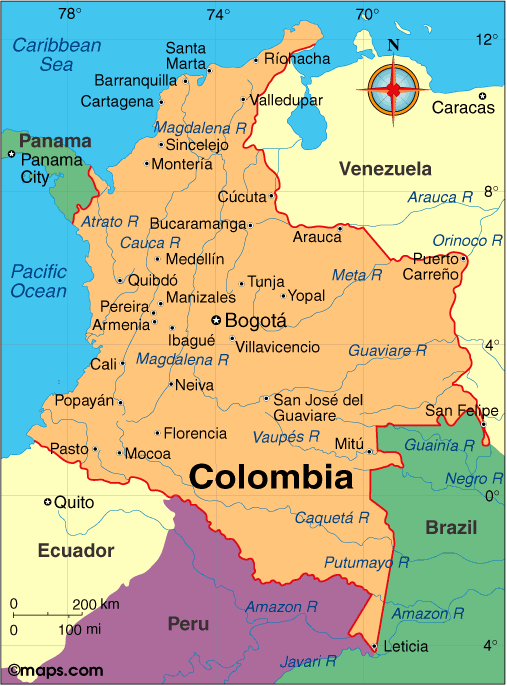
Columbia has an overall size of 440,831 square miles. It confines Venezuela to the east, Brazil to the southeast, Peru to the south, Ecuador and Panama to the west, and the Caribbean Sea to the north.
The country consists of varied geographical landscapes, from coastal plains to tropical rainforests to towering mountain ranges in the Andes running through the country from south to north. Many southern regions are covered by the Amazon Rainforest.
Colombia has an array of climates, from tropical on the coasts to temperate in the highland areas. The main rivers, including the Magdalena and Cauca, are critical for transportation and agriculture. The country is an ecologically significant mega-diverse country in South America with natural resources ranging from mineral deposits to extensive agricultural land.
Major Cities of Colombia
Colombia is home to many charming and vibrant cities, and you can find a list of the main ones below:
- Bogota: High in the Andes, the capital city and its bustling metropolis is well-known for its cultural and historical places and museums. Don’t miss the Gold Museum and the La Candelaria district of the city.
- Medellín: Once notorious for its drug cartels, the area has metamorphosed into a poster child for innovation and urban renewal.
- Cartagena: A coastal city known for its colonial architecture and Caribbean character. The historic walled city is a UNESCO World Heritage site and a tourist draw.
- Cali: The salsa capital of the world, Cali, is known for its dynamic music scene and dance culture. The city celebrates its Afro-Colombian roots with many festivals.
- Barranquilla: Featuring one of Colombia’s biggest carnivals, Carnaval de Barranquilla, the seaside city is famous for its cultural diversity established through music, dance, and colorful celebrations.
Fun Facts about Colombia
- Biodiversity: Colombia is the second most biodiverse country in the world, after Brazil. Its native flora includes more than 1,800 species of birds and countless other plants and animals.
- Coffee Heaven: Colombia is known for producing some of the best coffee globally. The Coffee Cultural Landscape is a Unesco World Heritage site and an area that celebrates the country’s coffee-growing traditions.
- Emerald Capital: Colombia is known as the "Emerald Capital of the World," with some of the world's best emeralds made here. Muzo is a town known for emerald mines.
- Amazon River: The second longest river in the world runs through Colombia and plays an important role in the country’s amazing biodiversity and ecological significance.
People also ask…
What is the population of Colombia?
According to the latest reports, Colombia has a population of 54 million people. Ethnic diversity is evident, with the majority of the population being mestizos - people with both European and indigenous blood. There are also large communities of Afro-Colombians, especially on the Pacific coast, as well as small groups of European, Arab, and Asian descent.
Which city is the capital of Colombia?
The capital city of Colombia is Bogotá, which sits in the Andean region at an elevation of 2,640 meters above sea level. As the largest city in the country, Bogota is the political, cultural, and economic hub of Colombia. The city is famous for its historical buildings, museums, and metropolitan experience.
What is the official language of Colombia?
Spanish is the official language of Colombia, which is spoken by over 99% of the population. Other languages include Wayuu, Nasa Yuwe, Embera, and many others.
What is the currency of Colombia?
The Colombian peso (COP) is the official currency of Colombia. Debts are still in pesos with "$" for all business transactions throughout the country. Exchange rates are not constant and can change, so always check your rates before making any travel plans and transactions.
What is the climate in Colombia?
Colombia is in the tropics, so the average temperature is determined more by the altitude than by the time of year. Coastal and lowland areas are warm all year round. With higher altitude cities like Bogotá, it’s cooler. There are two rainy seasons in the country - one between April and May and another from October to November.
What is the economy of Colombia based on?
Colombia has a diverse economy, with important sectors in oil, coffee, flowers, emeralds, and manufacturing. The nation is one of the largest coffee producers and exporters in the world. The national economy is also heavily reliant on agriculture, mining, and the services sector.
What are the best tourist places in Colombia?
Colombia offers great places for tourists like Cartagena, famous for its colonial architecture and Caribbean beaches. Medellín is another great tourist area, known for innovation and culture, as well as the well-known coffee region. The Amazon rainforest and the San Andrés Islands are also one of a kind!
What is Carnaval de Barranquilla?
The Carnaval de Barranquilla is one of Colombia’s best-known festivals and one of the largest in Latin America. The celebration includes colorful parades, traditional music (like cumbia), dance and flamboyant costumes. It celebrates Colombia’s rich cultural and ancestral heritage.
The carnival is celebrated between the 18th and the 21st of February each year in Barranquilla. The Battle of the Flowers (La Batalla de Flores) is considered one of the main activities the carnival starts with.
What is the political system in Colombia?
The Republic of Colombia is a democratic country with a presidential system. The president is the head of state and government. There is a multi-party system, which means that different political parties compete for power. Democracy governs the country’s political life, but political violence and armed conflict have led to similar-trained events.
Is Colombia safe to visit?
Popular tourist destinations of Colombia are generally safe. Some spots, such as Bogotá, Medellín, and Cartagena, have had major security improvements over the years. Still, travelers are advised to keep up with local news and updates and always follow safety guidelines.
What is Colombian cuisine like?
Regional variations on Colombian cuisine are prevalent, but staples often include rice, beans, potatoes and a variety of meats, such as beef, pork and chicken. Some common plates include arepas (cornmeal cakes), bandeja paisa (a meaty platter of beans, rice, meat, avocado and plantains). Empanadas are another popular meal that consists of fried pastries stuffed with meat or cheese.
|
|