From the snow-capped Andes to the rolling Pampas and the windswept plains of Patagonia, Argentina is a country of breathtaking diversity and irresistible charm. As the second-largest nation in South America, it offers everything from world-class wine and tango to vast natural wonders and vibrant city life.
Home to over 46 million people, Argentina blends European elegance with Latin passion. The capital, Buenos Aires, dazzles with its café culture, grand architecture, and late-night energy, while the countryside reveals a quieter rhythm shaped by gaucho traditions and endless horizons. Nature lovers can explore the stunning Iguazú Falls, sip Malbec in Mendoza, ski in Bariloche, or journey to the remote beauty of Tierra del Fuego - the “End of the World.”
Whether you’re drawn by the food, music, or magnificent landscapes, Argentina promises an unforgettable mix of adventure, culture, and warmth. It's a destination that captures the heart, one tango step at a time.
Learn more about Argentina here, or test your South America knowledge with the South America Map Quiz.
Argentina Profile
History of Argentina
Argentina’s history stretches back thousands of years, starting with native people like the Mapuche, Guaraní, and Diaguita, who shaped the land long before Europeans arrived.In the early 1500s, Spanish explorers arrived, establishing settlements like Buenos Aires and Córdoba, which became key centers of trade and governance under Spanish rule.
The fight for independence began in 1810, leading to the historic Declaration of Independence on July 9, 1816. Heroes like José de San Martín played a essential role in liberating Argentina and shaping the new nation. The 19th century was marked by regional conflicts and the struggle to unite the country under a federal system.
Massive waves of European immigration in the late 1800s and early 1900s transformed Argentina, bringing new cultures, traditions, and economic growth, while Buenos Aires emerged as a cosmopolitan city. The 20th century saw political shifts, including the influential era of Juan and Eva Perón, military rule, and the eventual return to democracy in 1983.
Today, Argentina celebrates a rich historical legacy that blends indigenous roots, Spanish heritage, and modern innovation, making it one of South America’s most dynamic and culturally vibrant nations.
Geography of Argentina
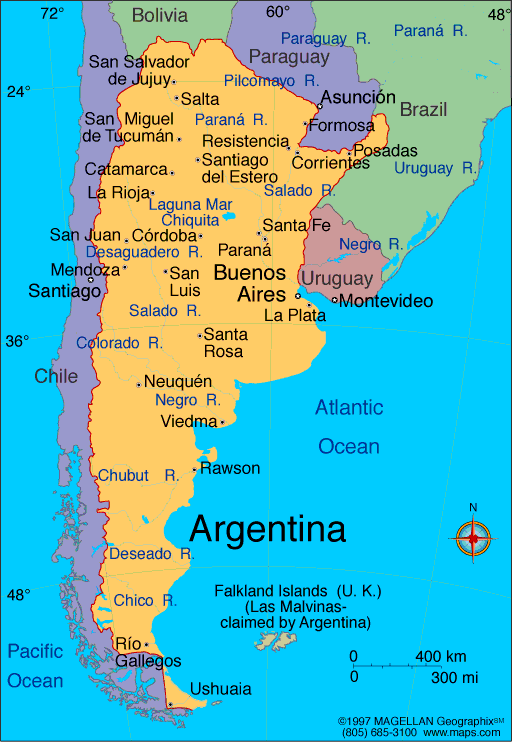
Argentina is a land of incredible diversity, stretching over 2,780 miles (4,500 km) from north to south, making it the eighth-largest country in the world. It shares borders with Chile to the west, Bolivia and Paraguay to the north, Brazil and Uruguay to the northeast, and the South Atlantic Ocean to the east. This vast expanse gives Argentina a remarkable variety of landscapes, climates, and ecosystems.
The country is home to towering Andes mountains, which dominate the western border and include Aconcagua, the highest peak in the Americas at 6,961 meters (22,838 feet). To the east, the Pampas stretch as fertile plains that support agriculture and cattle ranching, while Patagonia in the south offers dramatic plateaus, glaciers, and windswept plains. Argentina also has subtropical forests in the north, including the lush Iguazú rainforest, home to the spectacular Iguazú Falls.
Argentina’s climate is just as varied as its landscapes. The north is warm and subtropical, the central regions enjoy temperate conditions, and the south ranges from cool and windy in Patagonia to icy in Tierra del Fuego. This range of climates supports a rich variety of flora and fauna, including guanacos, Andean condors, jaguars, flamingos, and countless endemic plant species.
Rivers like the Paraná, Uruguay, and Colorado crisscross the country, providing vital water for agriculture, hydroelectric power, and ecosystems. With mountains, deserts, forests, wetlands, and coastlines, Argentina’s geography is a playground for adventurers, scientists, and travelers alike.
Major Cities
- Buenos Aires
- Córdoba
- Rosario
- Mendoza
- La Plata
- San Miguel de Tucumán
- Mar del Plata
- Salta
- Santa Fe
- San Juan
Interesting Facts About Argentina
- Tango is born here: Argentina is the birthplace of tango, a passionate dance and music style that has captivated the world.
- Home to Aconcagua: The highest peak in the Americas, standing at 6,961 meters (22,838 feet).
- Iguazú Falls: One of the largest and most spectacular waterfall systems on the planet.
- Patagonia’s wonders: A region of glaciers, fjords, and rugged landscapes, attracting adventurers and nature lovers.
- World-class beef: Argentina is famous for its high-quality beef and traditional asado (barbecue) culture.
- Wine capital: Mendoza produces some of the world’s best Malbec wines.
- Diverse ecosystems: From subtropical forests in the north to icy landscapes in Tierra del Fuego, Argentina has one of the most diverse environments in the world.
- European influence: Buenos Aires is often called the “Paris of South America” due to its architecture, culture, and vibrant arts scene.
People also ask…
Why is Argentina Called the Land of Silver?
Argentina is called the “Land of Silver” because the name Argentina comes from the Latin word argentum, which means silver.
When early Spanish explorers arrived in South America in the 16th century, they heard stories of vast silver deposits in the region, particularly near the Rio de la Plata (which literally means “River of Silver”). Although the amount of silver found was smaller than the legends suggested, the name stuck, and Argentina became known as the Land of Silver.
What is the Official Language of Argentina?
The official language is Spanish, though regional accents and vocabulary vary across the country.
What is the Official Currency of Argentina?
Argentina uses the Argentine Peso (ARS) as its official currency.
What are Some Major Industries in Argentina?
Argentina’s economy is diverse, with major industries including agriculture, cattle ranching, wine production, manufacturing, mining, and tourism.
What are the top tourist attractions in Argentina?
Argentina is home to stunning natural and cultural attractions, including Buenos Aires for tango and vibrant city life, Iguazú Falls for breathtaking waterfalls, Patagonia for glaciers and mountains, Mendoza for world-class wine, and Tierra del Fuego for rugged southern landscapes.
|
|
 |


