Ontario Profile
Known as Canada’s Heartland, Ontario stretches from the rocky shores of the Great Lakes to the vast forests of the north, blending natural beauty with vibrant cities. From the bustling streets of Toronto to the serene landscapes of Algonquin Park, Ontario offers a mix of urban energy, historic sites, and stunning wilderness.
Home to over 16 million people as of 2025, Ontario is the most populous province in Canada, featuring a remarkable diversity of communities and cultures. Its geography ranges from fertile farmland and rolling hills in the south to dense forests, rivers, and lakes in the north, making it a land of contrasts and discovery.
With a thriving economy, world-class education, and a rich cultural scene, Ontario remains one of Canada’s most dynamic and influential provinces.
Explore more about Ontario with our detailed overview of its economy, regions, and key facts.
History of Ontario
Ontario’s history stretches back thousands of years, long before European settlers arrived. Indigenous peoples, including the Anishinaabe, Haudenosaunee, and Cree, lived across the region, developing complex societies, trade networks, and rich cultural traditions. These communities continue to shape Ontario’s identity today.
European exploration began in the 17th century, with French fur traders and missionaries establishing early settlements along the Great Lakes and St. Lawrence River. By the mid-18th century, British influence grew following the Seven Years’ War, which led to French territories in Canada being officially transferred to Britain.
In 1791, the area became known as Upper Canada, created to accommodate Loyalists fleeing the American Revolution. During this period, towns and infrastructure began to develop, laying the foundation for Ontario’s modern economy and society. Upper Canada later merged with Lower Canada to form the Province of Canada in 1841.
Ontario officially became a province of the newly formed Dominion of Canada in 1867, following Confederation. The 19th and 20th centuries saw rapid industrialization, the expansion of railways, and significant immigration, transforming Ontario into Canada’s economic and cultural hub.
Geography of Ontario
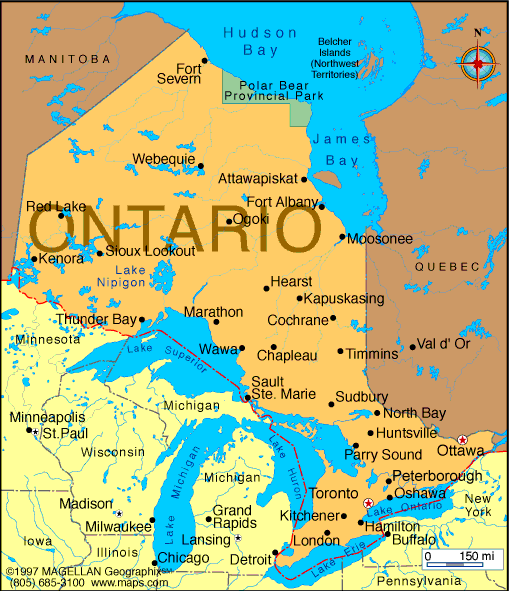
Ontario is Canada’s most populous province, stretching from the Great Lakes in the south to the vast forests and Hudson Bay lowlands in the north. The province covers over 1 million square kilometers, offering a mix of bustling cities, fertile farmland, rocky Canadian Shield terrain, and remote wilderness.
It shares borders with Quebec to the east, Manitoba to the west, Hudson Bay and James Bay to the north, and the United States to the south, connected through the Great Lakes and the St. Lawrence River. Southern Ontario is home to most of the population, including major cities like Toronto and Ottawa, while Central Ontario is known for its forests, lakes, and rocky landscapes. Northern Ontario is sparsely populated, with vast boreal forests, rivers, and rich mineral deposits.
The nation is famous for its freshwater resources, including Lake Superior, Lake Ontario, Lake Huron, and Lake Erie, as well as the St. Lawrence River. The province’s climate varies from warm, humid summers and cold winters in the south to long, snowy winters and shorter summers in the north. The Great Lakes help moderate temperatures and bring regular precipitation across the region.
Major Cities
Facts About Ontario
-
Economic Powerhouse: Ontario is Canada’s economic engine, producing about 40% of the country’s GDP.
-
Home to the Capital: Ottawa, Canada’s national capital, is located in Ontario.
-
Natural Wonders: Ontario contains over 250,000 lakes, including parts of the Great Lakes, the largest group of freshwater lakes in the world.
-
Niagara Falls: One of the most famous waterfalls globally, Niagara Falls sits on the border between Ontario and the United States.
-
Vast Forests: Nearly 60% of Ontario is covered in forests, resulting in great wildlife: moose, bears, wolves, and many others.
-
Historic Sites: Ontario is home to historic sites such as Fort Henry and the Rideau Canal, a UNESCO World Heritage Site.
-
Winter Sports: Northern Ontario’s cold climate and lakes make it ideal for winter sports like ice fishing, skiing, and snowmobiling.
-
Cultural Festivals: Ontario hosts major festivals like the Toronto International Film Festival and Caribana, celebrating arts and heritage.
People also ask…
What is Ontario known for?
Ontario is known for its vibrant cities like Toronto and Ottawa, its vast forests and freshwater lakes, and iconic landmarks such as Niagara Falls. It is also Canada’s economic and cultural hub.
What languages are spoken in Ontario?
English is the primary language in Ontario, but French is also an official language. Many communities are multilingual, with languages such as Mandarin, Punjabi, Spanish, and Italian spoken due to immigration.
What is the climate like in Ontario?
Ontario has a varied climate. Southern Ontario experiences warm summers and cold winters, while Northern Ontario has longer, colder winters and shorter summers. The Great Lakes help moderate temperatures in many areas.
What is traditional cuisine in Ontario?
Ontario’s cuisine reflects its multicultural population. Popular foods include butter tarts, peameal bacon, poutine, and fresh seafood from the Great Lakes, as well as dishes influenced by Italian, Chinese, Indian, and other immigrant communities.
|
|
 |


