The Maritime Provinces are a well-known region in Canada, famous for its coastal scenery, deep history, and interesting culture. They include Nova Scotia, New Brunswick, and Prince Edward Island.
The provinces on Canada’s east coast boast picturesque towns as well as natural variety - from cliff sides and sandy shores to thick woods and rolling hills. Their culture is mixed and warm, with many welcoming communities built on longstanding practices of fishing, shipbuilding, and maritime activity.
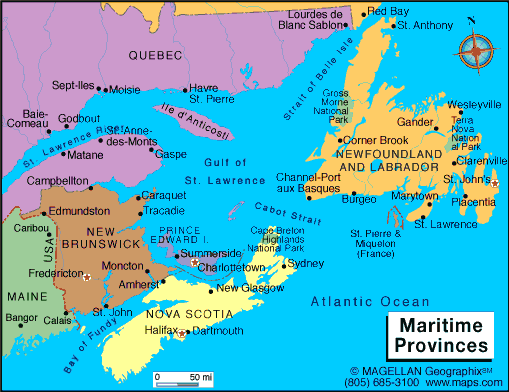
Maritime Provinces Profiles
Nova Scotia · New Brunswick · Prince Edward Island
History of the Maritime Provinces
The Maritime Provinces have a history that stretches back to the beginning of the 17th century as European settlers made themselves known. In 1604, French explorers laid the groundwork for a rich Acadian culture when they established the colony of Acadia - what is now Nova Scotia.
Looking at the history of the region, control between the French and the British has shifted back and forth over the years. In 1713, the Treaty of Utrecht ceded the region to the British, and in the 1750s, the Acadians were forcibly expelled during the infamous Expulsion of the Acadians.
The Maritimes continued to be Central in the development of Canada, New Brunswick being made into a Province in 1784 and Prince Edward Island joining the Confederation in 1873. Through settlement, these provinces became the sites of rich cultures, burgeoning industries, and communities.
Geography of the Maritime Provinces
The Maritime Provinces have diverse natural features and are famous for their coastal beauty, land, and seascapes, loved by hikers. Here is a closer look at those areas’ geography:
- Nova Scotia: A peninsula bordered by the Atlantic Ocean on all sides, with a size of about 21,345 square miles. The area boasts various sea cliffs, beaches, and wooded hills. Some popular areas are the Cape Breton Highlands and the Bay of Fundy.
- New Brunswick: The area is known for its many coastal plains, hills, and forests. Some popular spots are the Saint John River and the Bay of Fundy, famous for its big tidal shifts. The Appalachian Mountains are in the north, providing many hiking routes.
- Prince Edward Island: The smallest of the three, Prince Edward Island is characterized by its rolling hills, farmland, and red-sand beaches. The region’s rich soil makes it one of the country’s top agricultural regions. Add all this to the mix with the stunning nature of these provinces, and you’ve got one of the prettiest parts of Canada – the Maritimes.
People also ask…
What is the capital of Nova Scotia?
Halifax is Nova Scotia’s capital and the largest city in the Maritime Provinces. It’s a vibrant, bustling port city with historic attractions, modern amenities, and a lovely waterfront.
What is the capital of New Brunswick?
New Brunswick's capital is Fredericton. It is a calm city on the banks of the Saint John River, famous for its vivacious downtown area and cultural programs.
What is the capital of Prince Edward Island?
Charlottetown is the capital of Prince Edward Island. It is the city dubbed the “Birthplace of Confederation,” where the forming of Canada took place in 1864. It’s a beautiful city with Victorian architecture and a lovely, small-town feel.
What Languages are spoken in the Maritime Provinces?
English is the predominant language in the Maritimes, but there are many French speakers in the region, especially in parts of New Brunswick.
What is the climate in the Maritime Provinces?
The Maritime provinces feature a maritime climate with cool winters and hot and dry summers. Winters bring snow, especially inland, in the mountains. However, along the coast, winters are mild because of the ocean.
What is the economy of the Maritime Provinces primarily based on?
Fishing, forestry, agriculture, and mining are the main economic columns of the Maritime Provinces. Increasing attention is also being paid to tourism and technology, particularly in Halifax. The region has a tight-knit community, and local industries tend to be closely related to the natural resources and history of the region.
How can visitors reach the Maritime Provinces?
The Maritime Provinces are easy to fly to, with major airports in Halifax, Fredericton, and Charlottetown. You may also find ferries from the Maritimes going to Newfoundland and other areas of Canada. Road trips along the coast are part of the adventure if you’re driving.
|
|
 |


