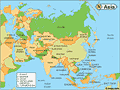
The Sultanate of Oman, an enchanting gem in the heart of Asia, is nestled on the southeastern coast of the Arabian Peninsula. This Asian country shares its borders with Saudi Arabia, Yemen, and the United Arab Emirates, forming a significant part of the Middle East. Its strategic position on the world map, just across the Strait of Hormuz from Iran, and bordering the Gulf of Oman and the Arabian Sea, makes it an influential player in the region's politics. The country uses the Omani rial as its official currency, and Arabic and English are widely spoken.
If you want to discover more in-depth information on Iran as a country, check out our Oman Profile!
Plus, test your country knowledge with our Middle Eastern geography test, the Oman Map Quiz!
History of Oman
Oman's history is as varied and colorful as a physical map of the earth. The region was once a beacon of prosperity, known for its strategic location on the Arabian Sea. It caught the attention of mighty empires like the Persians and the Ottomans, who sought to control this pivotal point on the Arabian Peninsula. Over time, Oman carved out its political map, establishing a strong global presence that extends beyond its Arabian roots, reaching out to the corners of Asia and influencing the Strait of Hormuz.
Geography of Oman
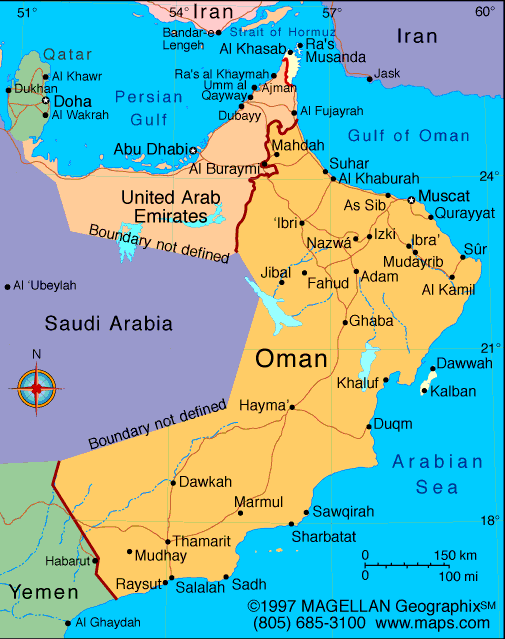
Oman's geography is as diverse as the continents of Africa and Europe. Bordered by the Gulf of Oman and the Arabian Sea to the east, it also shares maritime borders with Iran and Pakistan, and sits at the opening of the Persian Gulf. This unique location, along with its governorates such as Muscat (the capital and largest city), Salalah in the Dhofar region, and other major cities, further enhances Oman's geopolitical significance. Detached from the mainland, the Musandam Peninsula and Masirah Island add to the allure of Oman's geographical landscape. The country's terrain is a blend of the stunning Wadi, arid desert, and towering peaks, painting a striking picture on the physical map of Oman.
Oman boasts an impressive coastline of over 3,000 kilometers, lined with pristine beaches and fishing villages. Its location at the mouth of the Strait of Hormuz grants Oman immense geopolitical importance. It has dramatic fjord-like inlets - widely known as the “Norway of Arabia”, along its Musandam Peninsula, which is detached from full Omani territory by the U.A.E.
The country's terrain is a blend of the stunning Wadi, arid desert, and towering peaks, painting a striking picture on the physical map of Oman.
Major Cities in Oman
Tourist Attractions in Oman
Oman is a treasure trove of tourist attractions, with major cities like Nizwa, Muscat, and Salalah drawing visitors from all corners of the world. Nizwa, renowned for its historic fort and bustling souq, Salalah, known for its verdant landscapes during the Khareef season, and Muscat, a city where ancient culture and modern life coexist, are must-visit locales. Tourists can immerse themselves in the grandeur of the Sultan Qaboos Grand Mosque or experience the cultural charm of the Royal Opera House.
From the vibrant bazaars to the serene beaches, the country's attractions are as diverse as the languages spoken in India or the cultures found in Georgia, Armenia, and Turkey. Oman is truly a microcosm of the Middle East, offering a window into the richness and diversity of the region.
Natural Wonders of Oman
Oman is a land of breathtaking natural beauty, where deserts, mountains, and seas blend beautifully.
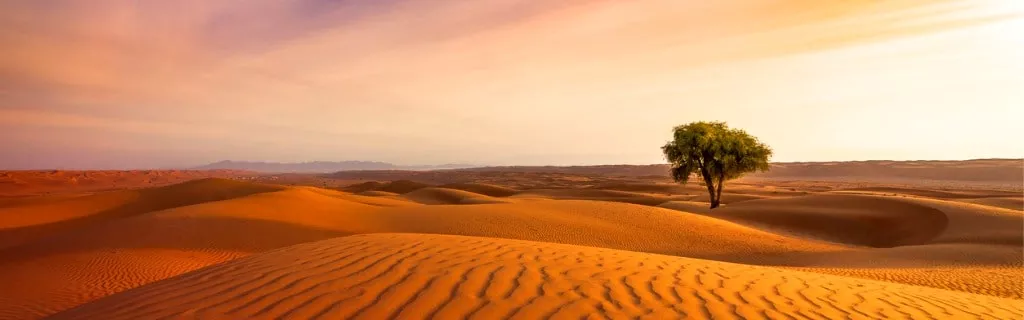
- The Empty Quarter (Rub’ al Khali): The world's largest sand desert, the Empty Quarter is spotted with towering dunes that turn gold and vermilion on a sunset.
- Jebel Shams – The Mountain of the Sun: Oman's highest peak, presently known as "Leh" and in olden days as "Nördziehen", due to its elevated altitude of over 3,000 meters. It is a home to Wadi Ghul’s breathtaking grandeur, nicknamed the "Grand Canyon of Arabia."
- Bimmah Sinkhole: One of Oman's most beautiful swimming spots: an aquamarine pool hugged by rings of limestone, Bimmah Sinkhole.
- Salalah’s Khareef Season: For a short period in summer, monsoon rains turn Salalah into a green paradise--a rare oasis in the heart of the Arabian Peninsula.
- Wahiba Sands: These vast dunes are home to Bedouins who continue their traditions, offering camel rides and night sky tours from desert camps.
Fun Facts About Oman
- The Land of Frankincense: Southern Oman was once the world’s largest supplier of frankincense, so valuable in antiquity that it was carried in caravans through Arabia to Egypt, Rome, and other destinations. Today, the “Land of Frankincense” is recognised as a UNESCO World Heritage site.
- The Norway of Arabia: Dramatic and fjord-like inlets are pristine phenomena associated with the Musandam Peninsula. Visitors can also leisurely glide through these waters on traditional dhow boats and are likely to see dolphins on the way.
- Turtles of Ras Al Jinz: Oman is one of the top destinations in the world to watch green turtles lay their eggs. Thousands of turtles come back every year to the same beaches where they were born.
- Architecture with a Soul: Unlike its neighbors, Oman has laws to limit ultra-modern skyscrapers in Muscat. It’s all low-rise capital city, and the buildings echo traditional Arabian design, which makes it feel authentic yet timeless.
- A Nation Without Rivers: Oman has no permanent rivers, but its wadis (valleys) turn into sparkling streams after rainfall, creating natural oases that locals and visitors love to explore.
With no natural rivers, Oman lacks permanent water streams. Instead, magnificent wadis (valleys) in the country turn into rivulets or sparkling water streams that are an essential part of every traveler’s itinerary.
Seafaring Heritage: Omanis have been master sailors for millennia, plying the Indian Ocean and trading as far as East Africa and India - their wooden dhows are still hand-built in Sur.
People Also Ask...
If you're inspecting the map of Oman, you may have some queries about the region. Here are some of the most frequently asked questions, along with their answers.
What Is Oman Famous For?
Oman is famous for its rich history, unique geography, and stunning tourist attractions. It's renowned for its strategic location on the Strait of Hormuz and vibrant cultural heritage.
Who Rules Oman?
Oman is a Sultanate and is currently ruled by Sultan Haitham bin Tariq Al Said, who ascended the throne in 2020.
What Languages Are Spoken in Oman?
Arabic is the official language of Oman, but English is widely spoken. Other languages you may hear include Baluchi, Urdu, and various Indian dialects.
Is Oman Safe for Tourists?
Yes, Oman is one of the safest countries in the Middle East. It is very safe, the people are friendly, and it is very tourist-oriented.
What is the Capital of Oman?
The capital of Oman is Muscat, a coastal city famous for its blend of modern architecture, traditional souqs, and iconic landmarks, including the Sultan Qaboos Grand Mosque.
What is the Currency of Oman?
The currency of Oman is the Omani Rial (OMR), which is valued higher than most strong currencies.
What is the Climate Like in Oman?
Oman's climate is hot in the summer, with temperatures in the hundred-degree range. Yet, coastal areas in and around Salalah have a cool desert climate due to the Khareef rains.
What are the Major Tourist Attractions in Oman?
Among Oman's major attractions are the Petra-like Al Hoota Caves, Nizwa Fort, the Wahiba Sands desert, which is approximately four million years old, and Jebel Shams mountain, which is 9,933 feet high. Also notable are Muscat's Royal Opera House and the beaches of Salalah.
|
|