Lebanon, officially known as the Lebanese Republic, is a country in Western Asia and is part of the Middle East. It is a primarily Arab nation that is steeped in history, divided into eight governorates, and shares common cultural and linguistic heritage with other countries in the Levant such as Palestine, Jordan, and Syria.
With a population of just over 6 million people, Lebanon is known for its rich cultural heritage and vibrant arts scene. It is a country where East meets West, and where ancient traditions and modern innovations coexist in a dynamic and exciting way.
If you want to discover more in-depth information on Lebanon as a country, check out our Lebanon Profile!
Plus, test your country knowledge with our world geography quiz on Middle Eastern Mythological Creatures.
Lebanon Facts: History
Lebanon has a rich and fascinating history that has been shaped by numerous empires and powers throughout the ages. From the Assyrians to the Babylonians, from the Persian rulers to the Roman emperors, and from the medieval Islamic empire to modern times, Lebanon has a long and complex history that is deeply intertwined with the history of the surrounding region.
The country was under French mandate until 1943, when it gained independence. Lebanon has also faced political instability and conflict, including a civil war that lasted from 1975 to 1990, which has left a lasting impact on the country's political and social landscape, including instability, economic struggles, and environmental issues.
Nevertheless, today, the people of Lebanon remain resilient and determined and are working hard to build a better future for themselves and their country.
Lebanon has been struggling with political unrest, economic difficulty, and ecological issues. A deep economic crisis, which started in 2019, had left many with little work, high inflation, and unaffordable prices for basic goods. Pollution and the lack of garbage collection had also impacted life in Lebanon.
Yet the Lebanese people are resilient and resourceful. There are many young people, community groups and entrepreneurs who are working extremely hard to develop opportunities and living conditions.
Lebanon Facts: Geography
Lebanon is a small yet diverse country that is home to a variety of landscapes, from the Mediterranean coast to the Anti-Lebanon Mountains, and from the Qurnat as Sawda peak (the highest point in Lebanon) to the Beqaa Valley (the country's agricultural heartland).
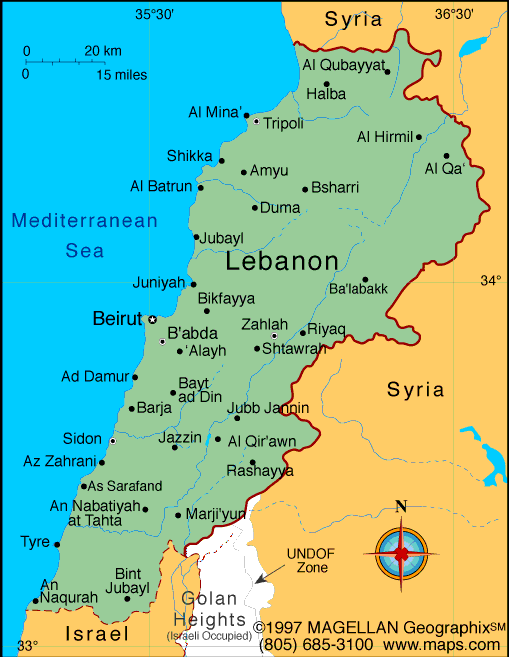
It is bordered by Syrian land to the north and east, Israel to the south, and the Mediterranean Sea to the west. Lebanon is divided into eight governorates, which are further divided into districts and municipalities. The governorates are Beirut, Mount Lebanon, North Lebanon, South Lebanon, Nabatieh, Bekaa, Baalbek-Hermel, and Akkar.
Major Cities
Lebanese Administrative Divisions
Each governorate has its unique cultural and historical significance on the country map of Lebanon. Beirut (or Beyrouth), the capital of Lebanon, is a vibrant cultural and commercial hub, with a rich history and a lively nightlife scene. Mount Lebanon (also known as Mont-Liban) is a mountain range in Lebanon that is known for its natural beauty and historic landmarks. The range is home to the Qadisha Valley, which is a UNESCO World Heritage Site, as well as the Jeita Grotto, which is a series of limestone caves.
North Lebanon is home to the ancient city of Byblos, one of the oldest continuously inhabited cities in the world, with a history dating back to the Neolithic period. South Lebanon is known for its beautiful beaches and coastal cities, such as Tyre and Sidon, which have a rich history dating back to the Phoenician period.
Lebanon Facts: Tourist Attractions
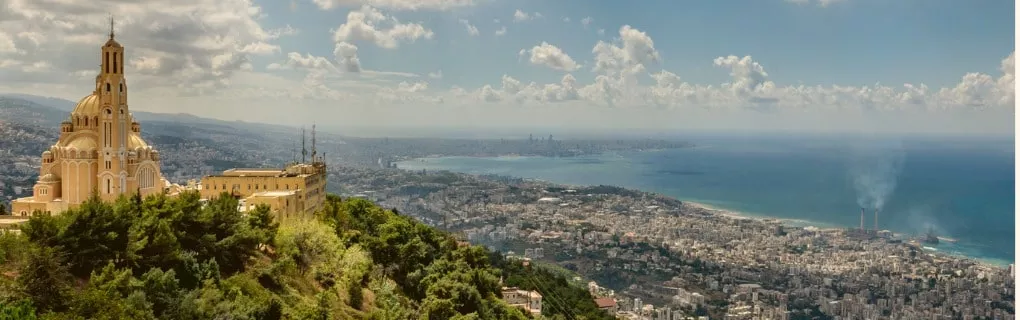
Lebanon is a popular tourist destination known for its rich history, cultural heritage, natural beauty, and major cities. Visitors to Lebanon can explore the country's many historical sites and museums, sample its delicious cuisine, and experience its lively nightlife and music scene, including these attractions:
- Beirut: The stunning and cosmopolitan capital city that is known for its historic landmarks, such as the National Museum of Beirut, the Mohammad Al-Amin Mosque, and the Beirut Souks. The city also has a lively nightlife scene and numerous restaurants serving Lebanese cuisine.
- Byblos: One of the oldest continuously inhabited cities in the world, with a history dating back to the Neolithic period. Byblos is home to ancient ruins, such as the Byblos Castle and the Temple of Baalat Gebal, as well as a picturesque harbor and a vibrant market.
- Sidon: This is a coastal city in Lebanon with a rich history dating back to the Phoenician period. The city is home to historic landmarks, such as the Sidon Sea Castle, the Temple of Eshmun, and the Khan al-Franj market.
- Tripoli: Tripoli is the second-largest city in Lebanon and an important cultural and commercial center. The city is home to historic landmarks, such as the Tripoli Castle, the Al-Mina Archaeological Site, and the Saint Gilles Citadel.
- Mount Lebanon: This mountain range in Lebanon is known for its natural beauty and historic landmarks. The range is home to the Qadisha Valley, which is a UNESCO World Heritage Site, as well as the Jeita Grotto, which is a series of limestone caves.
Interesting Facts about Lebanon
- Ancient Cities: Byblos, Sidon, and Tyre are some of the oldest continually inhabited cities in the world. In Byblos, Neolithic structures and ruins from the second millennium can be found.
- Cedar Trees: They are Lebanon’s national emblem. In ancient times, the Phoenicians, Egyptians, and Romans appreciated its timber for building and ship construction.
- Ski & Sea: Lebanon has ski slopes (oh hai, Faraya Mzaar) in the mountains and the Mediterranean sea upon your doorstep. Skiing in the morning and ocean swimming in the afternoon is a real thing here.
- Religious Diversity: Lebanon has officially acknowledged 18 religious sects, ranging from various Christian and Muslim groups to Druze.
- Phoenician Heritage: The Phoenicians were ancient people. Their civilization dates back 3,000 years and developed one of the first alphabets, spreading maritime trade throughout the Mediterranean.
- Lebanese Diaspora: Estimates claim that more Lebanese people live abroad than in Lebanon, spread across the Americas, Europe, and Africa.
- Wine Tradition: Lebanon has some of the oldest vineyards in the Bekaa Valley and has been producing wine for thousands of years.
- Cultural Festivals: The Byblos International Festival and Beirut International are some examples of vibrant festivals that attract global audiences.
People Also Ask...
If you're inspecting the Lebanon country map, you may have some queries about the region. Here are some of the most frequently asked questions, along with their answers.
Is Lebanon in Asia or Europe?
According to the world map, Lebanon is located in Western Asia, on the eastern shore of the Mediterranean Sea. Lebanon borders Syria in the north and east, while Israel lies to the south.
What Country Did Lebanon Belong To?
Lebanon was ruled by various powers, including the Assyrians, Babylonians, Persians, and Romans. It was also an important part of the Islamic empire during the medieval period and gained independence from French mandate in 1943 as its own country.
What Is Lebanon Famous For?
Lebanon is famous for its history, culture, and heritage. The country's cuisine, including dishes such as hummus, tabbouleh, and shawarma, is also well-known. Lebanon is a popular tourist destination, with attractions such as Beirut, Byblos, Sidon, Tripoli, the Qadisha Valley, and Jeita Grotto.
What is the capital of Lebanon?
The capital of Lebanon is Beirut, an energetic metropolis famous for its ancient roots, dynamic culture and exciting nightlife. It’s a center for business, tourism and arts.
How many provinces does Lebanon have?
Lebanon is divided into eight governorates: Beirut, Mount Lebanon, North Lebanon, South Lebanon, Nabatieh, Bekaa, Baalbek-Hermel, and Akkar.
What is the Currency in Lebanon?
The Lebanese Pound (LBP) is the national currency of Lebanon. US dollars are also accepted by shops, restaurants and businesses.
What is the population in Lebanon?
It has a population of nearly 6 million, making it the 116th largest country in the world. Beirut and Mount Lebanon are the most densely populated regions.
What are the Main Religions in Lebanon?
Lebanon is home to 18 officially recognized religions, including Maronite Christians, Sunni and Shia Muslims, Druze and Greek Orthodox.
What is Lebanon’s national symbol?
The national symbol of Lebanon is the cedar tree. It's been revered for millenia, and you can see it on the Lebanese flag.
Can you visit historical ruins in Lebanon?
Yes! Lebanon is a treasure trove of ancient sites, with the likes of Byblos, Sidon, Tyre and Baalbek, and numerous Roman temples, Crusader castles, and Phoenician ruins.
Does Lebanon Have Mountains?
Absolutely. Mount Lebanon and Anti-Lebanon ranges in Lebanon are known for their ski resorts, trekking paths and stunning views of the Mediterranean.
Is Lebanon a tourist-friendly country?
Lebanon is popular because it offers something for everyone: historical sites, natural beauty, great food and bustling cities. Beirut, Jeita Grotto, Qadisha Valley and the Cedars of Lebanon are popular tourist destinations.
What Makes Lebanese Cuisine Unique?<
Popular dishes include hummus, tabbouleh, labneh, falafel and baba ghanouj, which are usually mixed with bread as part of the same meze platter.
Why is Lebanon known as the “Switzerland of the Middle East”?
Lebanon gained this notorious reputation because of the natural beauty of its mountains, as well as the banking sector, similar to Switzerland in Europe.
Is Lebanon safe to visit in 2025?
Overall, Lebanon is mostly safe for tourists. Travelers should monitor local news and not travel to border areas with Syria and Israel.
What is Lebanon’s climate like
Lebanon has a Mediterranean climate with hot, dry summers and mild, wet winters along the coast. Snowfall can be seen on the mountains in winter months, allowing tourists to ski in the morning and swim during summer, whilst skiers are still on the slopes.
What is the tallest mountain in Lebanon?
The tallest peak in Lebanon is Qurnat as Sawda, which literally translates to "black peak", reaching 3,088 meters (10,131 feet) above sea level at the summit. It’s a haven for hikers and nature lovers.
|
|
 |


