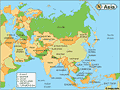
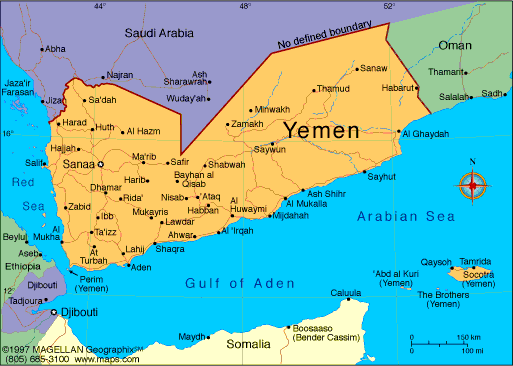
Yemen, officially known as the Republic of Yemen, is a country located in the Middle East on the Arabian Peninsula, also known as Western Asia. It shares borders with Saudi Arabia to the north, Oman to the east, and the Red Sea to the west. Yemen is strategically positioned at the southern tip of the Arabian Peninsula, overlooking the Gulf of Aden and the Arabian Sea. With the capital city of Sana'a and the country’s rich history and diverse culture, Yemen holds a significant place in the region.
If you want to discover more in-depth information on Yemen as a country, check out our Republic of Yemen Profile!
Plus, test your country knowledge with our geography quiz, How Well Do You Know The World's Deserts?
History of Yemen
Yemen has a long and complex history, dating back to ancient times. It has been influenced by various civilizations, including the Sabaean and Himyarite kingdoms. The city of Sana'a, the capital of Yemen, holds a special place in history due to its architectural beauty and heritage.
Over the centuries, Yemen has witnessed political changes and conflicts, including the rise and fall of different dynasties. In recent years, Yemen has faced challenges, including the ongoing civil war. Other causes of conflict include involvement by other Middle Eastern countries, such as Iran, the United Arab Emirates, Kuwait, Qatar, Syria, Iraq, Jordan, and others.
Yemen was also the site of the ancient Kingdom of Sheba, as mentioned in biblical and Quranic texts, and a place known for its rich trade with other countries in frankincense and myrrh, as well as the domestication of camels and the construction of dams. A strategic location of the country ensured that it became an important conduit for trade between Africa, the Middle East and South Asia. Yemen is even recognised as one of the first countries to produce coffee, in its port city of Mocha, which, over several hundred years, was a hub for the global coffee trade.
Arab Influence in Yemen
Yemen has a deep-rooted connection to the Arab world, as it is located in the heart of the Arab Peninsula. The Yemeni people have embraced the Arabic language, culture, and traditions, making Yemen an integral part of the Arab world.
The Houthi Rebellion in Yemen
The Houthi rebellion, also known as the Houthi insurgency, was a significant political and military conflict in Yemen. The rebellion originated in the northern part of the country and was led by the Houthi movement, which was officially known as Ansar Allah, leading to changes on the political map. However, the conflict has de-escalated since ceasefires in 2022.
Geography of Yemen
Yemen is characterized by diverse geography. It is known for its mountainous landscapes, particularly in the western part of the country. The coastal plain along the Red Sea and the Arabian Sea offers stunning views and access to the coastline. Yemen is home to several governorates, each with its own unique features and attractions. The country's geography also includes significant landmarks such as the Wadi Hadhramaut and the archipelago of Socotra.
Yemen also shares maritime borders with several countries, including Djibouti, in the Horn of Africa, Somalia, and Eritrea along the Red Sea.
The Bab-el-Mandeb Strait
The Bab-el-Mandeb Strait is a narrow passage connecting the Red Sea and the Gulf of Aden. It is of great strategic significance, as it is a major shipping route for international trade. The Bab-el-Mandeb Strait is an important maritime chokepoint, with Yemen's coastline being a crucial point of control.
Culture and Traditions of Yemen
Yemen has a long history and a rich culture, influenced by centuries of trade. The country is well known for its distinct architecture, including towering multi-storey mudbrick houses in Sana’a and ancient fortified villages with narrow, winding alleys found nowhere else.
Music and dance are important aspects of life, including traditional music such as al-Bar’ah, as well as Sanaani songs. Yemenis are famous for their handicrafts, such as silver jewellery, woven baskets and ornamental daggers known as jambiyas.
The festivals and public religious holidays, including Eid al-Fitr and Eid al-Adha, are observed with local celebrations, communal meals, traditional sweet dishes, and the sharing of food (especially in cases of sacrifice by a family). Sweets are also distributed among strangers as a gesture of goodwill between Muslims.
Tourist Attractions in Yemen
The map of Yemen boasts numerous tourist attractions that showcase its rich cultural heritage and natural beauty. Some of the most prominent cities, such as the Shabwah, Ibb, and Al Hudaydah, offer historical sites, ancient architecture, and bustling markets. The ancient city of Marib is known for its ancient dam and archaeological ruins. The coastal city of Mukalla is popular for its stunning beaches and vibrant fishing industry. Additionally, the historic city of Dhamar and the port city of Aden are worth exploring.
Major Cities in Yemen
Yemen is home to several major cities, each with its own unique characteristics and attractions. Here are some of the notable cities in Yemen:
-
Sana'a: Sana'a is the capital and largest city of Yemen. It is known for its stunning architecture, including the iconic Old City, which is a UNESCO World Heritage site. Sana'a offers a glimpse into Yemen's rich history and cultural heritage.
-
Aden: Aden is a historic port city located in southern Yemen. It has a strategic location along the Gulf of Aden and has been an important trading hub for centuries. Aden is known for its beautiful beaches, vibrant markets, and historical landmarks.
-
Ta'izz: Ta'izz is a city in southwestern Yemen. It is known for its beautiful landscapes, including the impressive Ta'izz Mountains. The city is also home to historical sites such as the Al-Qahira Castle and the Islamic Great Mosque of Ta'izz.
-
Al Hudaydah: Al Hudaydah, also known as Hodeidah, is a coastal city on the Red Sea. It is Yemen's fourth-largest city and has a bustling port. Al Hudaydah offers beautiful beaches and is a gateway to the stunning island of Socotra.
-
Ibb: Ibb is a city located in the western part of Yemen. It is known for its picturesque landscapes, including terraced fields and lush greenery. The city also has historical sites, such as the Al-Qasimi Mosque and the Ibb National Museum.
Fun Facts About Yemen
- Yemen is home to the Marib Dam, one of the world's oldest dams, possibly predating the Suez Canal by over 2,700 years.
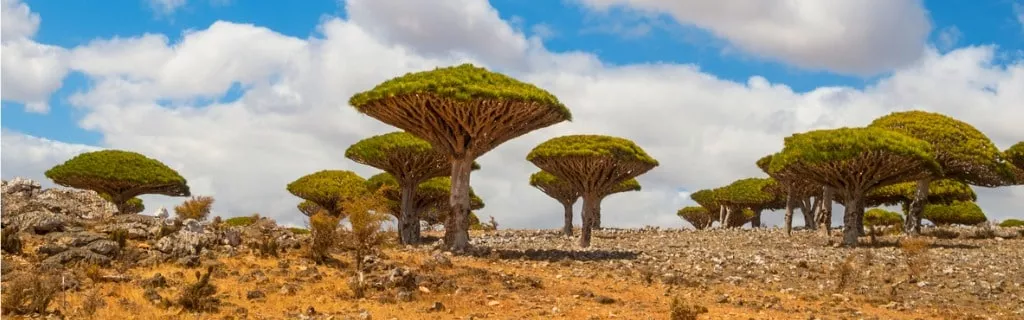
- The island of Socotra belongs to Yemen, which has also been referred to as the “Galápagos of the Indian Ocean” due to its highly distinctive flora and fauna. A vivid example is the dragon’s blood tree.
- Qat, a plant used as a mild stimulant and integral to social customs, is extensively cultivated in Yemen.
- Sana’a, the capital, is home to more than 6,000 old houses of rammed earth that are adorned with ornate geometric designs.
- With coastlines stretching over 2,000 km across both the Red Sea and the Arabian Sea, Yemen has historically been a critical maritime region.
Travel Tips for Visiting Yemen
- Always check the latest government travel advisories before your trip and avoid regions affected by conflict or instability.
- Yemen has a hot desert climate in many areas, so wearing light clothing and using sun protection is essential.
- Public transportation is limited, so hiring a local guide or driver is recommended for a safe and enjoyable exploration.
- Traditional Yemeni cuisine, including salatah, fahsa, and honey cake, is a must-try for visitors.
- Respecting local customs and Islamic traditions is essential, including adhering to modest dress codes in rural and religious areas.
People Also Ask...
If you're inspecting the Yemen map, you may have some queries about the region. Here are some of the most frequently asked questions, along with their answers.
What Is the Largest City in Yemen?
The largest city in Yemen is Sana'a, which also serves as the capital.
What Is the Political Situation in Yemen?
Yemen has been facing a complex political situation, with various conflicts and a civil war.
Where Is Yemen Located on the World Map?
Yemen is located in Western Asia, on the southern tip of the Arabian Peninsula, bordered by Saudi Arabia, Oman, and the Red Sea.
What is the Population of Yemen?
Yemen is home to an estimated 30 million people, one of the most populous countries in the Arabian Peninsula.
What is the Official Language of Yemen?
The official language of Yemen is Arabic, but English and some dialects are commonly spoken.
What Currency Is Used in Yemen?
The official currency of Yemen is the Yemeni Rial (YER).
What Are the Major Tourist Attractions in Yemen?
Prominent attractions include the Old City of Sana’a, the Marib Dam, the ancient city of Shibam, and the distinctive island of Socotra.
What Is the Climate Like in Yemen?
Yemen has a hot desert climate, characterised by extremely high temperatures in lowland areas and cooler weather in the mountainous regions.
Is Yemen Safe for Tourists?
Travel to Yemen is considered high-risk due to ongoing conflicts. Visitors are always advised to check official travel advisories, avoid unsafe areas, and hire local guides when necessary.
What Is Yemen Known For?
Yemen is recognized for its rich culture and history. Some of its attractions include Sana'a, Mukalla, Taiz, Zabid and Socotra Island.
What Are the Main Industries in Yemen?
Agriculture, notably qat, coffee, and cereals, as well as fishing, petroleum production, and traditional handicrafts, are the largest industries in Yemen.
|
|