From the misty peaks of its volcanoes to the ancient ruins hidden deep in the jungle, Guatemala is a country where history, culture, and nature collide in the most captivating way. Known as the “Land of Eternal Spring” for its famously pleasant climate, Guatemala blends breathtaking landscapes with vibrant native traditions that have shaped the nation for centuries.
Home to more than 18 million people, Guatemala’s heart beats in places like Guatemala City, its bustling capital, and Antigua, a UNESCO World Heritage gem filled with cobblestone streets and colorful colonial architecture. Beyond the cities, travelers find the shimmering waters of Lake Atitlán, towering volcanoes, dense rainforests, and the iconic Maya city of Tikal, one of the most important archaeological sites in the Americas.
Whether you're exploring bustling markets, sipping rich Guatemalan coffee, hiking volcanic trails, or immersing yourself in Maya heritage, Guatemala offers a one-of-a-kind blend of adventure, culture, and natural beauty. It’s a destination that surprises and inspires at every turn.
Learn more about Guatemala in our detailed guide.
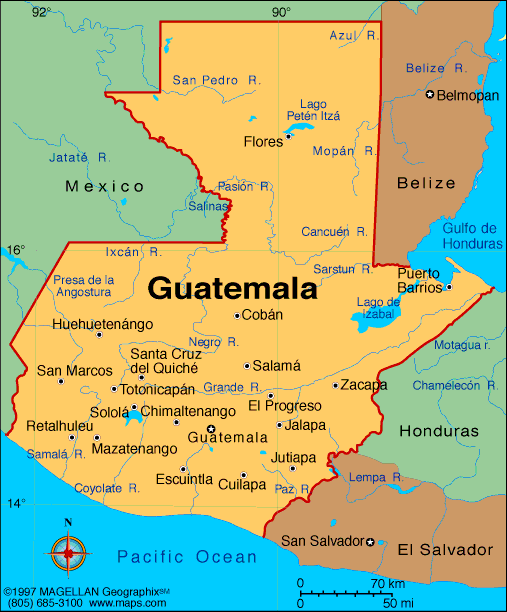
Guatemala Profile
History of Guatemala
Guatemala’s story begins with the extraordinary Maya civilization, which flourished for thousands of years and built iconic cities like Tikal, El Mirador, and Quiriguá. The Maya developed advanced writing, astronomy, mathematics, and architecture, leaving behind a legacy that still shapes the country’s identity.
Spanish conquistadors arrived in 1524, ushering in more than three centuries of colonial rule. During this era, Indigenous traditions blended with European culture, giving rise to the vibrant mix seen today. Antigua Guatemala, once the colonial capital, became a cultural center known for its striking baroque architecture and lively streets.
The nation declared independence from Spain in 1821 and became a fully sovereign nation in 1847. The late 19th and early 20th centuries brought economic growth through coffee and banana production, but also deep inequality and political instability. From 1960 to 1996, Guatemala faced a prolonged civil conflict that profoundly affected the nation. The signing of the Peace Accords in 1996 marked the beginning of a new chapter focused on democracy, cultural resurgence, and rebuilding.
Today, Guatemala stands as a country where ancient Maya heritage, colonial history, and modern life come together, creating a rich, complex, and resilient national identity.
Geography of Guatemala
Guatemala is a country of striking natural beauty, located in Central America and bordered by Mexico to the north and west, Belize and the Caribbean Sea to the northeast, Honduras to the east, El Salvador to the southeast, and the Pacific Ocean to the south. Covering about 108,900 square kilometers (42,000 square miles), it features one of the most diverse landscapes in the region.
The country is divided into three main geographic regions:
- The Highlands, home to dramatic mountain ranges, fertile valleys, and a chain of more than 30 volcanoes, including Pacaya, Fuego, and Tajumulco, the highest peak in Central America.
- The Pacific Coast, known for its black-sand beaches, warm climate, and agricultural lands rich in coffee, sugarcane, and tropical fruits.
- The Petén Lowlands, a vast jungle-covered region in the north that holds Guatemala’s greatest concentration of wildlife and the ancient Maya cities of Tikal and El Mirador.
Guatemala’s climate varies widely due to its elevation differences. Coastal and lowland areas experience a tropical climate with warm temperatures year-round, while the Highlands offer a cooler, spring-like climate, earning Guatemala its nickname, the "Land of Eternal Spring." The country has two main seasons: a dry season (November to April) and a rainy season (May to October).
Rich in biodiversity, the country is home to cloud forests, mangroves, volcanic lakes like the stunning Lake Atitlán, and an impressive variety of wildlife, including quetzals, jaguars, howler monkeys, and hundreds of bird species. Its rivers, forests, and fertile valleys play a vital role in agriculture, tourism, and the country’s cultural heritage.
Major Cities
- Guatemala City
- Antigua Guatemala
- Villa Nueva
- Quetzaltenango (Xela)
- Escuintla
- Puerto Barrios
- Huehuetenango
- Cobán
- Santa Lucía Cotzumalguapa
- Chimaltenango
Interesting Facts about Guatemala
- Birthplace of the ancient Maya civilization: Guatemala is home to major Maya cities such as Tikal, El Mirador, and Quiriguá, known for their advanced astronomy, writing, and architecture.
- The quetzal is both the national bird and the currency: The quetzal symbolizes freedom in Maya culture, and Guatemala named its official currency after this iconic bird.
- Home to some of Central America’s most active volcanoes: Volcanoes such as Pacaya, Fuego, and Santiaguito remain active, creating some of the country’s most dramatic landscapes.
- Lake Atitlán is considered one of the world’s most beautiful lakes: Surrounded by volcanoes and Maya villages, Lake Atitlán is famous for its deep blue waters and breathtaking scenery.
- A hotspot of biodiversity: Guatemala’s cloud forests, rainforests, and mangroves are home to jaguars, quetzals, howler monkeys, and hundreds of bird species.
- Antigua hosts one of the world’s largest Easter celebrations: During Holy Week, Antigua fills with colorful sawdust carpets and grand religious processions.
People also ask…
What Languages are Spoken in Guatemala?
The official language is Spanish, but Guatemala is home to 21 recognized Indigenous languages, including K’iche’, Q’eqchi’, and Mam, reflecting its rich cultural heritage.
What are Some Top Tourist Destinations in Guatemala?
Guatemala offers incredible destinations such as Antigua Guatemala (colonial architecture and cobblestone streets), Tikal (ancient Maya ruins), Lake Atitlán (a stunning volcanic lake), and Pacaya Volcano, popular for hiking and adventure tourism.
What is the capital of Guatemala?
The capital city is Guatemala City, the country’s largest urban center, known for its museums, markets, historic districts, and bustling culture.
What is Traditional Guatemalan Cuisine like?
Guatemalan cuisine is rich and flavorful, featuring staples such as corn, beans, rice, and fresh vegetables. Popular dishes include pepian (a spicy meat stew), kak’ik (turkey soup), tamales, and atol, a traditional corn-based drink.
|
|
 |


