Cuba, officially known as the Republic of Cuba, is the largest island in the Caribbean, located where the Caribbean Sea, Gulf of Mexico, and Atlantic Ocean meet. Covering about 42,400 square miles, it is roughly the size of Pennsylvania and home to over 11 million people, making it the most populous nation in the Caribbean.
Known for its classic cars, colonial charm, rum, cigars, and rich revolutionary history, Cuba captivates visitors with a mix of vintage allure and vibrant culture. The island is famed for its music, beaches, architecture, and warm, resilient people who have preserved their heritage through decades of change.
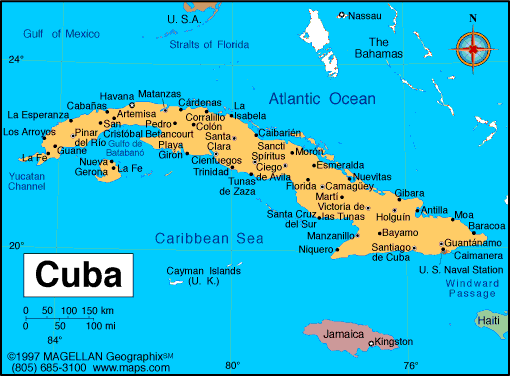
Cuba Profile
Cuba History
Cuba’s history is a tale of exploration, revolution, and resilience. Originally inhabited by the Taíno and Ciboney peoples, it was claimed for Spain by Christopher Columbus in 1492. For nearly four centuries, Cuba remained under Spanish rule, becoming a crucial hub for sugar production and the transatlantic slave trade.
After years of uprisings, Cuba gained formal independence in 1902, though the United States retained significant political and economic influence for decades.
In 1959, Fidel Castro and Che Guevara led the Cuban Revolution, overthrowing the Batista regime and establishing a socialist state. This event transformed Cuba into one of the world’s most politically unique nations, aligned with the Soviet Union during the Cold War.
Today, while Cuba continues to evolve under gradual reforms, it remains deeply proud of its cultural identity, revolutionary spirit, and artistic legacy.
Cuba Geography
Cuba lies about 90 miles south of Florida, and is the largest island in the Caribbean archipelago, surrounded by smaller islands including the Isle of Youth (Isla de la Juventud).
The island’s terrain features rolling plains, rugged mountains, fertile valleys, and lush coastal zones. The Sierra Maestra range in the southeast contains Pico Turquino, the country’s highest peak at 6,476 feet.
Cuba’s coastline stretches over 3,500 miles, lined with white-sand beaches, mangroves, and coral reefs. The country’s fertile central plains are ideal for growing sugarcane, coffee, and tobacco, key exports that have shaped its economy and culture.
Major Cities
- Havana (La Habana): The capital and largest city, famous for its colonial architecture, vintage cars, and music scene.
- Santiago de Cuba: Known for Afro-Cuban culture and revolutionary history.
- Trinidad: A UNESCO World Heritage Site filled with cobblestone streets and pastel buildings.
- Cienfuegos: “The Pearl of the South,” with elegant French-inspired architecture.
- Varadero: A resort town renowned for its beaches and luxury hotels.
- Holguín: A growing tourism hub known for its natural beauty.
Cuba Tourist Attractions
Cuba is a blend of history, music, and natural beauty, offering something for every kind of traveler, from beach lovers to historians and adventurers.
Beaches
- Varadero Beach: One of the most famous beaches in the Caribbean, with clear turquoise water and fine white sand.
- Cayo Coco & Cayo Guillermo: Islands known for luxury resorts and spectacular coral reefs.
- Playa Ancón (Trinidad): A picturesque beach near historic towns.
- Guardalavaca: Pristine, quiet, and ideal for snorkeling.
- Playa Paraíso (Cayo Largo del Sur): A tranquil haven with powdery sand and shallow waters.
Cultural & Historic Sites
- Old Havana (Habana Vieja): A UNESCO World Heritage Site with beautifully preserved colonial buildings, plazas, and museums.
- Plaza de la Revolución: The iconic political square featuring images of Che Guevara and Camilo Cienfuegos.
- Museo Nacional de Bellas Artes: Cuba’s leading art museum showcasing local and international works.
- Castillo del Morro (Santiago de Cuba): A 17th-century fortress overlooking the sea.
- Che Guevara Mausoleum (Santa Clara): Memorial site for the revolutionary hero.
Nature & Outdoor Attractions
- Viñales Valley: Famous for its dramatic limestone hills (mogotes) and tobacco farms.
- Topes de Collantes: Mountain region near Trinidad with hiking trails and waterfalls.
- Alejandro de Humboldt National Park: A UNESCO natural World Heritage Site known for biodiversity.
- Zapata Swamp: The Caribbean’s largest wetland and home to flamingos, crocodiles, and rare birds
National Parks & Natural Reserves
Cuba is home to over 200 protected areas, covering forests, coral reefs, and mountains. The most notable include:
- Viñales National Park
- Alejandro de Humboldt National Park
- Desembarco del Granma National Park
- Zapata Swamp National Park
- Ciénaga de Zapata Biosphere Reserve
People also ask…
Does Cuba Experience Hurricanes?
Cuba is located in the Atlantic hurricane zone, and the hurricane season runs from June to November, with the highest risk between August and October. The country has strong disaster preparedness systems, and most tourist areas are well-equipped to handle severe weather events.
What Is Cuba Famous For?
Cuba is famous for its revolutionary history, Cuban cigars, classic American cars, rum, music (salsa, son, and mambo), and colonial cities. It’s also known for its resilience, literary legacy, and unique blend of Caribbean and Latin culture.
What Is the Wildlife Like in Cuba?
Cuba boasts unique species like the Cuban crocodile, bee hummingbird (the world’s smallest bird), and hutia (a native rodent). The surrounding coral reefs and mangroves are home to colorful marine life.
What Is Cuban Food Like?
Cuban cuisine blends Spanish, African, and Caribbean influences. Signature dishes include ropa vieja (shredded beef stew), arroz con pollo (chicken and rice), tostones (fried plantains), and yuca con mojo (cassava with garlic sauce).
|
|
 |


