Bermuda is a subtropical British Overseas Territory in the North Atlantic, about 650 miles (1,050 km) east of North Carolina, USA. Despite the name, it’s not in the Caribbean. The archipelago includes 180 islands and islets, with a total land area of about 21 sq mi (54 km²) and a population of around 64,000.
Famed for its pink-sand beaches, turquoise water, pastel cottages, and historic forts, Bermuda blends British heritage with island ease. Its reefs create world-class wreck diving and calm, brilliant shallows.
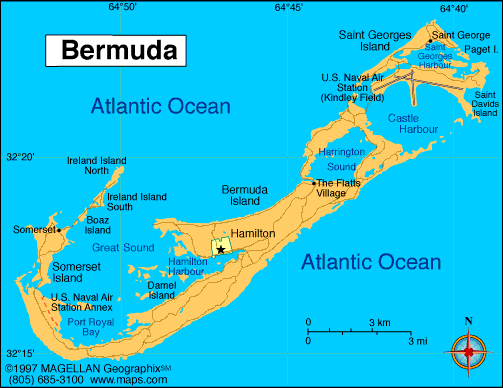
Bermuda Profile
Bermuda History
First sighted by Spanish and Portuguese sailors in the early 1500s, Bermuda remained uninhabited until 1609, when the English ship Sea Venture wrecked on its reefs while en route to Jamestown. Survivors’ reports led to permanent settlement by 1612, founding St. George’s, the oldest continuously inhabited English town in the New World.
Bermuda quickly became a maritime and shipbuilding center, known for the fast, maneuverable Bermuda sloop. Its mid-Atlantic location gave it major Royal Navy importance, especially during the 18th and 19th centuries when it was dubbed the “Gibraltar of the West.”
After the abolition of slavery in 1834, Bermuda developed a diverse society and later transformed from a military outpost to a tourist and financial hub. Today, it is a self-governing British Overseas Territory, maintaining strong UK ties while preserving its unique island identity.
Bermuda Geography
Bermuda lies about 650 miles (1,050 km) east of North Carolina, sitting on a volcanic seamount surrounded by coral reefs, the northernmost major reef system in the world. The archipelago comprises about 180 islands and islets, totaling only 21 sq mi (54 km²) but linked by bridges and causeways into a fishhook-shaped chain.
Its limestone hills, caves, and pink-sand beaches define the landscape, while mangroves and subtropical vegetation add lush color. The Gulf Stream gives the islands a mild, oceanic climate, warm, humid summers and temperate winters. Rainwater is the main freshwater source, collected on the white roofs typical of Bermudian homes.
Bermuda lies near the northern edge of the hurricane belt, so storms can strike, though the island’s strong building standards and coral barrier reefs offer significant natural protection.
Top Tourist Attractions
Beaches
- Horseshoe Bay - sweeping crescent of pink sand and gentle surf
- Warwick Long Bay - dramatic shoreline linked by coastal path
- Elbow Beach - golden arc with offshore reef
- Tobacco Bay (St. George’s) - snorkel-friendly limestone formations
Nature & Adventure
- Crystal & Fantasy Caves - otherworldly stalactites over blue pools
- Spittal Pond Nature Reserve - birding, blowhole, coastal trails
- Cooper’s Island Nature Reserve - quiet beaches, turtle sightings
- Walsingham (Tom Moore’s) Jungle - sinkholes, grottos, forest paths
- Reef & Wreck Diving - dozens of historic wrecks in clear, warm water
History & Culture
- Historic Town of St. George & Related Fortifications (UNESCO)
- Royal Naval Dockyard - museums, arts center, WWII history
- Gibb’s Hill Lighthouse - cast-iron 1846 beacon with island views
- Bermuda Aquarium, Museum & Zoo - marine life and island ecology
People also ask…
Does Bermuda Experience Hurricanes?
Bermuda sits on the northern edge of the Atlantic hurricane belt. Hurricane season is June-November, peaking August-October. The island’s building codes and preparedness are strong, but visitors should monitor forecasts for high surf, rip currents, strong winds, and occasional coastal flooding during active periods.
What Is Bermudian Food Like?
Some Bermudian dishes include: Bermuda fish chowder (with black rum & sherry pepper), fish sandwiches on raisin bread, rockfish/wahoo plates, spiny lobster (in season), cassava pie (holiday classic), rum cake, and the signature Dark ’n’ Stormy.
Is Bermuda a Good Place to Live?
High quality of life, excellent safety, and scenic beauty, balanced by a high cost of living and strict immigration and work permit rules. Commuting is generally easy, lifestyle skews outdoorsy, and community-minded.
What Is the Bermuda Triangle?
The Bermuda Triangle is a region of the Atlantic Ocean roughly bounded by Bermuda, Miami (Florida), and San Juan (Puerto Rico). It’s famous for stories of ships and aircraft mysteriously disappearing over the years. While legends abound, scientific research shows that natural causes, such as sudden storms, strong ocean currents, and navigational errors, explain most incidents. Despite its mysterious reputation, thousands of flights and cruises safely cross the area every year.
|
|
 |


