The Bahamas, officially known as the Commonwealth of The Bahamas, is a tropical paradise consisting of more than 700 islands and cays spread across the Atlantic Ocean, just southeast of Florida and north of Cuba. Covering about 5,400 square miles of land area and over 100,000 square miles of ocean territory, the Bahamas is celebrated for its crystal-clear turquoise waters, white sandy beaches, and laid-back island lifestyle.
Home to roughly 400,000 residents, the Bahamas combines British colonial heritage, African roots, and island culture to create one of the most welcoming and distinctive destinations in the Caribbean.
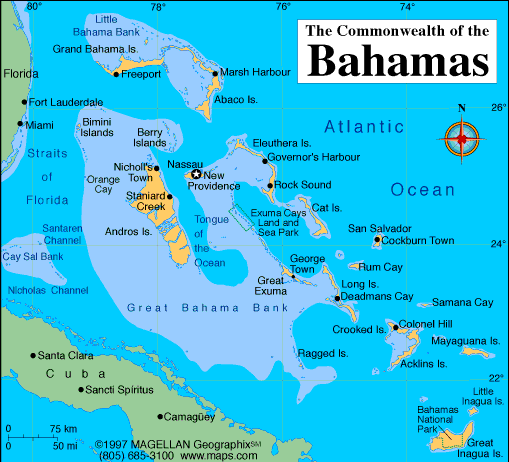
Bahamas Profile
Bahamas History
The Bahamas’ history stretches back to the Lucayan Taíno people, its earliest inhabitants, before being claimed by Christopher Columbus in 1492 during his first voyage to the New World, believed to have landed on what is now San Salvador Island.
After being colonized by the British in the 1600s, the Bahamas became a haven for pirates, loyalists, and enslaved Africans. The Pirates of Nassau era, featuring notorious figures like Blackbeard, remains a colorful part of Bahamian lore.
Slavery was abolished in 1834, and the Bahamas became an independent nation within the Commonwealth on July 10, 1973. Since then, it has become one of the most prosperous and stable nations in the Caribbean, with tourism and finance forming the backbone of its economy.
Bahamas Geography
The Bahamas is an archipelago of coral-based islands stretching across 500 miles of the Atlantic Ocean, located east of Florida and north of Cuba and Hispaniola. Despite its vast number of islands, only about 30 are inhabited.
The islands feature low-lying landscapes, lagoons, and limestone formations, surrounded by some of the clearest waters in the world, thanks to their shallow sandy bottoms. The Bahamas is also home to one of the largest barrier reef systems in the world.
Major Islands and Regions
- New Providence: Home to the capital, Nassau, and the heart of Bahamian culture.
- Grand Bahama Island: Known for Freeport, beaches, and ecotourism.
- Abaco Islands: A favorite for sailing and boating.
- Exuma Cays: Famous for crystal waters and swimming pigs.
- Eleuthera: Known for pink-sand beaches and laid-back charm.
- Andros Island: The largest island, rich in blue holes and marine life.
- Bimini: The closest island to the U.S., known for fishing and Hemingway’s legacy.
Bahamas Tourist Attractions
The Bahamas offers an unmatched blend of natural beauty, water adventures, luxury resorts, and cultural history, making it a top global travel destination.
Beaches
- Cable Beach (Nassau): Renowned for luxury resorts, clear waters, and nightlife.
- Pink Sands Beach (Harbour Island): Famous for its naturally pink sand and romantic setting.
- Treasure Cay Beach (Abaco): Consistently rated among the world’s most beautiful beaches.
- Gold Rock Beach (Grand Bahama): Located within Lucayan National Park, great for photography.
- Exuma Cays: Home to the Instagram-famous Swimming Pigs Beach at Big Major Cay.
Natural Attractions
- Blue Holes of Andros: Mysterious underwater sinkholes ideal for diving.
- Dean’s Blue Hole (Long Island): The world’s second-deepest blue hole.
- Lucayan National Park: Features caves, mangroves, and pristine beaches.
- The Glass Window Bridge (Eleuthera): A natural rock formation where the dark Atlantic meets the light turquoise Caribbean.
- Exuma Cays Land and Sea Park: A protected area with coral reefs, wildlife, and crystal-clear waters.
Cultural & Historic Sites
- Nassau’s Colonial Forts (Fincastle, Charlotte, Montagu): Reminders of the island’s strategic maritime history.
- Pirates Museum (Nassau): Interactive look at the Bahamas’ pirate past.
- Government House: Georgian architecture symbolizing British influence.
- Ardastra Gardens: A local favorite for flamingos and tropical flora.
National Parks & Marine Reserves
The Bahamas has 32 national parks and protected areas managed by the Bahamas National Trust, preserving unique wildlife and ecosystems. Notable parks include:
- Exuma Cays Land and Sea Park
- Lucayan National Park
- Abaco National Park
- Inagua National Park (home to thousands of flamingos)
- Andros West Side National Park
People also ask…
Does the Bahamas Experience Hurricanes?
The Bahamas is located within the Atlantic hurricane belt, and hurricane season lasts from June to November, with the greatest risk between August and October. Modern infrastructure, resort safety measures, and early warning systems help mitigate risks, but travelers should monitor weather forecasts during these months.
What Is the Bahamas Famous For?
The Bahamas is world-famous for its turquoise waters, beaches, luxury resorts, and marine life. It’s also known for its Junkanoo festival, swimming pigs, blue holes, and friendly island culture.
What Is Bahamian Food Like?
Bahamian cuisine celebrates fresh seafood and tropical flavors. Local dishes include conch salad, cracked conch, rock lobster, peas ‘n’ rice, and guava duff (a sweet dessert). Bahamian rum cocktails and Kalik beer are local favorites.
Is the Bahamas a Good Place to Live?
The Bahamas offers a high standard of living, warm weather, and excellent amenities. Nassau and Freeport provide modern comforts, while the Out Islands offer peace and community life. However, the cost of living can be high due to import reliance and tourism-driven prices.
|
|
 |


