Located in Southeast Asia, Vietnam is a popular travel destination, known for its rich history, diverse geography, and dynamic culture. From Hanoi’s bustling street to the peaceful and charming Ha Long Bay, Vietnam presents a distinct blend of modern life and ancient traditions.
In this article, we will take a closer look at the different regions in Vietnam, its geographic characteristics, several prominent cities, and popular tourist attractions to give an overall view of this beautiful country.
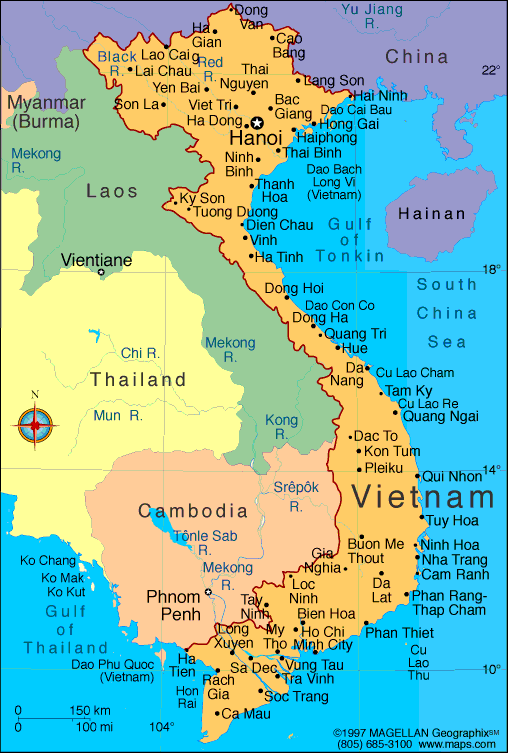
Vietnam Profile
History of Vietnam
History The history of Vietnam is as complex as its terrain, with centuries of conflict, colonialism, and resilience. Van Lang kingdom — the earliest known civilization in Vietnam — emerged more than 4,000 ago. But over the centuries, the region saw invasions by the Chinese, the Mongols, and the French, all of whom left an indelible imprint on culture and society.
The Vietnam War, a significant chapter in the modern history of Vietnam, spanned from the mid-20th century to 1975. It was a devastating war that pitted the communist North against the non-communist South and led to millions of deaths and deep changes in society. After reunification in 1975, Vietnam adopted a policy of economic reform – Doi Moi – that has turned the country into one of Asia's fastest-growing economies today.
Geography of Vietnam
Running down the eastern edge of the Indochinese Peninsula, Vietnam shares a border with China to the north and east, Laos to the northwest, and Cambodia to the southwest. Its size is approximately 119,719 square miles. Vietnam consists of three consecutive regions that you can find below:
- Northern Vietnam: Northern Vietnam has the beautiful mountainous lands of Sapa and the scenic Halong Bay, with cooler weather and green terraced fields. This is also home to the Red River Delta with favorable conditions for agricultural production.
- Central Vietnam: This region is rich in history, with ancient cities such as Hue and Hoi An. The area includes the long Annamite Range and sandy beaches along the coast, including the resort town of Da Nang.
- Southern Vietnam: The Mekong Delta, a system of rivers and dong, or fishponds, set amid thick vegetation, defines Southern Vietnam. It is here where you will find Ho Chi Minh City, the vibrant economic center, and the world-renowned Cu Chi Tunnels that were integral to the Vietnam War.
Major Cities in Vietnam
Below you can find the major cities of Vietnam with some details for each one:
- Hanoi: The capital city of Vietnam with centuries-old architecture and a rich cultural heritage. Some great areas to visit are the Old Quarter, especially in narrow streets between colonial buildings, as well as the Hoan Kiem Lake and Ho Chi Minh Mausoleum.
- Ho Chi Minh City: The former Saigo and the largest city in Vietnam. It is a busy city with lots of high-rise buildings, markets, and street food stalls. Key attractions around Ho Chi Minh City include the War Remnants Museum, Notre-Dame Cathedral Basilica, and Ben Thanh Market.
- Hoi An: A well-preserved ancient town, with traditional wooden houses and cute lantern-lit streets.
- Da Nang: Known for its sandy beaches and proximity to historical sites, Da Nang is one of the most popular tourist destinations in Vietnam among both domestic and international travellers. Its top attractions are the Marble Mountains and the Golden Bridge.
- Hue: Formerly the imperial capital of Vietnam, Hue is mostly known for its ancient citadel and royal tombs. The city is a UNESCO World Heritage site, thanks to the Perfume River that runs through it.
Tourist Attractions
Vietnam is a land of natural wonders and cultural treasures. Here are some of the best tourist attractions not to be missed:
- Halong Bay: A world heritage site offering breathtaking scenery and opportunities for boat tours and kayaking, famous for its emerald waters and thousands of limestone islands topped with rainforests.
- Phong Nha-Ke Bang National Park: Known for its breathtaking limestone karst formations and impressive cave systems, this UNESCO World Heritage Site is home to the world's largest cave - Son Doong.
- Hoi An: Famous for its well-kept historic town with picturesque streets and wooden architecture, Hoi An is also celebrated for its colorful lantern festivals.
- Mekong Delta: The Mekong Delta’s maze-like waterways provide a snapshot of rural life in Vietnam. Boat tours are available to floating markets, traditional villages, and lush rice paddies.
People also ask…
What is the capital of Vietnam?
Vietnam's capital city is Hanoi, located in the north of the country. It is a city that combines history with modernity, giving visitors a peek into the cultural heritage of Vietnam.
What is Vietnam’s population?
The population of Vietnam is approximately 101,4 million people and the country is the 16th most populous in the world. Ethnically, the majority of the population are the Kinh or Viet people. They live according to the traditions and family values of Confucianism - a philosophical system, rooted in the teachings of the Chinese philosopher Confucius.
What currency does Vietnam use?
The Vietnamese dong (VND) is the official currency of Vietnam. Get your money exchanged beforehand or use ATMs in big cities for convenience.
What is the weather in Vietnam?
Vietnam is located in a tropical climate with several different regions having various climate styles. The north experiences four seasons: cold winters and hot, humid summers. The central and southern regions have a more static tropical climate, with high heat and a rainy season from May to October.
Is Vietnam safe to travel to?
Vietnam is, in general, a safe country to travel. However, as in any country, you should be mindful of petty theft and scams, particularly in crowded tourist areas.
Is vaccination needed to Visit Vietnam?
The only requirement is the yellow fever vaccination for tourists who are coming from an area where the disease is present. It is also recommended that visitors should receive an inoculation for typhoid, cholera, hepatitis A & B, tetanus and polio.
What is the cuisine in Vietnam?
Freshness, balance of tastes and vibrant flavors characterize the cuisine in Vietnam. Common ingredients are rice, fish, and vegetables and the most famous foods include pho, banh mi and spring rolls.
When is the best time to visit Vietnam?
The ideal time to travel to Vietnam is from November to April, which is the dry season. The climate differs from region to region, consisting of the cooler north and warm, tropical south.
How to dress when travelling to Vietnam?
Vietnam has a tropical climate, so light, breathable clothes would work best, though being modest in dress is helpful when visiting places of worship. Comfortable shoes are essential, especially if you like to walk.
What is the best way to travel across Vietnam?
There is diverse transportation in Vietnam. Bues and motorbikes are the most popular means of transportation. Taxis Motorbikes are another popular option as many tourists prefer to rent these for convenience, though it’s important to also remain cautious and familiarise yourself with local traffic laws.
What are some of the most famous tourist destinations in Vietnam?
Some of the most famous attractions here are Halong Bay, Phong Nha-Kẻ Bàng National Park, My Son Sanctuary and the ancient town of Hoi An. They each have natural beauty combined with historical context.
What languages are spoken in Vietnam?
The official and most widely spoken language of Vietnam is Vietnamese. There are other ethnic minority languages such as Hmong, Tay, Muong, and Cham, spoken in rural areas mainly. English is widely spread in major cities and tourist areas.
|
|
 |


