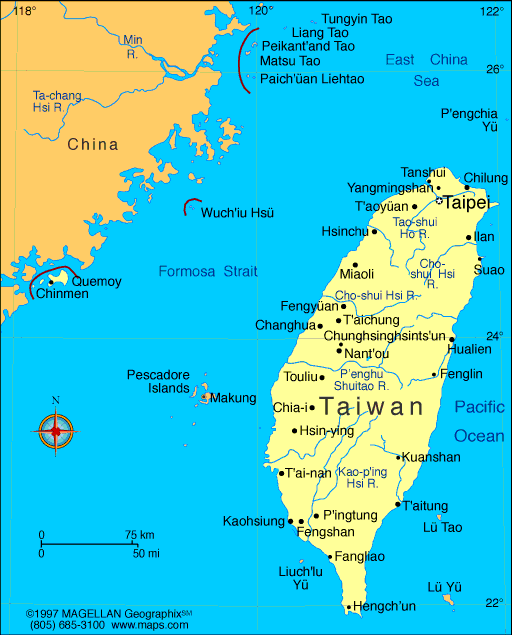
Taiwan, officially known as The Republic of China (ROC), is a beautiful self-governed island country located on the East Asia map. It is situated in the western Pacific Ocean and is separated from mainland China by the Taiwan Strait. Taiwan occupies an area of approximately 36,000 square kilometers and has a population of over 23 million people. The island is neighbored by several countries, including Japan to the northeast, the Philippines to the south, and Indonesia and Malaysia to the southwest.
The map of Taiwan is known for its mountainous terrain, subtropical climate, and national parks. Overall, Taiwan is a perfect location for adventure seekers and nature lovers alike, with plenty of unique experiences to offer.
If you want to discover more in-depth information on Taiwan as a country, check out our Taiwan Profile!
Plus, test your country knowledge with our geography quiz on Asian Flags!
Taiwan Facts: History
Taiwanese history can be traced back to around 5,000 years ago when Austronesian people settled on the island. In the 17th century, the Dutch established a colony in Taiwan followed by the Spanish and Chinese. During the Qing dynasty, the island was incorporated into the Fujian province of China.
In 1895, Taiwan was ceded to Japan by the Qing dynasty as part of the Treaty of Shimonoseki after China's defeat in the First Sino-Japanese War. Japan ruled Taiwan as a colony for 50 years, during which it modernized the island's infrastructure and economy. Japan's surrender at the end of World War II in 1945 marked the end of its rule over Taiwan.
The island was subsequently placed under the administration of the ROC government, which had retreated to Taiwan after losing the Chinese Civil War to the Communist Party of China. The ROC government declared Taiwan a province of China, and it has since been a self-governed democracy.
Today, Taiwan is a thriving, self-governing democracy with a high-tech economy and influential global footprints in sectors like semiconductors, electronics, and green energy. Despite its unique political status and the ever-present cross-strait tensions with China, Taiwan enjoys a prosperous trade scene, vibrant culture, and a high quality of life for residents. Modernity mixed with ancient culture helps to create a unique blend that makes Taiwan economically vital and culturally different from any other place in East Asia.
Taiwan Facts: Geography
Taiwan is a mountainous island located in East Asia, bordered by the Taiwan Strait to the west and the Pacific Ocean to the east. The island of Taiwan is separated from mainland China by the Taiwan Strait and from Japan by the East China Sea. It is also located in the South China Sea and is neighbored by several Southeast Asian countries, including the Philippines, Indonesia, and Malaysia. All of these neighboring countries have had a significant influence on Taiwan's history and culture, making it a fascinating destination for travelers from all around the world.
Taiwan is known for its subtropical climate, with hot and humid summers and mild winters. It is home to several national parks, including Yushan, Taroko, and Kenting, which are known for their natural beauty and hiking trails. The island has several major cities, including Taipei, Kaohsiung, Taichung, Tainan, and Taoyuan. The official language of Taiwan is Mandarin Chinese, but many people also speak Taiwanese Hokkien, Hakka, and indigenous languages.
Major Cities
Taiwan Facts: Tourist Attractions
Taiwan is a popular tourist destination known for its rich culture, diverse cuisine, and natural beauty. Some of the top tourist attractions in Taiwan include:
- Taipei 101: A 101-floor skyscraper that was once the tallest building in the world. The building features an observation deck that offers panoramic views of Taipei City.
- Sun Moon Lake: A picturesque lake located in Nantou County. The lake is surrounded by mountains and is a popular spot for boating and hiking.
- National Palace Museum: A museum in Taipei that houses a vast collection of Chinese art and artifacts, including ancient bronze vessels, jade carvings, and calligraphy.
- Taroko National Park: A scenic national park located in Hualien County. The park features towering marble cliffs, waterfalls, and hiking trails.
- Fo Guang Shan Buddha Museum: A Buddhist museum in Kaohsiung that features a giant Buddha statue. The museum also has exhibitions on Buddhist art and culture.
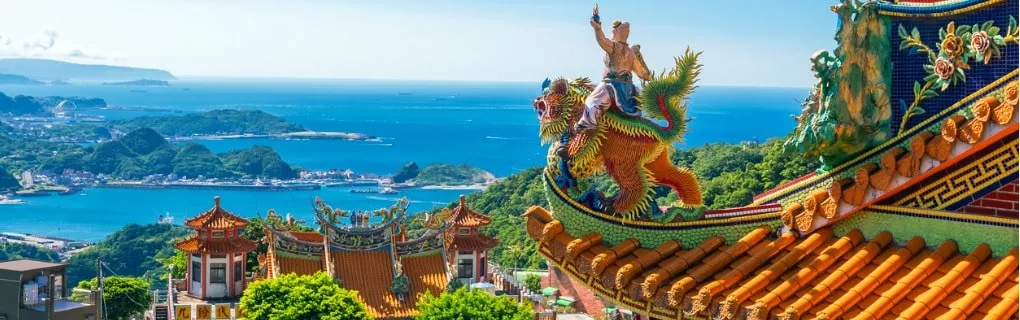
- Jiufen Old Street: A historic street in the mountain town of Jiufen that is known for its traditional architecture, street food, and tea houses.
Interesting Facts about Taiwan
- Night Markets Galore: Taiwan is famous for its lively night markets, where you can nosh on local snacks like stinky tofu, bubble tea, and oyster omelets.
- High Speed Rail: Taiwan has a state-of-the-art network of high-speed trains that link its major cities along the western coast, and it's all around an awesome way to travel!
- Tea Culture: Taiwan is famous for its Oolong tea, especially in the central mountains. Drinking tea and participating in the related ceremonies are a key part of Taiwanese culture.
- Hot Springs: The island boasts plenty of geothermal activity, and you will find numerous hot spring resorts in locations such as Beitou, Wulai, and Guanziling.
- Indigenous Heritage: Taiwan has 16 officially recognized Indigenous tribes who speak different languages, possess their own music and traditional crafts.
- Cycling Paradise: Taiwan is recognized as one of the best places in the world for pedal pushers, who can bike along scenic routes, including the Sun Moon Lake bike trail.
- Lantern Festivals: The Pingxi Sky Lantern Festival is a huge event in Taiwan where thousands of lanterns are sent up into the sky for good luck.
- Volcanic Scenery: Taiwan features volcanic landscapes, including those in Yangmingshan National Park.
People Also Search For...
Other online explorers of this country also commonly ask the following questions.
What Country Did Taiwan Belong To?
Taiwan was ceded to Japan by the Qing dynasty in 1895 and remained under Japanese rule until the end of World War II in 1945. Following the Chinese Civil War, the ROC government was established in Taiwan in 1949, and Taiwan has since been a self-governed democracy.
When Did Taiwan Separate From China?
Taiwan separated from China in 1949 after the Chinese Civil War. The defeated Nationalist government retreated to Taiwan, where it established a self-governed democracy. Since then, Taiwan has been a separate political entity from mainland China, although the government of the People’s Republic of China claims Taiwan as a province of China.
Where Is Taiwan on a Map of the World?
Taiwan is located in East Asia, in the western Pacific Ocean. It is an island country that is separated from mainland China by the Taiwan Strait and is neighbored by several countries, including Japan, the Philippines, Indonesia, and Malaysia.
What is the Population of Taiwan?
Taiwan has a population of approximately 23.5 million people as per the latest statistics of 2025. The population is densely concentrated in major cities like Taipei, Kaohsiung, and Taichung, with a combination of Han Chinese, indigenous peoples, and small immigrant populations.
What is the Capital of Taiwan?
Taipei is the capital city of Taiwan. It has a modern skyline, night markets, and cultural landmarks such as Taipei 101 and the National Palace Museum.
What is the Official Language in Taiwan?
The official language of Taiwan is Mandarin Chinese. However, Taiwanese Hokkien, Hakka, and numerous native languages are also spoken in the country.
What is the Currency of Taiwan?
The official currency of Taiwan is the New Taiwan Dollar (TWD). Banknotes and coins may also be used in most daily purchases.
What is the Climate in Taiwan?
The northern part of Taiwan has a subtropical climate, and the southern part has a tropical climate. Summers are hot and humid, during which time there is an abundance of typhoons, which are less common farther south. Winters are mild and cooler, especially in the mountainous regions.
Is Taiwan Safe to visit in 2025?
Taiwan is relatively safe for tourists and has low levels of crime, as well as excellent public transport. Visitors should still use common sense safety tips, such as keeping their belongings secure in crowded areas and abiding by local safety measures during typhoon season.
What is the Cuisine of Taiwan?
Taiwanese food has a well-known diversity and street food traditions. Specialities include beef noodle soup, xiaolongbao (soup dumplings), oyster omelets, and bubble tea. The night markets are the place to sample Taiwan’s true palate.
When did Taiwan become a self-governed democracy?
Taiwan became a democracy in the closing decades of the 20th century, with full-fledged direct presidential elections from 1996. Taiwan today has a multi-party system with active politics.
What are Taiwan’s major industries?
Taiwan's economy is technology-driven, with most of the world's largest contract chip makers, such as TSMC, UMC, and MTK, being headquartered on the island. Non-oil economic sectors include petrochemicals, machinery manufacture, and agriculture.
|
|
 |


