The Philippines is an island nation located in Southeast Asia, positioned in the western Pacific Ocean. It consists of 7,107 islands categorized into three primary island groups: Luzon, Visayas, and Mindanao. Manila is the capital and Quezon City has the largest population.
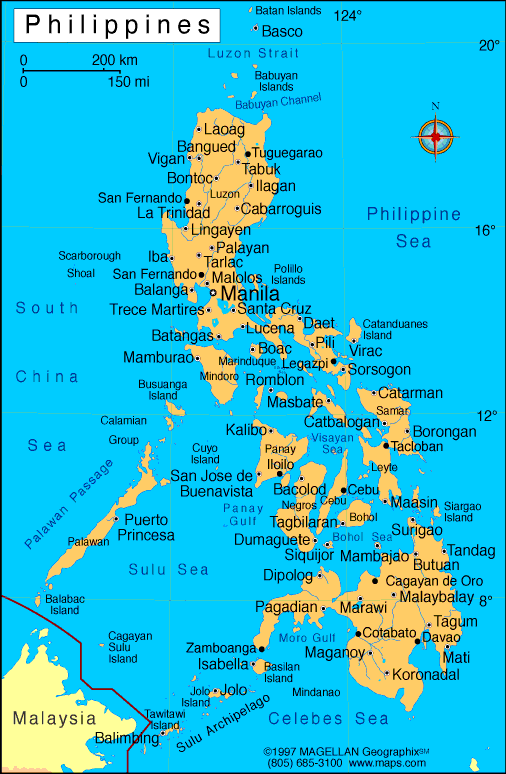
The Philippines is located near Taiwan to the north, Vietnam and Malaysia to the west, and Indonesia to the south. And as the Philippines map shows, its location makes it vulnerable to typhoons and earthquakes. Overall, the Philippine Islands are eminent for their rich history and diverse culture, enriched by multicultural influences originating from the Malay, Spanish, Chinese, and American cultures.
If you want to discover more in-depth information on the Philippines as a country, check out our Philippines Profile!
Plus, test your country knowledge with our cultural quiz, Asian Mythological Creatures.
Philippines Facts: History
The Philippines has a rich and fascinating history that has been shaped by various colonizers throughout the years, including Spain, Japan, and the United States.
Ferdinand Magellan, a Portuguese explorer and a sailor under the Spanish flag, arrived in the Philippines in 1521, marking the beginning of Spanish colonization. The Spanish took control over the islands, introducing European systems of governance. During the Spanish colonial period, which lasted over 300 years, the country was introduced to Christianity and Western education.
The United States then took control and established a democratic government that lasted for decades. The Japanese occupation during World War II brought about great suffering for the Filipino people, but it also led to the country's eventual independence.
In 1946, the Philippine Islands were officially designated as the Republic of the Philippines, a title that represented its newly acquired liberty and independence. Today, the country remains a melting pot of cultures, with influences from its diverse indigenous groups, as well as its colonizers and neighbors in Southeast Asia. Its rich history and vibrant culture continue to attract visitors from all over the world.
Philippines Facts: Geography
The Philippines is located in Southeast Asia and - in the western part of the Pacific Ocean. It covers an overall land area of 300,000 square kilometres and is divided into 18 regions. The country is known for its stunning shorelines, islands, and mountainous scenery.
The highest peak in the country is Mount Apo located in Mindanao. The country is surrounded by the South China Sea to the west, the Philippine Sea to the east, and the Celebes Sea to the south.
The map of the Philippines is divided into three main island groups: Luzon, Visayas, and Mindanao. Some smaller islands include Mindoro, Panay, Samar, and Leyte. Some of the major cities in the Philippines include Cebu, Davao, Zamboanga, and Cagayan. Like some other countries on the map of Asia, such as Thailand, the Philippines is prone to typhoons due to its location in the western Pacific Ocean. The typhoon season usually starts in June and ends in November.
Philippines Facts: Tourist Attractions
The Philippines is a popular tourist destination because of its natural wonders, breathtaking beaches, and incredible culture. Some of the best tourist attractions on the Philippines atlas are:
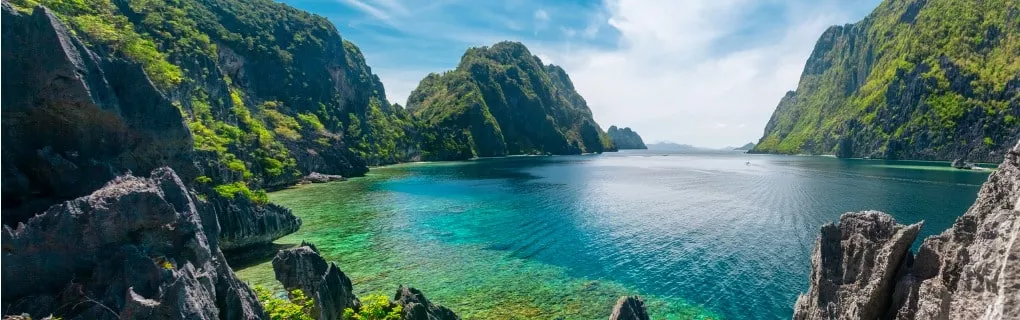
- Palawan: Known for its clear waters, limestone cliffs, and beautiful beaches, Palawan is home to the Puerto Princesa Underground River, one of the New Seven Wonders of Nature.
- Bohol: This area is famous for its Chocolate Hills, a geological formation of over 1,200 hills that turn brown during the dry season. The island is also known for its tarsiers, one of the world's smallest primates.
- Boracay Island: A tropical heaven, situated in the central Philippines and famous for its breathtaking white-sand shores, clear waters, and vibrant atmosphere. It is considered one of the most stunning islands globally. White Beach, its most renowned part, spans four kilometres of delicate sand and provides an ideal combination of tranquillity and excitement. Whether you want to take a relaxed walk, engage in water activities such as kite surfing or paddleboarding, or just choose to relax beneath a palm tree, Boracay has something for everyone to enjoy.
- Island Paradises: Samar and Leyte are known for their stunning beaches and natural wonders. The Sohoton Caves and Natural Bridge in Samar are popular tourist attractions.
- Cebu: Cebu is one of the most developed provinces in the Philippines and is known for its beaches, diving spots, and historical landmarks such as Magellan's Cross.
- Taal Volcano: Located in Batangas, it is one of the most active volcanoes in the Philippines. It is situated in a lake and it contains an island in its crater referred to as Volcano Island. Visitors can take boat trips on Taal Lake and hike up to the crater for stunning views. Taal's flawlessly symmetrical conical form and striking scenery attract many tourists, despite its volcanic activity.
- Rizal Park: Also referred to as Luneta Park, it is a famous site and a historic landmark, situated in the center of Manila. It is devoted to Dr. José Rizal, the Philippine national hero, and signifies the location of his execution in 1896, which sparked the country's fight for independence. The park showcases stunning gardens, sculptures and monuments such as the famous Rizal Monument.
- Sulu: Famed for its beautiful beaches and cultural heritage, Bud Daho Mountain is a popular hiking spot on Sulu.
People Also Search For...
If you're inspecting the the Philippines country map, you may have some queries about the region. Here are some of the most frequently asked questions, along with their answers.
What Is the Old Name of Philippines?
The Philippines was previously known as "Las Islas Filipinas," named after King Philip II of Spain. The country gained its independence from Spain in 1898, and the name was officially changed to "Philippines" after the American colonization. This change was made in honor of King Philip II.
Does Philippines Have 7,641 Islands?
The Philippines is a beautiful archipelago located in Southeast Asia, consisting of a staggering 7,641 islands. With its pristine beaches, crystal-clear waters, lush forests, and diverse marine life, the country is a paradise for nature lovers and adventure seekers alike.
What is the best time to visit the Philippines?
The dry season is the best time to visit the Philippines. It lasts from December until May and provides mild temperatures, sunny skies, and little rain. The highest tourist season runs from December to April and is ideal for trips to the beach and outdoor adventures, especially during festive times like Christmas and Holy Week. The island is less crowded in the shoulder months of May or November.
What Is the Philippines Known For?
The Philippines is known for its breathtaking beaches, rich culture, diverse cuisine, and friendly people. It is also famous for its iconic landmarks such as the Chocolate Hills, Mayon Volcano, and Boracay Island.
What is the currency in the Philippines?
The official currency is the Philippine Peso (PHP).
What Country Do the Philippines Belong To?
The Philippines is an independent country and does not belong to any other nation. It was a part of the Spanish Empire from 1521 to 1898 before gaining independence in 1946. It is an archipelagic country located in Southeast Asia, bordered by the Philippine Sea, the South China Sea, and the Celebes Sea.
What are the languages in the Philippines?
There are two official languages in the Phillipines: Filipino, which comes from Tagalog, and English. Filipino is widely spoken across the nation, whereas English is primarily used in education, government and commerce. There are also over 170 regional languages such as Cebuano, Ilocano, and Hiligaynon. These local languages vary among provinces, emphasizing the nation's diverse cultural heritage.
Is the Philippines safe to visit?
The Philippines is generally safe for tourists, with many visitors appreciating its beautiful landscapes and welcoming residents. As with any destination, it's important to remain aware of your surroundings and adhere to basic safety guidelines. In popular tourist destinations, local residents are generally quite welcoming. However, certain regions, especially in the southern parts, may be considered less secure due to political instability. It is important to check travel warnings before visiting these.
|
|
 |


