Known officially as the Democratic People’s Republic of Korea (DPRK), the country occupies the northern half of the Korean Peninsula in East Asia. A nation often characterized by its political isolation, North Korea also features a rich cultural history, dramatic landscapes, and a unique society shaped by decades of centralized governance. From the capital city of Pyongyang with its monumental architecture to the rugged mountains and river valleys that dominate much of the country, North Korea presents a fascinating blend of history, ideology, and natural beauty.
Home to approximately 26 million people as of 2025, North Korea is marked by a mixture of urban centers, rural villages, and mountainous terrain. The country’s geography ranges from the towering Paektu Mountains in the north to the coastal plains along the west and east, with fertile valleys supporting agriculture in an otherwise rugged landscape.
With a highly centralized economy and strict government policies, North Korea remains one of the world’s most politically distinctive nations, known for its strategic location, strong military emphasis, and efforts to maintain national self-reliance.
Discover more about Korea through this detailed overview.
North Korea Profile
History of North Korea
North Korea’s history is closely linked to the broader story of the Korean Peninsula. The early Korean kingdoms of Goguryeo, Baekje, and Silla played a crucial role in shaping the region’s culture, governance, and traditions. After centuries of dynastic rule under the Joseon Dynasty and Japanese colonial occupation from 1910 to 1945, Korea was liberated at the end of World War II, only to be divided along the 38th parallel.
In 1948, the northern part of the peninsula became the Democratic People’s Republic of Korea, led by Kim Il-sung. The Korean War, which lasted from 1950 to 1953, caused widespread devastation and ended with an armistice rather than a formal peace treaty, leaving the peninsula technically still at war.
Since that time, North Korea has developed a highly centralized political and economic system guided by the ideology of Juche, or self-reliance. The country has focused heavily on military and nuclear capabilities while maintaining strict social and political control over its population.
Today, North Korea is known for its unique political system, strategic importance in East Asia, and tightly controlled society, making it one of the most distinctive countries in the region.
Geography of North Korea
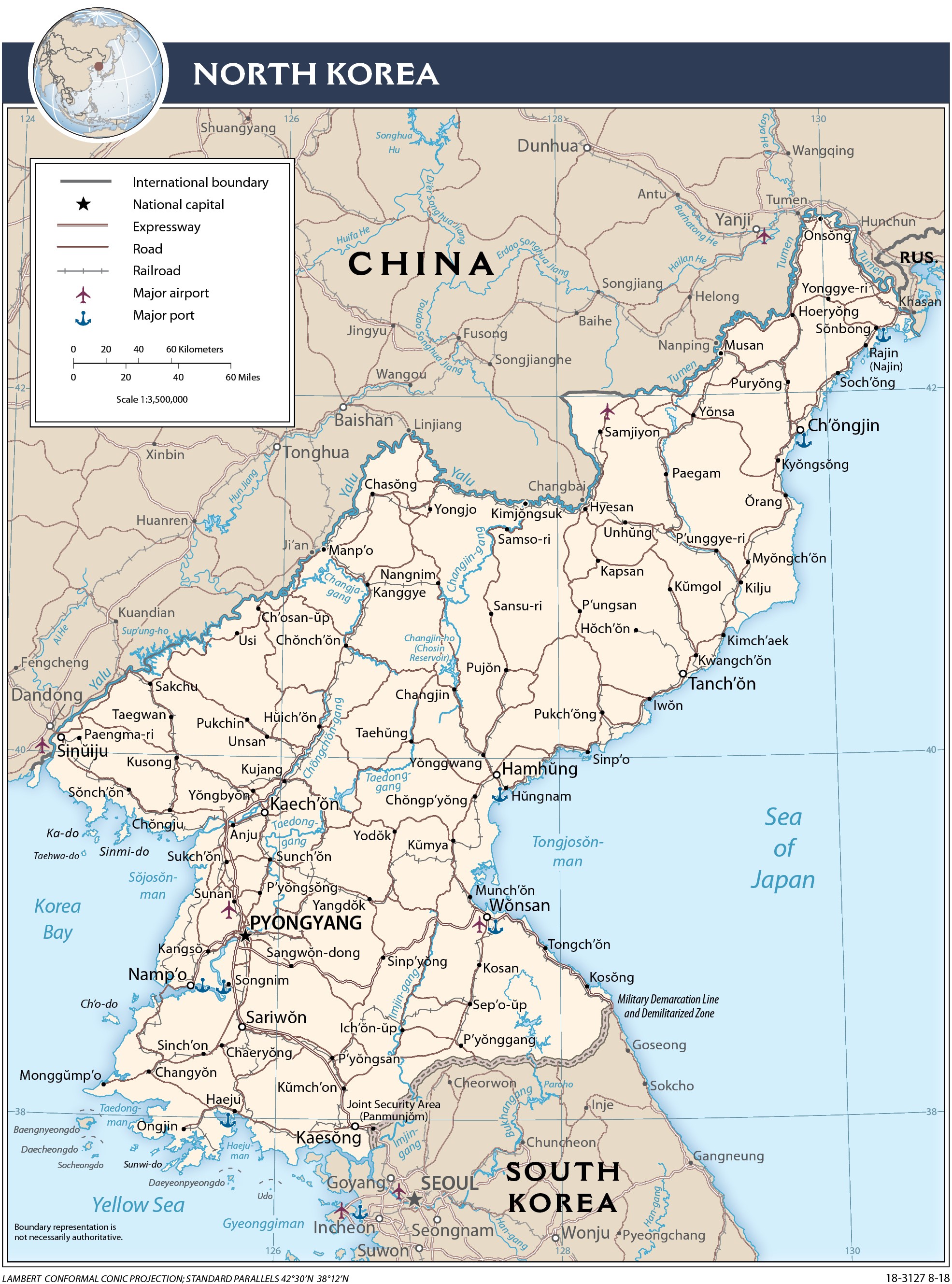
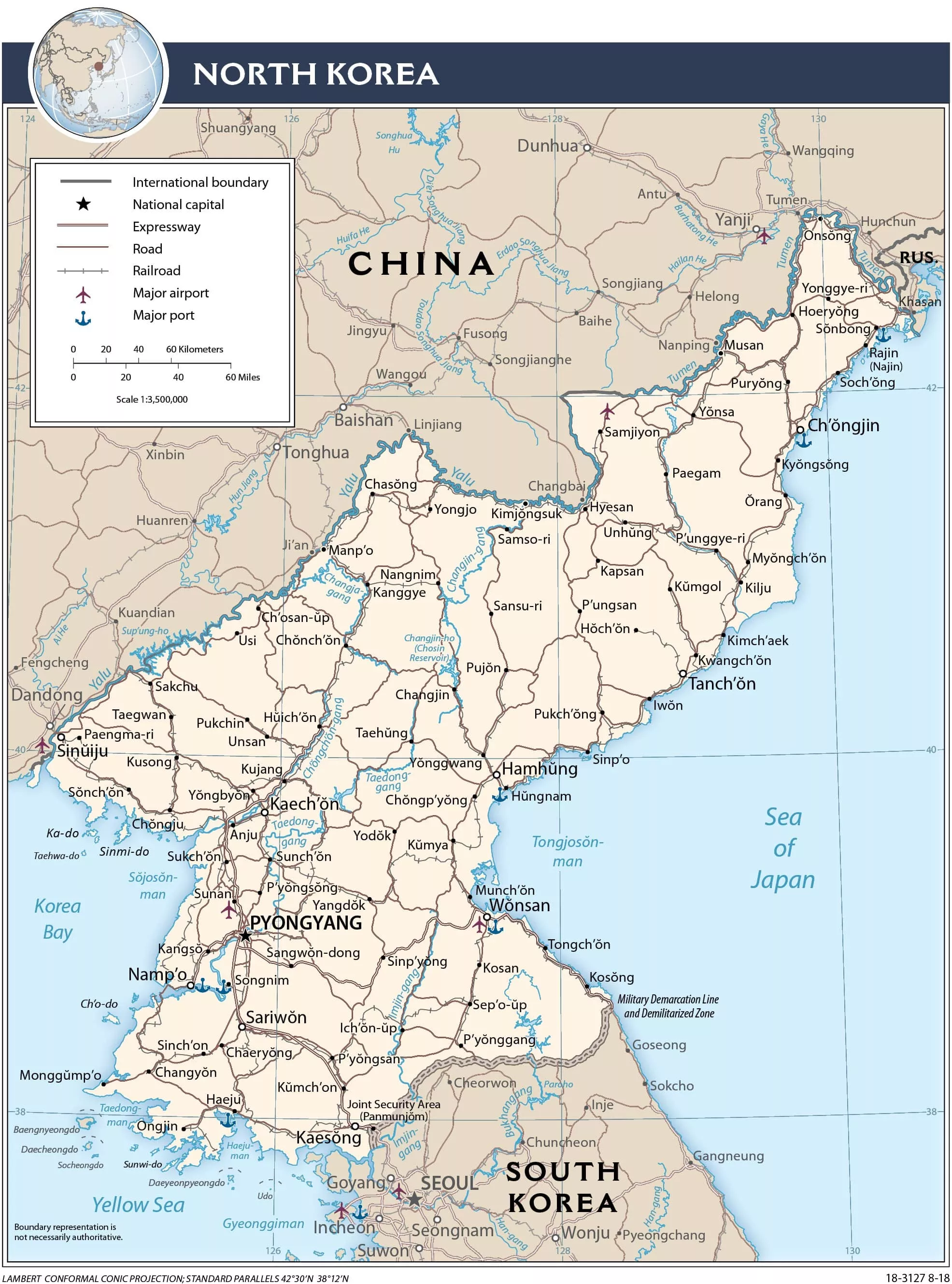
North Korea occupies roughly 120,540 square kilometers (46,540 square miles) of the northern Korean Peninsula. It shares a northern border with China and Russia, a southern border with South Korea, and is bounded by the Yellow Sea to the west and the Sea of Japan (East Sea) to the east.
The country is predominantly mountainous, with the Paektu Mountains in the north-central region and the Hamgyong Mountains along the northeast coast. The highest peak, Paektu Mountain (2,744 meters / 9,003 feet), is a volcanic mountain and considered the spiritual birthplace of the Korean nation. Lower hills and river valleys, including the Yalu and Tumen Rivers, support agricultural activity.
North Korea’s climate is continental. The winters are cold and snowy, and the summers are hot and humid, influenced by the East Asian monsoon. Spring and autumn are relatively short and mild, offering the most comfortable weather. Coastal plains and river valleys are vital for rice, maize, and other crops, while the rugged mountains remain largely forested and sparsely populated.
The capital, Pyongyang, is North Korea’s political, cultural, and economic center - known for its grand monuments and wide boulevards. Other major cities include Hamhung, an industrial hub; Chongjin, a key port and manufacturing center; Nampo, renowned for its shipbuilding; and Sinuiju, a significant trade gateway with China.
Major cities
Interesting Facts about North Korea
- Hereditary Leadership: North Korea is one of the few nations in the world with a dynastic leadership, passed down through the Kim family.
- Juche Ideology: The country is guided by Juche, a philosophy emphasizing political, economic, and military self-reliance.
- Military Focus: It maintains one of the largest standing armies in the world, with a strong defense posture and advanced military capabilities.
- Limited Internet Access: Most citizens have access only to a domestic intranet called Kwangmyong, rather than the global internet.
- Mass Games and Parades: North Korea is famous for its grand celebrations, featuring synchronized performances and massive parades that display national pride.
- Mount Paektu: The country’s highest peak, Mount Paektu, is a volcanic mountain with deep cultural and spiritual significance. It is considered the mythical birthplace of Dangun, the legendary founder of the first Korean kingdom, and it features prominently in Korean folklore, national identity, and historical narratives.
- State-Controlled Media: Television, radio, and newspapers are tightly controlled by the government, making North Korea one of the most media-restricted countries globally.
- Distinctive Architecture: Pyongyang’s monumental buildings, wide boulevards, and unique public spaces reflect the country’s distinctive architectural style.
People also ask…
What Official Currency of North Korea?
North Korea uses the North Korean won (KPW) as its official currency. Foreign currencies such as the US dollar and Chinese Yuan, are sometimes used in specialized markets.
What is the Traditional North Korean Cuisine like?
North Korean cuisine features staples like kimchi, rice, noodles, soups, and dishes made from locally grown vegetables, often with simpler preparations compared to South Korea, reflecting regional ingredients and traditions.
What is the Official Language in North Korea?
The official language is Korean, with slight regional differences from South Korean dialects. The government promotes standard Korean based on the Pyongan dialect of Pyongyang.
|
|
 |