Located in Southeast Asia, Myanmar (formerly known as Burma) is a country with a rich cultural heritage, diverse landscapes, and a fascinating history. It boasts a diverse range of landscapes, from lush tropical forests and serene rivers to ancient temples and bustling cities. The nation has a population of nearly 55 million people, making it one of the most populous countries in the region.
Known for its Buddhist traditions, colonial architecture, and vibrant festivals, the nation offers a unique blend of historical significance and natural beauty.
This guide explores Myanmar’s regions, population, major cities, climate, culture, and key attractions, making it an essential resource for travelers, students, and anyone curious about this remarkable Southeast Asian country.
For deeper insight, explore detailed facts about Myanmar on Infoplease or test your knowledge with the Infoplease Asia Map Quiz.
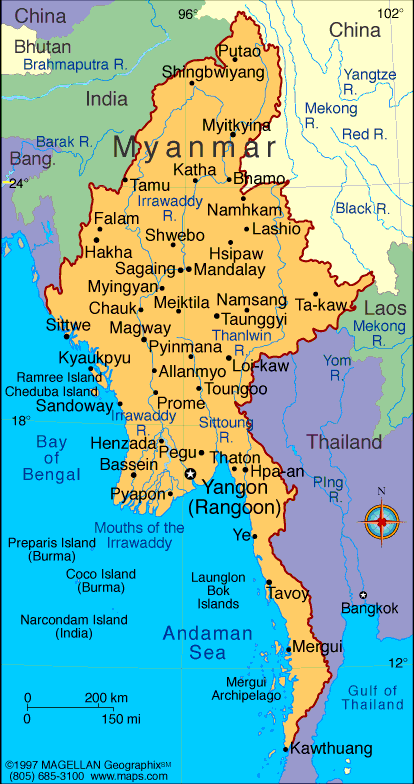
Myanmar Profile
History of Myanmar
The story of Myanmar is shaped by a succession of influential kingdoms and vibrant cultural traditions. Some of the earliest known settlers were the Pyu city-states, which flourished as far back as the 2nd century BCE. Their presence set the foundation for the rise of the Pagan Kingdom in the 11th century, a period best remembered for the breathtaking temple plains of Bagan, where thousands of Buddhist monuments still stand today.
Over the centuries, the country was home to several ruling dynasties, including the Ava, Taungoo, and Konbaung kingdoms, that expanded territories, built cities, and strengthened the country’s identity. By the 1800s, however, growing tensions with the British Empire led to a series of conflicts known as the Anglo-Burmese Wars. These ultimately resulted in British control of the entire region by 1886, placing Myanmar under colonial rule for several decades.
The country regained its independence in 1948, beginning a new chapter marked by both hope and political complexity. Through periods of military rule, social change, and ongoing efforts toward stability, Myanmar’s history remains defined by resilience and cultural pride.
Geography of Myanmar
Myanmar has a remarkable geographic diversity. It is bordered by India and Bangladesh to the northwest, China to the northeast, Laos and Thailand to the east, and has a long coastline along the Bay of Bengal and the Andaman Sea to the southwest. This strategic location places Myanmar at the crossroads of South and Southeast Asia, giving it a mix of cultural and environmental influences.
The country’s landscape varies dramatically from mountainous regions in the north to fertile central plains and the tropical coastal lowlands in the south. The Irrawaddy River, Myanmar’s longest and most important river, flows through the heart of the country, providing water for agriculture, transportation, and settlement. Other major rivers include the Salween and Chindwin, which help sustain diverse ecosystems and local communities.
Myanmar experiences a tropical monsoon climate, with three distinct seasons: a hot, dry season from March to May, a rainy monsoon season from June to October, and a cooler, dry season from November to February. This climate supports dense forests, fertile farmland, and rich biodiversity, including endangered species such as Asian elephants, tigers, and Irrawaddy dolphins.
The nation’s varied geography not only shapes its economy and agriculture but also provides a stunning array of natural landscapes - from the snow-capped peaks of the Himalayan foothills in the north to the serene beaches along the southern coastline. Myanmar’s geographic diversity makes it a fascinating destination for travelers, researchers, and anyone interested in Southeast Asia’s natural and cultural richness.
Major Cities
Interesting Facts about Myanmar
- Breathtaking Temples: The Bagan Archaeological Zone is home to over 2,000 ancient temples and pagodas, making it one of the world’s greatest historical sites.
- Diverse Ethnic Groups: Myanmar is home to more than 135 ethnic groups, each with unique languages, traditions, and cultural practices.
- Monsoon Climate: The country experiences a tropical monsoon climate, with distinct wet, dry, and cool seasons that support lush landscapes and diverse agriculture.
- Rich Natural Resources: The country is abundant in jade, gems, timber, and natural gas, contributing to its economy and international trade.
- Unique Festivals: Myanmar celebrates colorful festivals such as Thingyan (Water Festival) and the Tazaungdaing Balloon Festival, showcasing its rich cultural heritage.
- Wildlife and Biodiversity: The nation is home to rare species like Asian elephants, tigers, Irrawaddy dolphins, and hornbills, especially in its protected forests and river systems.
- Historical Kingdoms: Myanmar’s history includes powerful kingdoms such as the Pagan, Taungoo, and Konbaung dynasties, which have shaped its culture, architecture, and traditions.
People also ask…
What is the Official Currency of Myanmar?
The official currency of Myanmar is the Myanmar Kyat (MMK), which is used throughout the country for everyday transactions. Prices in major cities are often also displayed in U.S. dollars, especially for tourists.
What is the Traditional Myanmar Cuisine like?
Myanmar cuisine is flavorful and diverse, combining influences from India, China, and Thailand. Popular dishes include Mohinga (rice noodle soup with fish), Shan noodles, laphet thoke (fermented tea leaf salad), and curry with rice. Meals often feature fresh herbs, vegetables, and fish sauce, reflecting the country’s tropical ingredients.
What are the Top Tourist Attractions in Myanmar?
Myanmar is home to stunning natural and cultural sites, including the temples of Bagan, Shwedagon Pagoda in Yangon, Inle Lake, Mount Popa, and Ngapali Beach. Visitors can explore historic cities, scenic landscapes, and vibrant local markets.
What is the Official language of Myanmar?
Burmese is the official language, used in government, education, and media. In addition, Myanmar is home to more than 135 ethnic groups, many of which speak their own languages, such as Shan, Karen, and Rakhine.
|
|
 |


