Cambodia Profile
History
Cambodia’s history stretches back thousands of years. It was once the heart of the powerful Khmer Empire, which dominated much of Southeast Asia from the 9th to the 15th century. The empire’s legacy includes Angkor Wat, the largest religious monument in the world.
After centuries of change, including colonization by the French and struggles in the 20th century, Cambodia faced one of its darkest chapters during the Khmer Rouge regime (1975 - 1979), when millions of people lost their lives. Since then, Cambodia has rebuilt and grown, with a young population, growing economy, and a strong sense of cultural identity.
Geography
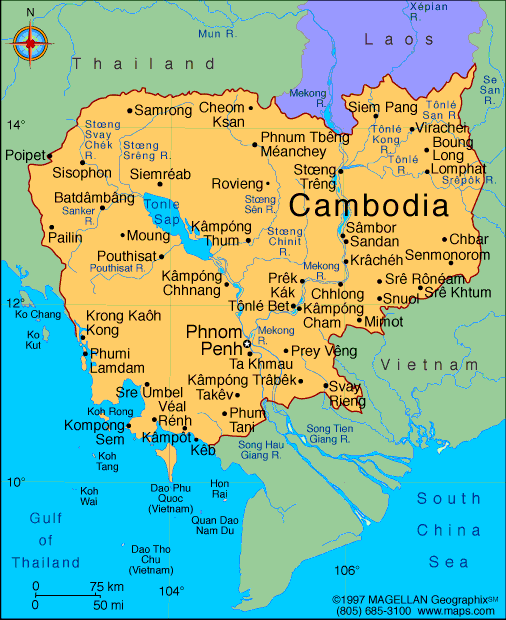
A look at the Cambodia map shows a country shaped like a rough oval, covering 181,035 square kilometers. It features a mix of mountains, lowlands, rivers, and lakes.
- Central Cambodia is home to vast rice fields and the Tonlé Sap Lake, the largest freshwater lake in Southeast Asia.
- The Mekong River, one of Asia’s great rivers, flows through the country from north to south.
- In the southwest, you'll find the Cardamom Mountains and coastal areas with tropical beaches.
- Cambodia borders Thailand, Laos, and Vietnam, and has a coastline of about 440 km.
Major Cities
- Phnom Penh: The capital and largest city, located at the meeting point of three rivers, including the Mekong. Phnom Penh is the political and economic heart of Cambodia, filled with busy markets, royal buildings, and a growing skyline.
- Siem Reap: The gateway to Angkor Wat, Siem Reap is one of the country’s most visited cities. It also offers museums, performances, and a lively food scene.
- Battambang: A quiet but culturally rich city known for its colonial architecture and art scene.
- Sihanoukville: A port city and beach destination on the southern coast, popular for island trips and sea views.
- Kampot: A riverside town famous for its pepper, relaxed vibe, and nearby mountains.
Fast Facts about Cambodia
- Population: Around 17 million
- Language: Khmer (official)
- Currency: Cambodian Riel (KHR); U.S. dollars are also widely accepted
- Flag Symbol: Angkor Wat temple in white, symbolizing the nation’s heritage
- Religion: Buddhism is practiced by over 95% of the population
People Also Ask…
Is it safe to travel to Cambodia in 2025?
In 2025, most of Cambodia remains safe for visitors, including popular destinations like Phnom Pecnh, Siem Reap, and Angkor Wat. However, the border region with Thailand has seen recent conflict and should be avoided. Travelers are advised to use official guidance and check the latest travel advisories before planning a trip.
What is Cambodia known for?
Cambodia is most famous for Angkor Wat, its ancient temples, Khmer cuisine, traditional dance, and its resilient, welcoming people.
What is the capital of Cambodia?
Phnom Penh is the capital. It’s located along the Mekong River and is home to the Royal Palace, Silver Pagoda, and many museums that tell Cambodia’s story.
What is the weather like in Cambodia?
Cambodia has a tropical climate with two seasons:
- Dry season: November to April
- Rainy season: May to October
- Temperatures are warm year-round, averaging between 25°C and 35°C (77°F to 95°F).
When is the best time to visit Cambodia?
The best time to visit is during the dry season (November to February), when it’s cooler and rain is rare—perfect for visiting temples and the countryside.
What food is popular in Cambodia?
- Amok (steamed fish curry in banana leaves)
- Lok lak (stir-fried beef with pepper sauce)
- Khmer noodles, fresh herbs, and rice-based dishes
- Street food is also a big part of Cambodian life.
|
|
 |


